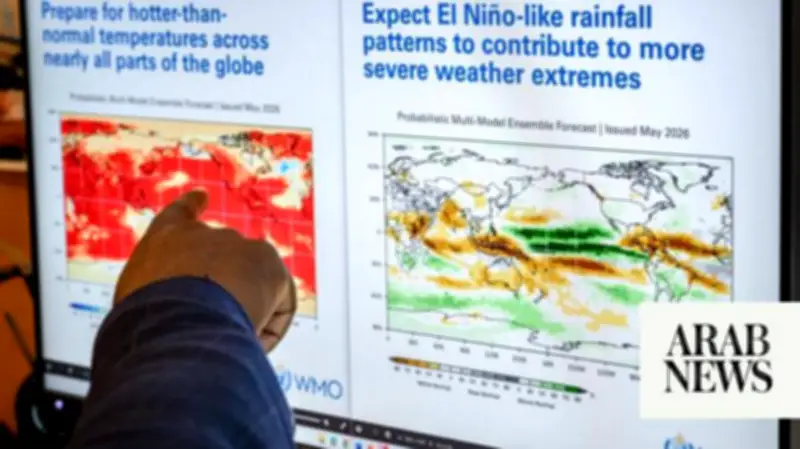
The United Nations weather agency has forecast a moderate to possibly strong El Nino event that could drive up global temperatures and increase the risk of extreme weather over the coming months. The World Meteorological Organization (WMO) stated on Tuesday that there is an 80 percent likelihood of the El Nino phenomenon developing between June and August 2026.
El Nino Development and Predictions
El Nino is a periodic warming of sea surface temperatures in the central and eastern Pacific Ocean, typically lasting between nine and 12 months. The WMO reported that warm ocean waters are fueling El Nino's development and predicted above-average temperatures in most parts of the world from June to August. It is likely that El Nino will persist until November.
WMO Secretary-General Celeste Saulo emphasized the need for preparedness: "We need to prepare for a potentially strong El Nino event — which will exacerbate drought and heavy rainfall and increase the risk of heatwaves both on land and in the ocean." The most recent El Nino, in 2023-24, contributed to 2024 being the hottest year on record, Saulo added.

Observed Changes in the Pacific
A shift has been observed in the Equatorial Pacific, with sea surface temperatures rising rapidly from late April to mid-May, indicating developing El Nino conditions. The WMO noted unusually warm subsurface conditions across the tropical Pacific, with temperatures exceeding 6 degrees Celsius above average, creating a reservoir of heat driving surface warming.
Regional Impacts and Global Warming
The weather pattern is known to disrupt regional climates, potentially bringing increased rainfall to southern South America, the southern United States, parts of the Horn of Africa, and central Asia, while causing drought in Australia, central America, Indonesia, and sections of southern Asia. It can also have a warming effect on the global climate and fuel hurricanes in the central and eastern Pacific Ocean.
UN Secretary-General António Guterres called for urgent action: "The world must treat it as the urgent climate warning it is. El Nino conditions will pour fuel on the fire of a warming world." He urged a shift away from fossil fuels toward renewable energy.
Climate Change and El Nino
While there is no evidence that climate change increases the frequency or intensity of El Nino events, it can worsen associated impacts such as extreme heatwaves and heavy rainfall, according to the WMO.