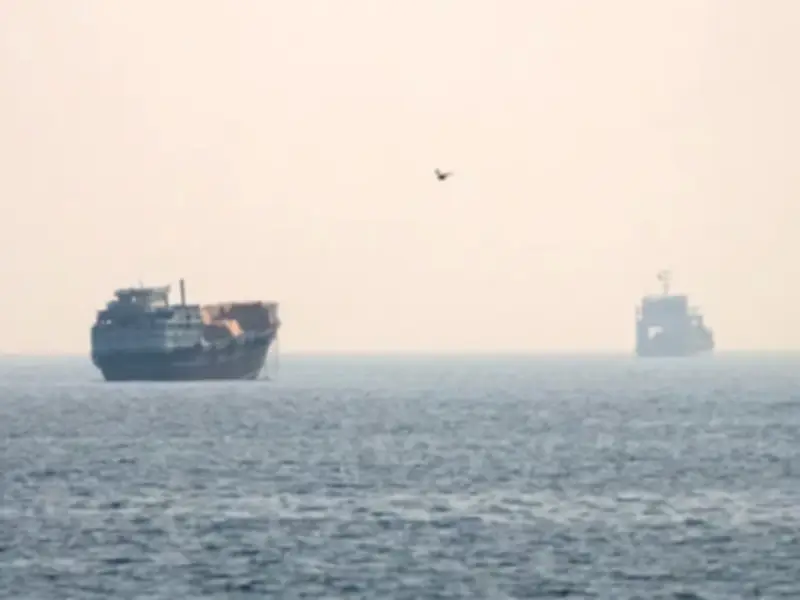
The United States military conducted fresh strikes on Iran on Wednesday, aiming to maintain freedom of navigation in the Strait of Hormuz, the US Central Command (CENTCOM) announced. The strikes came in response to an Iranian assault on three cargo ships transiting the strait the previous day. Iran retaliated by attacking Kuwait and Bahrain, both of which host US military bases, escalating tensions and undermining efforts to finalize a permanent ceasefire.
US and Iranian Statements
"US Central Command forces have started conducting additional strikes against Iran to further degrade their ability to threaten freedom of navigation in the Strait of Hormuz," CENTCOM wrote on X. "The United States is holding Iran accountable for recent unjustified aggression against commercial shipping and civilian crews freely navigating a vital international waterway." The strikes rattled several cities along Iran's southern coast, leaving some areas without power.
Iran's top negotiator, Mohammad Bagher Ghalibaf, responded on X: "The US has yet to learn that bullying and breaking its commitments no longer come without a cost. Let me be clear: If you strike, you will be struck back." He added, "The Strait of Hormuz will be reopened only under Iranian arrangements, not through US threats."

Impact on Peace Negotiations
The exchange of strikes dimmed hopes of turning a June 17 memorandum of understanding into a permanent deal to end the war, which began with US-Israeli attacks on Iran on February 28. Speaking before a NATO summit in Turkey, President Donald Trump said, "It's a very interesting question. To me, I think it's over. I don't want to deal with them." He later added, "If we make a deal with Iran I'm not sure that will stick. I found them to be very dishonourable people." However, Trump did not expect a return to full-fledged war and said it was unclear whether negotiations would continue.
Oil Prices and Regional Effects
Wednesday's attacks pushed oil prices higher, with Brent crude futures rising about 1% to $78.80 a barrel by 5:54am PKT. Prices remained well below the late-April peak of more than $120 a barrel. The strikes primarily targeted Iran's southern coast, from the Strait of Hormuz to the Gulf of Oman. Locations hit included Bandar Abbas, home to Iran's largest port and key navy and Revolutionary Guards facilities, as well as Konarak and Chabahar near the Pakistan border.
Electricity was restored to most areas of Chabahar after strikes knocked out power, according to Mehr news agency. A maritime traffic control tower in Chabahar was hit, and a firefighter was killed in a strike on the airport in Iranshahr, state media reported. In northern Iran, a US attack hit a railway bridge near Aqqala, Press TV reported.
Iranian Retaliation and Diplomatic Moves
Prior to the US attacks, Iranian Foreign Ministry spokesperson Esmaeil Baghaei said US strikes violated the memorandum by challenging a clause that "emphasizes the Islamic Republic of Iran's responsibility in determining arrangements for the safe passage of ships through the Strait of Hormuz." A spokesperson for parliament's National Security Commission said options for retaliation included withdrawing from the nuclear Non-Proliferation Treaty (NPT), changing Iran's nuclear doctrine, and closing the Bab-el-Mandeb Strait.
In a letter to the United Nations Security Council, Iran's mission accused the United States of "blatant violation of the Charter of the United Nations and its international obligations" and said the attacks violated the memorandum of understanding signed by the two countries.