US forces struck Iranian coastal radar sites on Saturday after shooting down drones launched by Iran toward the Strait of Hormuz, the U.S. military said, in the latest escalation complicating efforts to end the war between the two countries. The U.S. military believed the four Iranian drones were targeting regional maritime traffic, a U.S. official told Reuters. U.S. Central Command said on X that the U.S. then struck Iran's surveillance sites in Goruk and Qeshm Island, both on the Strait of Hormuz.
Iran's Response and Regional Reactions
Iran's foreign ministry said the US action broke an April 8 ceasefire, adding that such repeated violations showed Washington had no intention of reducing tensions. It warned that the United States would bear responsibility for the consequences of its “illegal actions”. Iran's Revolutionary Guards said they had attacked US bases in Kuwait and Bahrain in retaliation for US strikes and fired at four tankers trying to cross the strait without its permission.
Kuwait's army said on Saturday it engaged seven ballistic missiles that passed over residential areas, resulting in material damage but no casualties. In Bahrain, sirens sounded and residents were urged to seek shelter. Kuwait and Bahrain condemned the strikes. Iran later said it had hit US bases in both countries with ballistic missiles, but the US military said six missiles were intercepted and a seventh did not reach its target.

Pakistan's Mediation Role
Iranian state media reported that Mohsin Naqvi, the interior minister of Pakistan, which has been mediating an end to the conflict, arrived in Tehran on Saturday for talks with Iranian officials including Foreign Minister Abbas Araqchi. According to officials in Pakistan, Naqvi would carry a message from Pakistan to the Iranian Supreme Leader Ayatollah Mojtaba Khamenei.
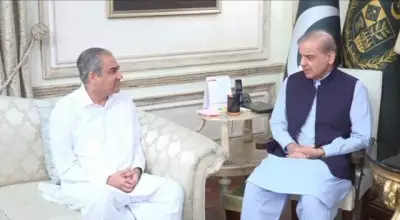
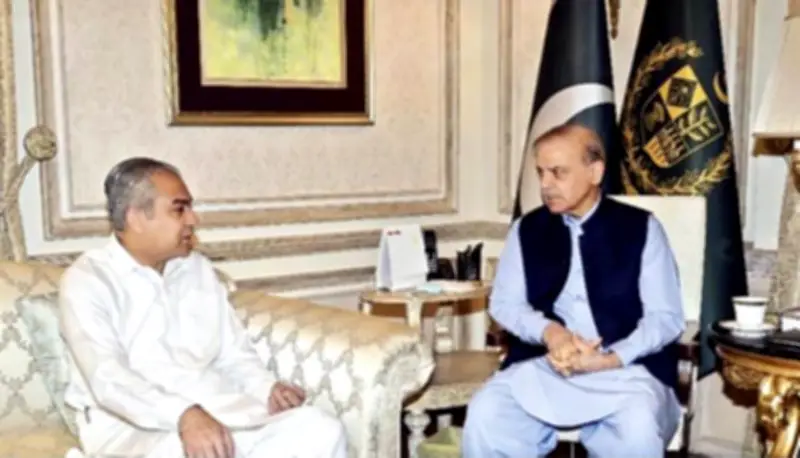
Interior Minister Mohsin Naqvi called on Prime Minister Muhammad Shehbaz Sharif in Lahore on Saturday. They discussed in detail the overall law and order, and security situation in the country. The Interior Minister briefed the Prime Minister about the steps being taken to maintain law and order in the country and protect citizens. He also discussed his upcoming visit to Tehran and sought the Prime Minister's guidance in this regard. The Interior Minister also apprised the Prime Minister of his important meetings held on the sidelines of the Shanghai Cooperation Organization conference in Kyrgyzstan. On this occasion, the Prime Minister emphasized close coordination and an integrated strategy among all relevant institutions to maintain law and order in the country and make security more effective.
Lebanese Army Chief Visits Pakistan
Lebanese army chief Rodolphe Haykal left Lebanon for Pakistan on Saturday, where he will meet his Pakistani counterpart, the Lebanese military said, with a source telling AFP the visit is linked to broader Iran-US talks. In a statement, the army says that Haykal “left Lebanon for the Islamic Republic of Pakistan, at the invitation of his Pakistani counterpart, Field Marshal Syed Asim Munir.” A source with knowledge of the matter tells AFP Haykal's visit is “linked to the Pakistani mediation to resolve” issues between the United States and Iran, which are negotiating an end to the Middle East regional war. “Lebanon is a critical part of the negotiations,” the source adds, requesting anonymity. Field Marshal Asim Munir is Islamabad's key negotiator between the United States and Iran.

In a parallel conflict in Lebanon, two Lebanese army officers and a soldier were killed in an Israeli strike on a military vehicle in south Lebanon, the Lebanese army said. The Israeli military said it was investigating the incident. Iran has made a ceasefire in Lebanon between Israel and Iran-aligned Hezbollah a condition for any peace deal with Washington. Lebanon's army said on Saturday its commander, General Rudolf Haykal, left for Pakistan at the invitation of his Pakistani counterpart, without giving further details. The surprise visit is notable given the insistence by Washington — and by Lebanese leaders including the president — that ceasefire talks for Lebanon remain separate from U.S.-Iran negotiations mediated by Pakistan. Hezbollah leader Naim Qassem this week rejected a U.S.-brokered pact between Israel and the Lebanese government to halt the fighting in Lebanon. The deal did not provide for an Israeli withdrawal and Hezbollah had not been party to the negotiations. Israel has said its forces would not withdraw or halt operations in the country amid increasing friction with the U.S.
Kuwait and Bahrain Condemn Attacks
The Gulf state of Kuwait condemns the overnight attacks from Iran which it says are a “direct threat” to the “lives of citizens and residents.” Kuwait “affirms that these attacks constitute a flagrant violation of the sovereignty of the state,” its foreign ministry says, adding that the attacks “represent a dangerous escalation.” Neighboring Bahrain also says it was targeted by Iranian missile barrages.
Trump's Comments on Iran's Missile Stockpiles
US President Donald Trump is facing mounting domestic political pressure due to rising gas prices to bring the unpopular war to an end. He told NBC that while most of Iran's drone and missile manufacturing facilities had been destroyed, the Iranians still had access to about a fifth of their missiles. “They have some missiles, they have some drones. I would say percentage wise, maybe 21%-22% of their missiles. It's a lot of missiles, but it's not what it was when we first attacked,” Trump told NBC News' “Meet the Press” program, according to excerpts released by the network on Friday. Asked why Iran's leaders were not more inclined to strike a deal, if they were as desperate as he has portrayed them, Trump said: “Because they are strong. They're proud. There are things they never thought they'd be doing that they're going to have to do, they've got no choice, and it takes a little while.”
Background and Ongoing Negotiations
After the U.S. and Israel launched the war against Iran on February 28, Tehran attacked Gulf states hosting U.S. bases and largely stopped shipping through the Strait of Hormuz. The conflict has driven up oil prices and disrupted supply chains for other goods, including humanitarian aid. Mohsen Rezaei, an adviser to Iran's supreme leader, told CNN on Friday that a peace deal hinged on the Trump administration unfreezing $24 billion in Iranian assets, and warned that the U.S. would “enter into a dark corridor” if it resumed attacks.
Reportedly, Pakistan's Interior Minister, Mohsen Naqvi, departed for Tehran on Saturday carrying what an informed source described as an important message from Pakistan Army Chief Field Marshal Syed Asim Munir to Iran's Supreme Leader of the Islamic Revolution, Ayatollah Seyyed Mojtaba Khamenei, according to Iran's state news agency IRNA. The source told IRNA that Naqvi's visit comes after a series of high-level consultations in Islamabad, including discussions with Prime Minister Shehbaz Sharif, underscoring the significance of the mission amid evolving regional diplomatic developments. According to the source, the Pakistani interior minister has been entrusted with delivering a message from Field Marshal Asim Munir to Iran's Supreme Leader, Ayatollah Seyyed Mojtaba Khamenei, during his visit to Tehran. The source further said that Prime Minister Shehbaz Sharif provided Naqvi with special instructions concerning ongoing discussions related to Iran-U.S. talks, highlighting Islamabad's close attention to developments affecting regional stability and diplomacy. Naqvi's visit is being closely watched in diplomatic circles as Pakistan and Iran continue to engage on a range of bilateral and regional issues, including security cooperation and broader geopolitical developments in the region. No official details regarding the contents of the message have been disclosed. However, the reported exchange reflects continued high-level communication between the leaderships of the two neighboring countries at a time of heightened regional engagement.