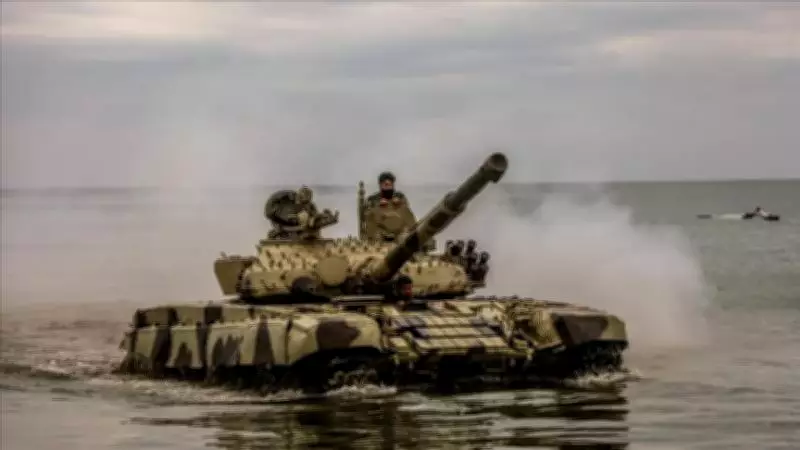
US Military Issues Firm Warning to Iran Ahead of Planned Naval Exercises
The United States Central Command (CENTCOM) has delivered a clear and direct warning to the Islamic Revolutionary Guard Corps (IRGC) of Iran regarding upcoming naval activities. This statement was released on Friday, just as Iran announced its intention to conduct live-fire naval exercises in the strategically vital Strait of Hormuz next week.
Call for Professional Conduct in International Waters
In its official communication, CENTCOM strongly urged the IRGC to carry out these announced drills in a manner that is safe, professional, and minimizes risks to the freedom of navigation for international maritime traffic. The command emphasized that the Strait of Hormuz is not only an international sea passage but also a critical trade corridor that underpins regional economic stability and prosperity.
While acknowledging Iran's legitimate right to operate in international airspace and waters, CENTCOM outlined specific behaviors it deems unacceptable and will not tolerate. These include:

- Overflight of U.S. military vessels engaged in flight operations.
- Low-altitude or armed overflights of U.S. assets when intentions are unclear.
- High-speed boat approaches on a collision course with U.S. naval vessels.
- Weapons being trained directly at U.S. forces.
Risks of Escalation and Destabilization
The warning highlighted that any unsafe or unprofessional behavior near U.S. forces, regional partners, or commercial shipping significantly increases the dangers of collision, military escalation, and broader destabilization in the region. CENTCOM reaffirmed its commitment to ensuring the safety of all U.S. personnel, ships, and aircraft operating across the Middle East.
It described the U.S. military as the most highly trained and lethal force globally, pledging to continue operations with the utmost professionalism and in strict adherence to international norms. The command explicitly called on the IRGC to mirror this standard of conduct during its exercises.
Broader Context of Rising Tensions
This diplomatic and military alert comes amid a period of heightened tensions between Tehran and Washington. Recent weeks have seen nationwide protests in Iran, which began in late December in Tehran and spread to several cities, persisting for nearly two weeks. These demonstrations were triggered by a sharp devaluation of the Iranian currency and a worsening economic crisis.
In response, U.S. President Donald Trump has stated that a "massive armada" of American ships is being directed toward the region, alongside demands for Iran to engage in negotiations. Iranian officials have countered with warnings that any U.S. attack would provoke a "swift and comprehensive" response, while reiterating that Tehran is open to talks only under conditions that are fair, balanced, and free from coercion.
The situation remains delicate, with the planned naval exercises in the Strait of Hormuz serving as a potential flashpoint. The international community will be closely monitoring the conduct of all parties to prevent any miscalculations that could lead to conflict.