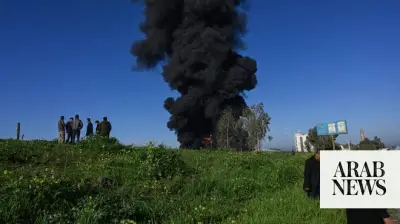
More than 6,000 people have fled Sudan's West Darfur region following threats from the Rapid Support Forces, according to a UN agency. This displacement is the latest in a long history of conflicts that underscore why peace remains an elusive dream. Sociologists and historians categorize warfare into major structural drivers: resource competition driving imperial expansion for land, water, oil, and wealth; ideological clashes such as democracy versus communism; religious wars like the Crusades; and nationalism scaled to state levels, causing catastrophic events like World War I and World War II.
Systemic Barriers to Absolute Harmony
Several systemic barriers prevent total global peace. The security dilemma persists: one nation's defensive build-up is perceived as an offensive threat by its neighbors. Human nature, shaped by evolutionary biology, programs humans for in-group loyalty and out-group hostility. Economic incentives remain a major conflict driver, as the military-industrial complex generates immense profit from ongoing global instability. The decline of a global superpower creates geopolitical power vacuums, triggering wars of succession among rising powers.
True peace is the absence of fear, not just the absence of war. Historically, peace has only existed as an enforced state of power dominance, exemplified by Pax Romana, Pax Britannica, and Pax Americana. The Cold War (1947–1991) perfectly illustrates how peace remains elusive due to structural competition, ideological hostility, and proxy warfare. Its core drivers were ideological polarization between capitalism and liberal democracy, the nuclear arms race under the MAD doctrine, and the security dilemma between NATO and the Warsaw Pact. The illusion of peace was maintained by fighting proxy wars in developing nations: the Korean War (1950–1953), the Vietnam War (1955–1975), and the Soviet-Afghan War (1979–1989), which created a power vacuum that fuels modern transnational terrorism, keeping Pakistan, Afghanistan, and parts of Central Asia in conflict to this day.

The Cold War's Enduring Legacy
The "peace" of the Cold War was merely the absence of direct superpower war, sustained by the terror of nuclear annihilation—a state of negative peace. Preventing war in Europe simply shifted battlefields and exported violence to Asia, Africa, and Latin America. The collapse of the Soviet Union in 1991 did not bring permanent peace, as seen in the modern revival of democratic-authoritarian rivalries in the USA, Israel, Ukraine, Russia, Venezuela, Mexico, Cuba, Afghanistan, Pakistan, India, Libya, Syria, Palestine, Lebanon, Iran, and the Gulf region.
The structural dynamics of the 20th-century Cold War have resurfaced in 2026, fueling an intense geopolitical rivalry between the United States and a revisionist bloc led by China and Russia. While the ideological language has evolved, the core mechanisms of the security dilemma, proxy battlegrounds, and zero-sum competition remain identical. The classic Cold War was measured in nuclear stockpiles and missile counts; the current iteration is fought through data, code, and silicon, defined by the AI and chip race and weaponized interdependence through "de-risking" and aggressive tariff structures.
2026 Geopolitical Landscape
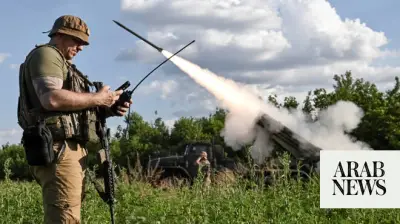
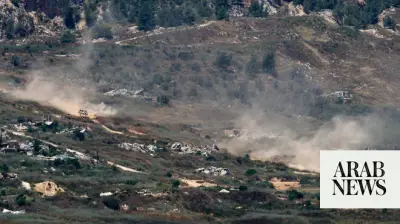
The old binary of capitalism versus communism has transformed into a systemic clash between liberal democracies and authoritarian states. China and Russia are actively consolidating alternative financial, trade, and security frameworks to challenge Western-led institutions. Russia's ongoing aggression in Eastern Europe continues to test NATO's cohesion and defense spending thresholds, reviving Cold War-era European security fears. Just as Korea, Vietnam, and Afghanistan defined 20th-century proxy conflicts, contemporary regional wars are deeply entangled in major-power rivalries: the War in Ukraine, the Taiwan Strait and South China Sea disputes, and the Middle East/Iran tensions.

The 2026 Global Peace Index (GPI) indicates that the world has become less peaceful over the past 18 years; of the 163 countries on the GPI, 119 have deteriorated and only 42 have improved. The Council on Foreign Relations' Preventive Priorities Survey 2026 identifies an increasingly volatile, multi-theatre security environment, highlighting major risks including the Israeli-Palestinian conflict, the Russia-Ukraine infrastructure war, and U.S. domestic unrest. The report emphasizes escalating Tier-1 risks in the Middle East and a growing threat from AI-enabled cyberattacks alongside potential great-power confrontations.
The Defining Difference of 2026
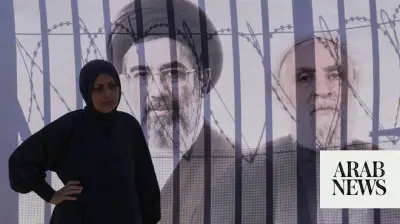
The world is no longer strictly bipolar. While the original Cold War forced countries into two rigid camps, today's landscape features independent middle powers—countries forming BRICS, QUAD, and SCO—that actively resist being drawn into a new great-power standoff, leveraging their bargaining positions to maintain economic neutrality. Pakistan's diplomatic efforts to disentangle the ongoing USA/Israel and Iran/Gulf States conflict, leveraging its nuclear stature, are notable. However, increasing hostility between Pakistan and Afghanistan, and between Pakistan and India—with potential to escalate over the Indus Water and IIOJK issues—also requires resolution with the involvement of major global players.