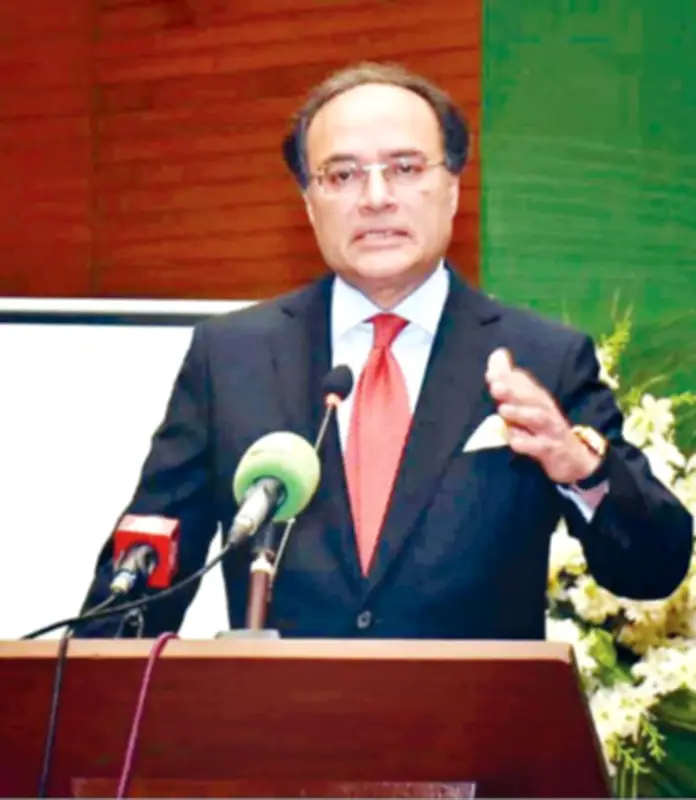
Finance Minister Muhammad Aurangzeb informed the National Assembly on Saturday that the proposed Finance Bill 2026-27 would provide maximum relief to all segments of society within available resources, as lawmakers from both treasury and opposition shared their budgetary proposals.
Budget Debate and Opposition Input
Members of the National Assembly from both sides presented their budgetary proposals over the past week, with opposition members granted an additional five hours to voice their concerns, primarily focusing on the insufficient salary increases for government servants. Concluding the debate in line with parliamentary tradition, Aurangzeb stated that the government had provided tax relief to the salaried class by raising pay and pensions.
The minister highlighted measures to simplify pension processing, as well as the abolition of taxes on sanitary pads and contraceptives, alongside reductions in taxes on medicines. In his one-and-a-half-hour speech, Aurangzeb faced no interruptions from opposition benches, a departure from past practices.

Pro-Growth Budget and Reforms
“The budgetary proposals set the foundation to accelerate sustainable growth seen in the past two years,” the minister claimed, noting that the federal budget contains positive, pro-growth proposals across all sectors aimed at accelerating sustainable growth. Addressing criticism that the government imposes tax burdens on the masses, Aurangzeb asserted that this budget changes that trend, focusing on broadening reforms rather than adding extra burden.
“Initiatives have been taken to introduce maximum relief to the masses, which will create a positive impact in the future,” he said, citing concessional loans for importers, agricultural reforms, and other sectoral measures. The minister announced plans to introduce a new tax operating model as part of these reforms, with the goal of bringing positive change to people’s lives.
FBR Performance and Revenue Collection
Responding to opposition criticism of the Federal Board of Revenue’s (FBR) performance, Aurangzeb said the treasury benches had listened to all proposals and criticism. He noted that an additional $14 billion was collected in revenue from 1988 to 2011. Regarding agricultural reforms, he mentioned the Zarkhez scheme, under which interest-free loans are provided to small-scale farmers.
The minister appreciated the National Assembly for saving Rs 5 billion and the Senate for saving Rs 1 billion through austerity measures. He thanked lawmakers for their participation in the budget debate, specifically Opposition Leader Mehmood Khan Achakzai, as well as Saleem Mandviwala and Naveed Qamar, who head the standing committees on finance for the Senate and National Assembly, respectively.
Call for National Consensus
Emphasizing the importance of national consensus, Aurangzeb urged all stakeholders to continue their cooperation for the country’s economic development. Earlier, the chair informed the House that over 53 hours of discussion had been held on the Federal Budget 2026–27, and the House had also considered 140 recommendations proposed by the Senate on the budget.