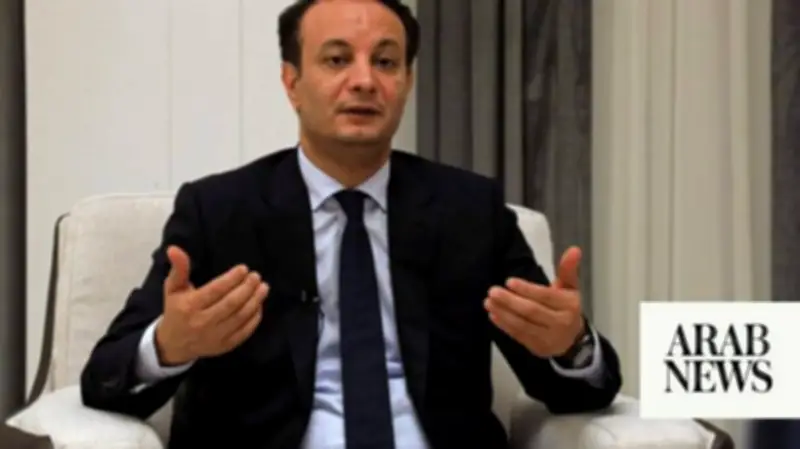
Belgacem Haftar, the son of eastern Libya's military commander Khalifa Haftar, has pledged to compensate for more than 40 years of stagnation under the former ruler Muammar Qaddafi. In an exclusive interview with AFP, he detailed the reconstruction initiatives spearheaded by the Libyan Development and Reconstruction Fund (LDRF), which he directs.
Background of Division and Development
Following Qaddafi's death in the 2011 uprising, Libya plunged into a civil war that divided the nation. The Haftar family assumed control in the east, with Field Marshal Khalifa Haftar maintaining a firm security grip. Among his six sons, Belgacem now oversees a comprehensive reconstruction program aimed at restoring the family's legitimacy. After the catastrophic floods that struck Derna in 2023, claiming nearly 4,000 lives, Belgacem emerged as the face of rebuilding efforts. Today, bridges, apartment complexes, schools, and hospitals are rising across eastern Libya, a region historically marginalized under Qaddafi's rule.
Accompanied by journalists from the Libyan National Army (LNA) led by Haftar, AFP observed numerous construction sites in Benghazi, Derna, and Bayda. Belgacem, 46, stated from his office in a lavish Benghazi palace: "Qaddafi governed Libya for 42 years, and he did not accomplish what we have in two years."

Political and Economic Context
Libya remains split between the United Nations-recognized government in Tripoli and the eastern administration in Benghazi, backed by the Haftars. The reconstruction fund, initially established in 2024 with a $2 billion budget to rebuild Derna, has since expanded into the Libya Development and Reconstruction Fund. Eastern Libya and most of the south are firmly under Haftar's control. Saddam Haftar, widely seen as the heir apparent, serves as deputy commander of the LNA, while another son, Khaled, is chief of staff.
Libya holds Africa's largest oil reserves, approximately 48.4 billion barrels, with most oil fields and export terminals located in areas controlled by the Haftar family. The reconstruction fund has launched numerous projects in these regions to "make up for the lost years" of Qaddafi's reign, according to Belgacem. He noted that since Qaddafi's overthrow, sectors such as education, healthcare, and basic necessities have been "completely neglected."
Addressing Criticism and Transparency
The Haftars' development push occurs as they seek to demonstrate their governance capabilities beyond their controlled areas, amid reported U.S. efforts to promote rapprochement between Libya's rival authorities. Responding to accusations of financial misconduct and lack of oversight, Belgacem asserted: "The number and scale of the projects underway answer the question of where the money is being spent." He emphasized that every contract signed by the fund is audited by appropriate authorities and all payments are processed through the central bank in Tripoli.
Future Expansion and Challenges
Libya has endured repression and poverty both during and after Qaddafi's rule. Belgacem stated that the fund has "mended trust between citizens and the state by implementing projects that had been abandoned for years." On Friday, he attended a rehearsal for an education sector celebration at Benghazi's newly built stadium, where a young girl handed him a note with her family's requests.
The reconstruction fund could potentially expand into western Libya, including the Tripoli region, "if the authorities request it," Belgacem said. He described the area as in "immense need" for infrastructure. However, tensions between Belgacem and Prime Minister Abdelhamid Dbeibah, who leads the Tripoli-based government, would need to ease. Belgacem accused Dbeibah of having "carried out no project on the scale of the Libyan state in the last five years," while Dbeibah has charged that the eastern administration has been spending off budget.
Signs of a potential shift emerged last month when the legislative bodies of the rival authorities signed a U.S.-mediated agreement to unify public spending across the divided country for the first time in over a decade. The deal includes investments worth approximately 20 billion dinars ($3 billion) in western Libya, with a similar amount allocated to the east and south, where the fund aims to develop further strategic projects.