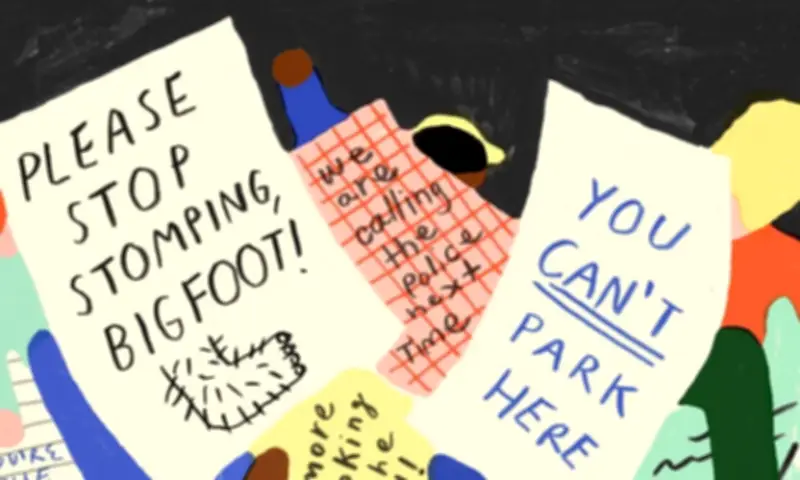
Tens of millions of Americans live in close proximity to neighbors, making irritating encounters almost inevitable. From loud parties and unkempt lawns to parking disputes and noise complaints, these everyday exasperations span cities, suburbs, and rural areas. While face-to-face conversations or phone calls are ideal, many resort to the dreaded neighbor note—a form of communication that often backfires.
The Anxiety of Writing a Neighbor Note
Elaine Swann, a lifestyle and etiquette expert, explains that neighbor interactions are difficult when there is no prior relationship. “You’re going to them with something that’s bad,” she says, noting that the lack of positive interactions amplifies awkwardness. Swann believes that building a relationship beyond complaints can ease the tension.
Modern conveniences like doorbell cameras and delivery services have reduced casual neighborly interactions, making notes seem like the only option. However, these notes often fail because they lack personal connection. Swann advises treating the note as a conversation starter, not a final demand.

When a Note Becomes Necessary
Sam, a renter using a pseudonym, faced a sewage flooding issue in her apartment. After her toilet gurgled and bathtub filled with wastewater, she posted an illustrated note to all neighbors, pleading with them to stop flushing wipes. “I was just done avoiding conflict,” she says. Despite her efforts, someone ripped up her note, leaving her to rely on a Shop-Vac and hope management would intervene.
Sam’s story highlights the gamble of neighbor notes: they can improve the situation or escalate tension. “It was stressful—the anxiety of if someone gets overly offended,” she admits. Her antiques and art, worth about $15,000, remain at risk.
The Recipient’s Perspective
Harry, 37, received a noise complaint note 15 years ago while living in Washington, D.C. The note accused him of stomping, but he believed it was unfounded. “It made accusations that were not true,” he says. The note made him self-conscious, altering his behavior. Ironically, Harry later learned his own motion sensor light was annoying neighbors, and he wished someone had told him sooner.
Being on both sides gave Harry insight: a good note is friendly and assumes no ill intent. He suggests including smiley faces or XOXOs to soften the message. Ultimately, a face-to-face conversation may be more effective.
Expert Tips for a Better Neighbor Note
Etiquette coach Jacqueline Whitmore emphasizes empathy: “You don’t always know what this person is going through.” She advises giving the benefit of the doubt. Swann recommends including your contact info to keep the door open. “This is the person who will call if your house is on fire,” she says, urging neighbors to see each other as community, not enemies.
Key takeaways: approach with kindness, treat the note as a dialogue, and build relationships before problems arise. A well-crafted note can resolve issues without creating lasting hostility.