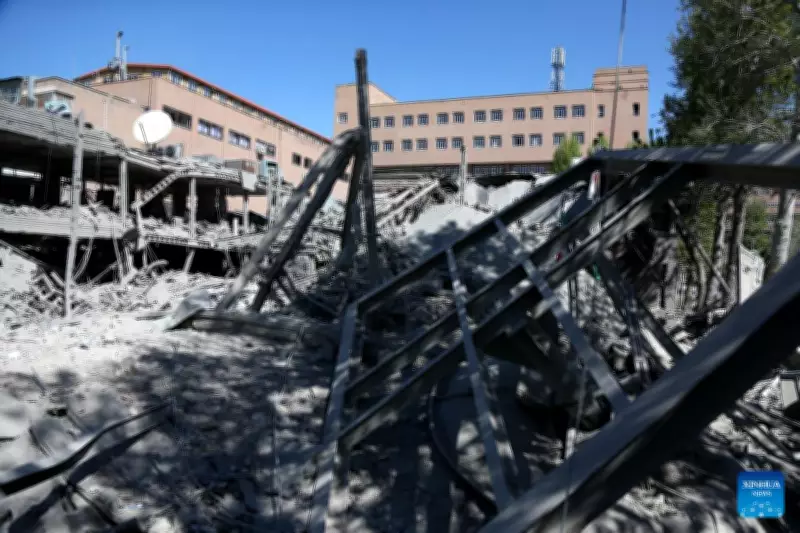
Authorities in Iran have announced plans to preserve a damaged site at the Isfahan University of Technology as a war museum following recent strikes. The decision was revealed by the university's head, Zafarollah Kalantari, who stated that the affected area will be maintained as a reminder of what he described as the country's scientific suffering during the conflict.
Plans for Reconstruction and Preservation
Kalantari emphasized the importance of preserving the site, saying, 'Construction of a new building and provision of advanced equipment will accompany the museum.' He added that early estimates place the damage to university buildings and infrastructure at approximately $11 million, according to the state news agency IRNA.
Background of the Attacks
The university was damaged during a US-Israeli attack in March, which was part of a broader conflict that spread across the region. Officials reported that at least 30 universities in Iran were affected, including institutions in Tehran, along with residential areas and other civilian sites. The attacks caused significant destruction to educational facilities, which authorities have described as a blow to the country's scientific progress.

Ceasefire and Aftermath
A ceasefire between the involved parties has been in place since April 8, bringing a halt to the hostilities. However, the damage to infrastructure, particularly in the education sector, has prompted a response from Iranian authorities to commemorate the event and rebuild. The decision to turn the damaged site into a war museum serves as a dual purpose: to memorialize the impact of the conflict on science and education, and to inspire resilience through reconstruction.
The Isfahan University of Technology, one of Iran's leading technical institutions, will now host a museum that officials hope will educate future generations about the costs of war. The project underscores the broader narrative of scientific suffering and recovery amid regional tensions.