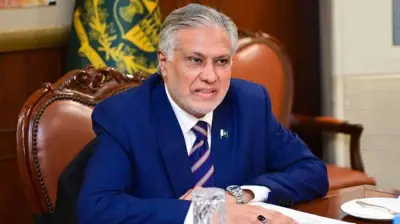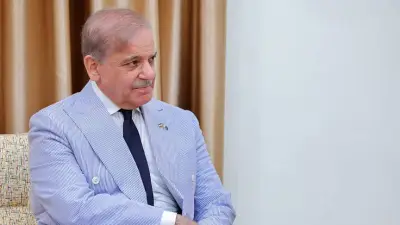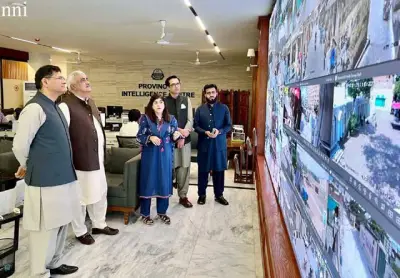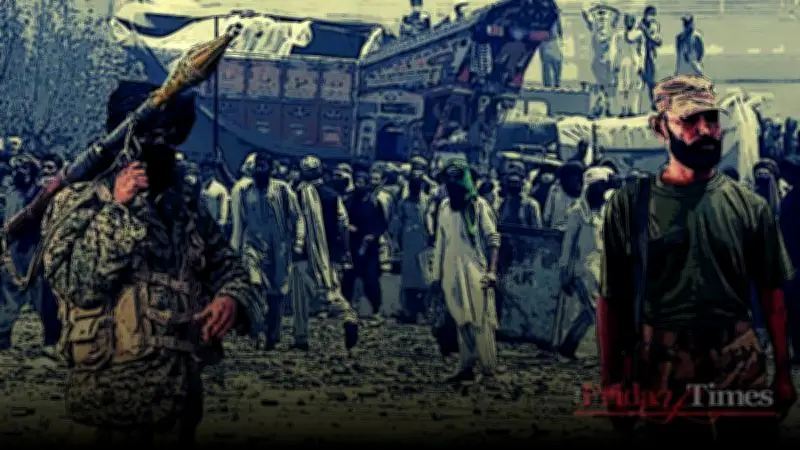
A high-stakes military raid in Lakki Marwat on 28 May 2026 shattered the fragile illusion of security in Pakistan's borderlands. Acting on credible intelligence, security forces surrounded the home of Sub-Inspector Saboor, a member of the local Police Peace Committee, to arrest an active Taliban terrorist. Instead of cooperation, forces faced gunfire from inside the house. The fallout was immediate: one of Saboor's nephews was arrested as a militant, his other nephew was implicated as a facilitator, and the committee fractured over why a wanted terrorist was being sheltered under its protection. Soon after, a defiant voice note allegedly leaked from the committee's president, Khalid Khan, threatening the military, while videos circulated of Saboor Ali accusing the army of high-handedness. This explosive standoff is not a localized failure; it is a symptom of a deeper crisis. It forces us to confront uncomfortable questions about a fractured security landscape where informal proxies operate in dangerous legal grey zones.
Question 1: How can a state-backed Peace Committee end up harboring the very terrorists it is supposed to fight?
The presence of a Taliban terrorist in a Peace Committee member's home exposes the systemic flaw of co-opting surrendered militants and locals into informal security structures. The underlying logic of utilizing these proxies relies on raw pragmatism: they possess terrain mastery, understand insurgent networks, and serve as a cheap force multiplier. However, because these committees were never created through formal legislative acts, they exist in an administrative vacuum. They are engineered as a hybrid entity: a mix of low-ranking local patrol police, traditional tribal elders, and reconciled former Taliban fighters. Lacking statutory codification under the Police Act, they operate entirely on ad hoc administrative mandates issued by regional bureaucracies. This lack of institutional vetting and formal legal parameters means their loyalties are rarely absolute. As the Lakki Marwat incident demonstrates, this uncodified status provides an ideal operational cover. Militants can exploit the committee's local clout to shield active cells, stockpile weapons, and run protection rackets completely outside the standard judicial process.
Question 2: Who bears responsibility for this flawed proxy network?
The rise of these rogue committees is not the fault of a single entity, but rather the result of a systemic contradiction between military operational shortcuts and civilian administrative abdication. Historically, the military establishment integrated local reconciled fighters into informal peace committees as a rapid, low-cost tactical measure to hold territory and gather intelligence. However, by relying on these non-statutory bodies to maintain order, the state bypassed the formal legal framework, creating highly volatile parallel power centers. On the ground, the relationship between regular security units and these autonomous committees has frequently been defined by intense friction and turf wars rather than unified coordination. Frontline military units often view these proxies with deep suspicion, recognizing that they are highly vulnerable to tribal nepotism and active insurgent infiltration, a reality proven when the raid in Lakki Marwat had to bypass local networks to neutralize a hidden threat. The deeper crisis is a collective state failure: the military pursued immediate kinetic fixes while successive civilian administrations failed to enforce institutional vetting, provide democratic leadership, or invest in an independent provincial police force. By allowing unlegislated militias to function as security buffers, both institutions co-created an uncontrollable system that left frontline forces to clean up the operational mess when the proxies inevitably double-cross the state.


Question 3: If these committees must remain operational in the short term, how can coordination be stabilized?
To eliminate mutual suspicion and prevent dangerous standoffs, any short-term reliance on these committees must be replaced by structured institutional oversight and information synchronization. A Joint Operations Framework should establish localized information-sharing platforms under the supervision of senior district administrators. Committees must be barred from independent, unnotified actions; all local data they collect should be funnelled through formal channels to ensure synchronized coordination between relevant sections of the military and police before operations are launched. A Dual-Layer Vetting Process is essential: background checks must be elevated beyond local police stations, requiring rigorous simultaneous clearances from verification branches within both police and military networks to neutralize localized nepotism. Command Accountability must be enforced: committee members must have strictly defined operational limits and answer directly to civilian district leadership. Any inflammatory public messaging or unauthorized posturing, such as the leaked voice notes in Lakki Marwat, must result in immediate administrative suspension and investigation into the leadership involved.
Question 4: Why does the state continue to rely on these fractured proxies?
The reliance on proxies is a symptom of state isolation, driven by a total breakdown of trust between the state and the local population. When political alienation cuts the state off from its citizens, formal intelligence channels dry up. A population that views the central state with hostility will not report militant movements. In this vacuum, local administrations co-opt tribal power brokers to act as intermediaries, effectively buying local access. Furthermore, this trust deficit has permeated the state's own law enforcement organs. A historic fault line exists between the provincial police, who are embedded in the community and share local grievances, and the federal military. When the military suspects the police are compromised, and the police resent heavy-handed federal oversight, informal Peace Committees are used as an administrative workaround. This creates the absurd paradox seen in Lakki Marwat: an informal proxy embedded within the police opens fire directly on the army.
Question 5: How do active militant groups exploit this internal divide in their propaganda?
Militant propaganda machinery has evolved into highly agile digital psychological operations, aggressively weaponizing these internal institutional divides to subvert state authority and fracture the security apparatus from within. On mainstream platforms like TikTok, Instagram Reels, and YouTube Shorts, militant media cells upload highly edited, dramatic clips of military raids. Overlaid with emotional Pashto poetry or mourning anthems (taranas), these videos purposefully reframe federal security operations. By omitting the context of terror threats, they paint the federal military as an alien, occupying force while depicting local police and proxy forces as victimized, native sons of the soil. This framing aims to trigger cognitive dissonance and operational hesitation within local law enforcement. The Disposable Asset Narrative is also used: when the state launches kinetic operations to neutralize a compromised proxy, militant propaganda groups seize the narrative on hyper-local WhatsApp networks and Telegram channels, warning local youth and tribal elders that the state views them as disposable. They capitalize on cases like the Lakki Marwat raid to argue that the state will exploit local collaboration for short-term intelligence, only to label those same collaborators as terrorists the moment they outlive their tactical utility. Exploitation of Tribal Honour Codes is systematic: militants translate complex security standoffs into the universal grammar of local culture, portraying regular military house searches as direct violations of chador and chahardewari (the sanctity of the home and female modesty). By transforming a lawful counter-terrorism operation into a tribal insult, they alienate the broader community, turning passive citizens into hostile actors who refuse to cooperate with state investigators. Shadow Judicial Branding occurs on end-to-end encrypted messaging applications, where militant groups position their own shadow governance structures against state proxies. They document instances of Peace Committee members engaging in extortion or land-grabbing under unwritten functional immunity, presenting their own swift Sharia summary courts as a clean alternative, winning a war of governance legitimacy at the grassroots level.
Question 6: What historical precedent exists for formalizing and then dismantling these forces?
The state has successfully raised irregular forces temporarily and dismantled them once the threat subsided. During the Afghan-sponsored Pashtunistan movement from the 1950s to the 1970s, Pakistan raised irregular border defenses, such as the Dir Levies and localized Khasadar units. These local tribesmen were temporarily co-opted and formalized to defend key mountain passes against foreign-funded subversion. Critically, once the political momentum of the Pashtunistan movement collapsed and border stability returned, the state successfully phased out these irregular border militias or absorbed them into disciplined, standard security forces. This proves that outsourcing security must only ever be a short-term emergency measure with a definitive exit strategy.
Question 7: What practical, phased structural steps are required to permanently break this trap?
While immediate blanket demilitarization is operationally impractical, the state can execute a phased, three-tiered transition blueprint to safely wind down these proxies. Phase 1: Registration, Audit, and Freeze: halt all new proxy recruitment, initiate mandatory biometric profiling of all active committee members, and ballistically profile every issued weapon. Legal decrees must establish that committee members are subject to civilian criminal law, ending the unwritten doctrine of functional immunity. Phase 2: Functional Substitution and Police Primacy: operational control must return to the formal hierarchy. The provincial police must lead local intelligence and arrest operations, with the military acting strictly in an institutional support role. Following the successful Swat model, armed committees must be replaced by unarmed, legally codified civilian Dispute Resolution Councils (DRCs) and institutionalized Community Police Officers (CPOs) to handle local mediation. Phase 3: Final Integration or Demobilization: following the blueprint that absorbed 28,000 tribal fighters during the FATA merger, vetted committee members who pass background checks should be formally integrated into the regular police force, subjecting them to state academy discipline. Non-compliant members must face structured weapon buy-backs and complete demobilization, while the state deploys real-time digital verification portals to neutralize insurgent propaganda on TikTok and Telegram.
The Final Verdict
The Lakki Marwat crisis serves as a stark reminder that outsourcing public safety to informal groups offers only a temporary illusion of peace. The ongoing friction between regular security forces and these local committees proves that lasting stability cannot be bought through quick fixes or ad hoc compromises. For Pakistan to achieve true security in its borderlands, it must move away from relying on parallel, unregulated armed groups. Real, enduring peace can only be built by investing in trustworthy, formal institutions and strengthening accountability under the law.