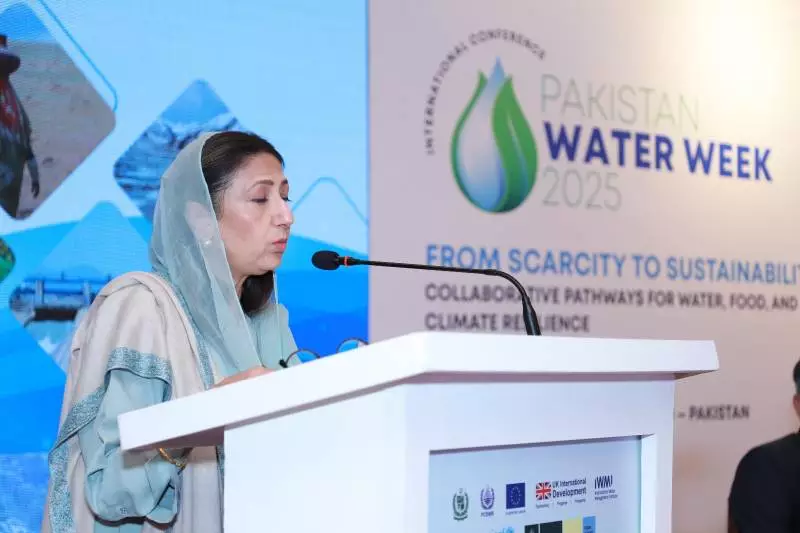
The fifth edition of Pakistan Water Week concluded on Friday in the federal capital, marking a significant step toward addressing the country's critical water and climate challenges. The event culminated with strong appeals for collective action and sustainable partnerships to secure Pakistan's water future.
High-Level Participation and Collaborative Efforts
Organized by the International Water Management Institute (IWMI) Pakistan in partnership with the Pakistan Council of Research in Water Resources (PCRWR), the five-day conference saw participation from numerous international organizations. CGIAR Policy Innovations, CGIAR Climate Action, European Union, FCDO, UNICEF, and ICIMOD all contributed to the event that brought together scientists, policymakers, and civil society representatives.
During the closing ceremony, Minister of State for Climate Change and Environmental Coordination Dr Shezra Mansab Ali Khan Kharal delivered a powerful address highlighting water's central role in Pakistan's development. She emphasized that water security is fundamental to food security, energy stability, and environmental well-being, yet remains one of Pakistan's most threatened resources due to accelerating climate change impacts.

Government Initiatives and Youth Innovation
Dr Shezra detailed the government's ongoing efforts, including the completion of the National Adaptation Plan and National Climate Finance Strategy. These frameworks aim to mobilize investments for climate-smart irrigation, renewable energy, and integrated water management systems.
The minister reaffirmed Pakistan's commitment to nature-based solutions aligned with the Prime Minister's vision of a Climate-Resilient Pakistan. These include watershed restoration, mangrove conservation, and ecosystem-based flood control measures that prioritize environmental sustainability.
A notable highlight of the event was the recognition of young innovators who presented groundbreaking solutions in smart irrigation and digital water monitoring technologies. Dr Shezra emphasized that empowering youth and women is essential for achieving sustainable progress in water management.
International Partnerships and Future Directions
Dr Shezra commended IWMI and PCRWR for their leadership and thanked international development partners including FCDO, GIZ, UNICEF, ACIAR, FAO, World Bank, EU, and ADB for supporting Pakistan's water and climate resilience agenda.
She specifically highlighted the FCDO-funded WRAP Programme implemented by IWMI as a successful model of translating research into actionable solutions. Looking ahead, the minister urged that future Water Weeks should focus on measurable outcomes and tangible progress rather than just discussions.
The government alone cannot overcome this crisis, Dr Shezra stressed, calling for stronger collaboration with international partners like IWMI to build resilience and secure Pakistan's water future.
The concluding session was attended by IWMI Country Representative Dr Muhammad Ashraf, Deputy Director Dr Rachel McDonnell, and International Director Mohsin Hafeez, underscoring the international commitment to Pakistan's water challenges.
The five-day conference featured an impressive 24 panel discussions, including a High-Level Panel ahead of COP30 in Brazil. Topics covered diverse aspects of water management, including the media's role in climate communication, smart solar irrigation, groundwater governance, water accounting, and climate-resilient agriculture practices.