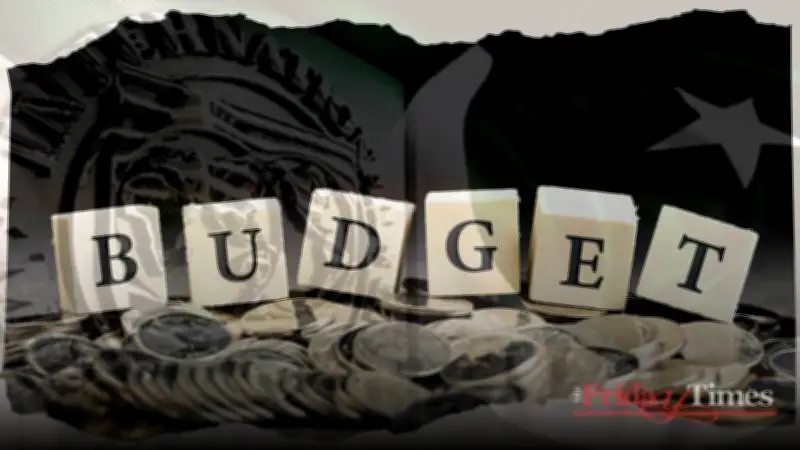
As Pakistan enters another budget season, the national debate once again revolves around taxation, IMF conditionalities, fiscal deficits, debt servicing and revenue targets. Yet beneath these recurring discussions lies a more fundamental question: if higher taxation, repeated stabilisation programmes and successive rounds of fiscal adjustment were sufficient to create prosperity, why does Pakistan remain trapped in recurring economic crises?
The answer is increasingly difficult to avoid. Pakistan's challenge is not fundamentally fiscal. It is a crisis of productivity, institutional confidence and state design. For more than two decades, Pakistan has attempted to compensate for structural weaknesses through fiscal instruments. Taxation was expected to offset weak productivity, devaluation to compensate for poor competitiveness, and borrowing to substitute for growth. Each provided temporary relief, but none addressed the underlying causes of economic stagnation. The result is an economy that collects more revenue than ever before, yet struggles to generate exports, attract investment or sustain industrial expansion.
The Numbers Reveal the Contradiction
Since 2000, FBR collections have risen from approximately Rs362 billion to nearly Rs12 trillion. Yet over the same period, the rupee depreciated from roughly Rs52 to nearly Rs288 against the dollar. In dollar terms, tax collection increased from around $7 billion to approximately $42 billion. Much of this apparent growth, therefore, reflects inflation, currency depreciation and indirect taxation rather than a comparable expansion in productive capacity.

Exports tell an even more revealing story. In 2000, Pakistan exported roughly $9 billion worth of goods. By 2017, exports had reached around $29 billion. Nearly a decade later, they remain stuck near $32 billion. Twenty-five years of reforms, devaluations and taxation drives have produced an export increase of barely $23 billion. During the same period, India's exports exceeded $438 billion, Germany's surpassed $1.7 trillion, China's approached $3.7 trillion, and Bangladesh crossed $55 billion through a focused manufacturing strategy. Pakistan's challenge is not a shortage of potential but a failure to convert potential into productivity.
Pakistan's Budgets Perpetuate Economic Stagnation
These figures also challenge one of the most persistent assumptions in economic policymaking: that currency depreciation automatically creates competitiveness. Over the past decade, the rupee has lost more than seventy per cent of its value, imposing inflation, reducing purchasing power and increasing production costs. Yet the anticipated export boom never materialised. India and Bangladesh, despite far more moderate currency movements, expanded industrial output and exports far more successfully.
Pakistan imports roughly $65 billion annually, while exporting only around $31–32 billion. The explanation is straightforward: devaluation is not a development strategy. It can support competitiveness only when an economy already possesses strong industrial ecosystems, affordable energy, reliable infrastructure, technological capability and policy stability. Without those foundations, a weaker currency merely raises costs while doing little to improve productivity.
The same weakness is visible in foreign direct investment. In 2025, the United States attracted approximately $279 billion in FDI, China around $116 billion, the United Kingdom nearly $89 billion, India approximately $47 billion and the UAE close to $46 billion. Pakistan attracted barely $1.8 billion. This is not merely a financial statistic; it is a measure of confidence. Investors are not deterred by Pakistan's geography or market size. They are deterred by policy inconsistency, regulatory unpredictability and recurring macroeconomic instability.

Tax Regime and Informal Economy
Pakistan's tax regime often compounds the problem. Corporate taxes, super taxes, dividend taxes and multiple regulatory levies create effective burdens approaching forty-five per cent for many formal businesses. At the same time, large segments of the informal economy remain outside the tax net. Various estimates suggest that between one-third and two-fifths of economic activity remains undocumented. Millions of retail and wholesale businesses operate partially or entirely outside formal taxation, leaving salaried professionals, manufacturers and compliant businesses to shoulder a disproportionate share of the burden. This weakens investment incentives while eroding confidence in the fairness of the system.
The distortion extends beyond taxation to capital allocation. Over the past two decades, real estate has become one of the most attractive destinations for investment, drawing resources away from manufacturing, exports and technology. Manufacturing's share of GDP declined from roughly eighteen per cent in 2005 to around eleven per cent in 2024. The economy increasingly shifted towards consumption, services and asset appreciation rather than production and value creation. No country has achieved sustained prosperity through speculation alone. Durable growth emerges from industrial upgrading, technological sophistication and rising productivity. Pakistan's current model too often rewards wealth accumulation without corresponding value creation, contributing to stagnant exports, weak competitiveness and limited job creation.
Remittances and Trade Imbalance
Remittances further illustrate the imbalance. In 2008, Pakistan received approximately $6.5 billion in remittances. By 2025, remittances exceeded $38 billion annually, surpassing merchandise exports. These inflows remain indispensable, but they also reveal a deeper reality. A country of more than 250 million people now earns more foreign exchange from the labour of its citizens abroad than from the goods it produces at home. Pakistan increasingly exports workers while importing machinery, technology and energy. Remittances can support stability, but they cannot permanently substitute for productivity.
Trade figures reinforce the same conclusion. Pakistan imports roughly $65 billion annually while exporting only around $31–32 billion. This persistent gap generates recurring balance-of-payments pressures and repeated dependence on external financing. Meanwhile, heavy reliance on imported energy and industrial inputs continues to constrain competitiveness.
Energy and Governance Failures
Energy policy itself demonstrates how governance failures undermine economic performance. Circular debt has expanded into trillions of rupees due to transmission losses, expensive capacity payments, weak governance and dependence on imported fuels. Industrial electricity tariffs consequently rank among the highest in the region, making expansion increasingly difficult for export-oriented industries.
The federal budget increasingly reflects the exhaustion of this model. Pakistan's FY2025–26 budget stands at approximately Rs17.6 trillion. Yet before meaningful spending on growth and industrial transformation can occur, much of the fiscal space has already disappeared. Around Rs8.2 trillion—nearly forty-seven per cent of the budget—is consumed by debt servicing alone, while defence expenditure exceeds Rs2.5 trillion. Development spending remains constrained. The state is increasingly financing past obligations at the expense of future productivity.
Structural Weaknesses in Fiscal Decentralisation
The National Finance Commission Award exposes another structural weakness. Under the current arrangement, approximately 57.5 per cent of divisible pool revenues are transferred to the provinces, yet provincial revenue mobilisation remains limited. Agricultural income taxation remains politically constrained, property taxation is underdeveloped, and local tax systems are weak. The federation therefore bears responsibility for debt servicing, defence and macroeconomic stabilisation while operating with increasingly restricted fiscal space.
The deeper issue is that fiscal decentralisation has not been matched by fiscal accountability. The NFC Award was designed to decentralise spending, not dependence. In successful federations, subnational governments compete to attract investment, expand economic activity and strengthen local tax capacity. In Pakistan, provinces are often judged by how effectively they spend transfers rather than by how successfully they generate growth and revenue.
Neglect of Human Capital
The ultimate casualty of these distortions is human capital. Debt servicing and defence absorb the majority of public resources, while education and health remain underfunded relative to national needs. No country has achieved sustained prosperity while underinvesting in its people. China's rise was built on industrialisation, South Korea's on education and technology, Singapore's on institutional efficiency and Bangladesh's on export-oriented manufacturing. Pakistan, by contrast, continues to oscillate between stabilisation programmes without establishing a long-term productivity strategy.
The Path Forward: Institutional Reform and Confidence
At its core, therefore, Pakistan's challenge is institutional. The country requires a state that facilitates enterprise rather than obstructing it, rewards productivity rather than speculation and prioritises competitiveness over short-term revenue extraction. Tax reform remains necessary, but taxation alone cannot substitute for growth. Regulatory simplification, stronger contract enforcement, governance reform, currency stability, industrial competitiveness and human capital investment must become central pillars of economic policy.
Most importantly, confidence itself must become a policy objective. Investors commit capital when institutions are credible. Entrepreneurs expand when rules remain predictable. Citizens save and invest when they believe opportunity will be rewarded. Pakistan is not a poor country. It possesses strategic geography, entrepreneurial talent, a large youth population and one of the world's most significant diaspora communities. What it lacks is not potential but a state architecture capable of converting that potential into productivity.
The question before Pakistan is not whether it can survive another IMF programme. It almost certainly can. The real question is whether it can build an economy capable of no longer needing one. Until that question is confronted honestly, taxation will continue to substitute for productivity, borrowing will continue to substitute for reform, and stabilisation will continue to substitute for transformation. A nation cannot tax its way to prosperity. It must produce its way there.