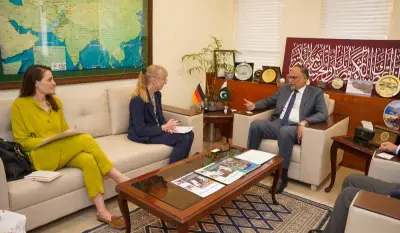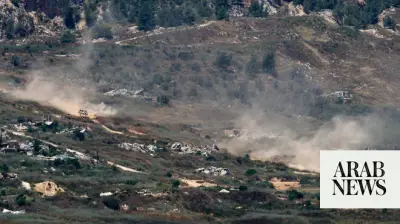
The US-Israel Combine's war on Iran has triggered massive paradigm shifts in the Middle East-Greater Middle East Region (ME-GMER) Complex, redefining geopolitical, geostrategic, and geoeconomic imperatives. A radically transformed Middle East may now instigate a new world order. International efforts have stopped hostilities, with peace talks mediated by Pakistan and later Qatar leading to the Islamabad Memorandum of Understanding and a subsequent Lucerne Summit aimed at formulating a framework for regional peace and coexistence.
US-Israel Combine Emerges as Biggest Loser
The biggest loser of this military misadventure is the US-Israel Combine itself. The United States has lost its stature, clout, credibility, and once-dominating influence in the region, leaving its sphere of influence severely truncated. All its allies in Europe, NATO, and the Indo-Pacific region demurred at joining what is widely considered an unjust war. Israel was similarly deserted by European allies, remaining totally dependent on US support. Iran, on the other hand, emerged strong, ascendant, steadfast, and assertive throughout the war and negotiations.
Gulf Arab States Face Strategic Dilemma
Gulf Arab states were reluctant allies compelled into an unwanted war. The superpower they relied upon preferred Israel's defense over theirs. These caustic strategic realities force them to seek other solutions. They have three options: unite for indigenous solutions, seek regional or extra-regional intercession to restore strategic balance, or continue under the imposed status quo. According to a retired brigadier of the Pakistan Army, Imran Malik, writing in The Nation, the war exposed genuine limits to US-Israel power, as they could not bludgeon Iran into submission.

Geostrategic Shifts: Iran's Rise and US Decline
At the geostrategic level, the world's perception of Iran has transformed. Iran now appears as a united, resilient, principled, and determined country. The US's biased pro-Israel posture has cost it the region's trust as a net stabilizer and security provider. Israel's military capabilities have been exposed as limited to immediate border areas—Gaza, West Bank, Syria, south Lebanon—with anything beyond requiring US and European support. Iran is emerging as a formidable center of power with an evolving sphere of influence and unwavering political will. The Gulf Arab states stand nonplussed, facing a decision that will define future geostrategic contours.
Geoeconomic Leverage: Control of Hormuz Straits
At the geoeconomic level, Iran fought a cost-effective asymmetric war, with longer duration crippling US-Israel resources. President Trump cut losses for US mid-term elections. The most critical ramification is Iran's linkage between control of the Hormuz Straits and its interests. Twenty percent of the world's energy resources pass through the straits, and Iran has converted this into leverage over geopolitics, geostrategy, and geoeconomics. This leverage even makes Iran's nuclear program pale in comparison. Iran will now determine geoeconomic imperatives of the region. Sanctions on international economic activities and oil and gas trade have been lifted initially for 60 days. The Gulf Arab states will be stuck with a $300 billion bill for reconstruction of Iran's infrastructure, despite not causing the destruction—a cost of weak leadership.
Implications for New World Order
Regional and extra-regional powers must now move to redefine the imperatives of the emerging ME-GMER Complex and the new world order. The article concludes that these developments will have lasting impacts on global power dynamics.