Lahore High Court Demands Rules for Local Government Elections Amid Legal Challenges
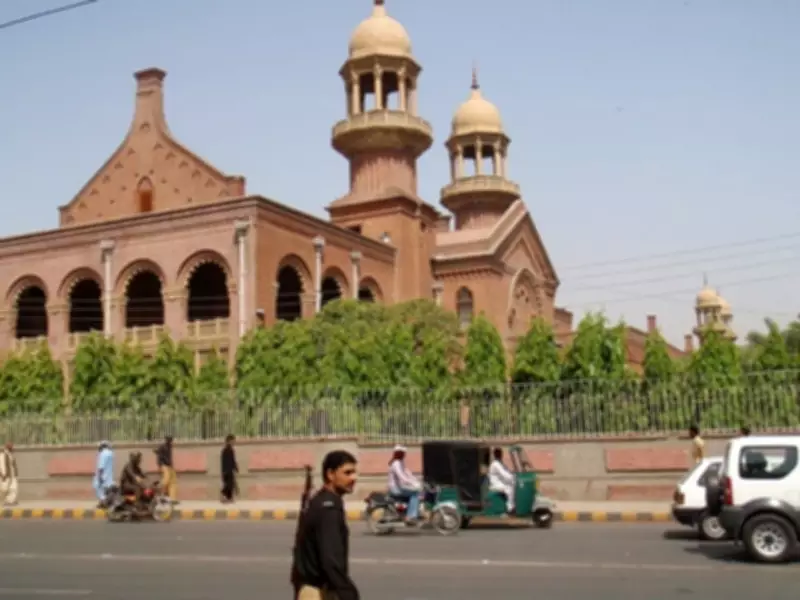
The Lahore High Court (LHC) on Wednesday took a significant step by seeking the official rules framed for the upcoming local government elections. This move came during a hearing on multiple petitions that challenge the proposed non-party basis of these polls, raising critical questions about democratic norms and constitutional adherence.
Petitions Filed by PTI and Jamaat-e-Islami Highlight Constitutional Concerns
Justice Sultan Tanveer Ahmad presided over the hearing, which included petitions filed by prominent political entities such as the Pakistan Tehreek-e-Insaf (PTI) and Jamaat-e-Islami, along with other petitioners. These groups have named the Punjab government and the Election Commission of Pakistan (ECP) as respondents in their legal actions.
The petitioners presented a strong argument, asserting that conducting local government elections on a non-party basis fundamentally contradicts constitutional principles and established democratic practices. They emphasized that this approach undermines the essence of representative governance and could lead to a dilution of political accountability at the grassroots level.

Allegations of Curtailed Autonomy and Budgetary Violations
In their submissions, the petitioners further contended that the financial and administrative autonomy of local bodies has been significantly curtailed under the current framework. They argued that vesting budgetary powers in the provincial administration, rather than with the locally elected representatives, amounts to a direct violation of the Constitution. This, they claimed, strips local governments of their ability to function independently and serve their communities effectively.
As a result, the court was formally requested to issue directives to the relevant authorities, urging them to conduct the upcoming local government elections on a party basis. This would ensure greater transparency, political engagement, and alignment with democratic standards, according to the petitioners.
Government's Response and Court's Adjournment
During the proceedings, the government's legal counsel informed the court that the election rules had been finalized. They assured that a formal notification regarding these rules would be issued within the next few days, providing clarity on the procedural aspects of the polls.
In response, the court granted the law officer a period of 10 days to submit the finalized rules for judicial review. The hearing was subsequently adjourned for the same duration, setting the stage for further legal scrutiny and potential implications on the electoral process.
This development underscores the ongoing tensions between political parties and governmental bodies over the structure of local governance, with the Lahore High Court poised to play a pivotal role in shaping the future of democratic practices in Punjab.