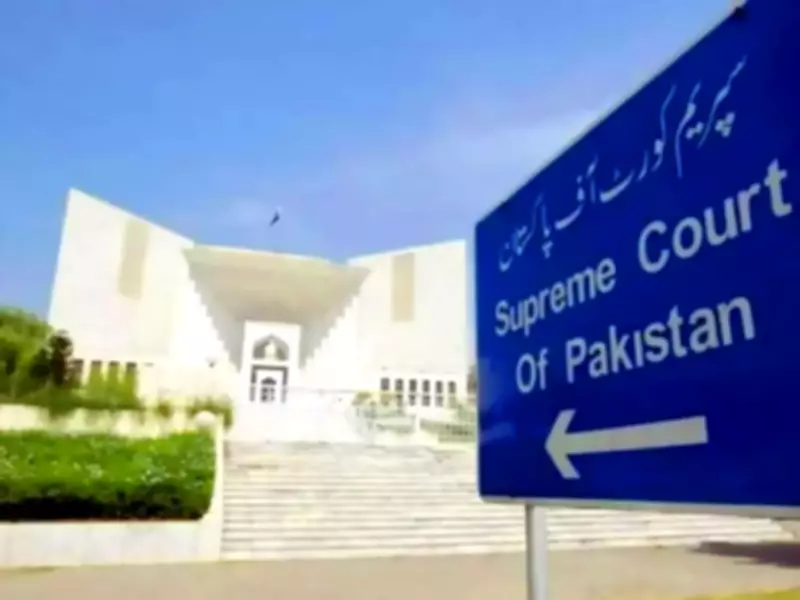
Supreme Court Clears Former Minister in OGDCL Recruitment Case
In a significant legal development, the Supreme Court of Pakistan has acquitted a former minister who was previously convicted in a high-profile recruitment case involving the Oil and Gas Development Company Limited (OGDCL). This ruling overturns a lower court's decision, marking a pivotal moment in the ongoing judicial scrutiny of corruption allegations within state-owned enterprises.
Background of the Case
The case centered on allegations of irregularities in the recruitment process at OGDCL, where the former minister was accused of abusing authority to influence hiring decisions. The initial conviction had drawn widespread attention, as it was seen as part of broader efforts to combat corruption in Pakistan's public sector. However, the Supreme Court's recent judgment has now cleared the former minister of all charges, citing insufficient evidence and procedural flaws in the earlier trial.
Judicial Reasoning and Implications
During the proceedings, the Supreme Court emphasized the importance of due process and the need for concrete proof in corruption cases. The bench noted that while combating corruption is crucial, it must be done within the bounds of law to ensure fairness and justice. This acquittal could set a precedent for similar cases, potentially influencing how recruitment-related allegations are handled in the future. It also underscores the judiciary's role in balancing accountability with the protection of individual rights.

Reactions and Broader Context
The decision has sparked mixed reactions across Pakistan. Supporters of the former minister have hailed it as a victory for justice, arguing that it corrects a miscarriage of law. On the other hand, critics express concern that it might weaken anti-corruption efforts, especially in cases involving influential figures. This case is part of a larger narrative of legal battles over governance and transparency in Pakistan, reflecting ongoing challenges in the country's fight against corruption.
Key Points from the Ruling:- The Supreme Court found the evidence presented in the lower court to be inadequate for a conviction.
- Procedural errors during the initial trial were highlighted as grounds for the acquittal.
- The ruling reaffirms the principle that accusations must be substantiated with solid proof.
This acquittal by the Supreme Court not only impacts the individuals involved but also contributes to the evolving legal landscape regarding corruption cases in Pakistan. It serves as a reminder of the complexities in prosecuting such matters and the critical role of the judiciary in upholding the rule of law.