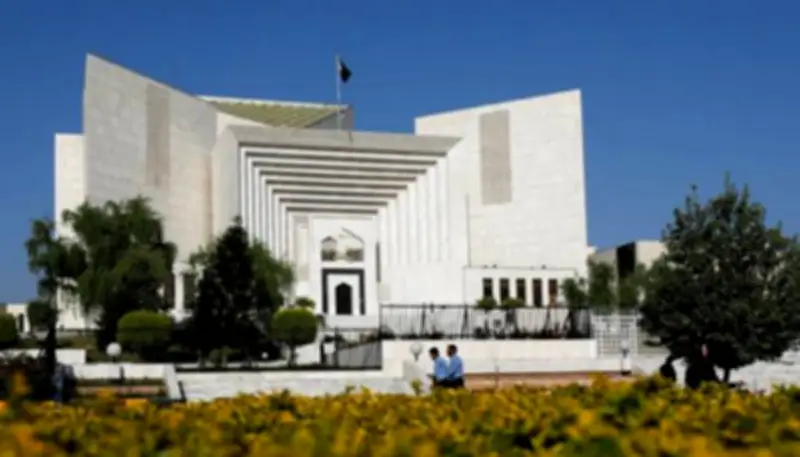
The Supreme Court of Pakistan has declared that heads of educational institutions are legally obligated to provide a harassment-free working environment for female teachers and must take immediate and effective action on complaints of workplace harassment. The Court warned that failure to do so may render them accountable for administrative negligence.
Case Background and Judgment
A two-member bench, comprising Justice Muhammad Ali Mazhar and Justice Musarrat Hilali, issued the detailed judgment. It allowed appeals filed by the Punjab government and Shazia Iqbal, setting aside the Punjab Service Tribunal’s order that had reduced the penalty of forfeiture of five years’ past service to one year. The Supreme Court restored the original departmental punishment of forfeiture of five years’ past service.
The case involved Shazia Iqbal, Headmistress of the Government Special Education Centre in Faisalabad. A departmental inquiry established that she failed to take effective action despite receiving complaints that a speech therapist posted at the institution had been harassing female teachers. She was found to have neglected her supervisory and administrative responsibilities. Additionally, she unlawfully allowed the employee to reside on the institution’s premises, causing financial loss to the public exchequer.

Court Observations
The Supreme Court held that the departmental inquiry was conducted in accordance with the law. Female teachers testified before the inquiry, the accused was given full opportunity to cross-examine witnesses, and their testimony remained unrebutted. The Court observed that extending undue leniency in such serious misconduct cases would be inconsistent with the interests of justice.
The judgment stated that educational institutions are not merely places of learning but are also obligated to provide a safe and dignified environment for female employees and all staff members. It emphasized that when the head of an institution remains silent in the face of harassment complaints, it undermines victims’ confidence and creates an unsafe educational environment.
Policy Recommendations
The Court further stressed that every educational institution should have a clear anti-harassment policy, an effective complaint mechanism, impartial inquiry committees, and safeguards to protect complainants against retaliation. Referring to the Protection against Harassment of Women at the Workplace Act, 2010, the International Labour Organization’s Convention No. 190, and international judicial precedents, the Supreme Court held that all institutions have a responsibility to adopt and enforce a zero-tolerance policy against workplace harassment.