In the scorching summer of 2026, Ayodhya shines under the banner of its new temple, a symbol of its builders' belief in civilisational revival. But behind the marbled halls and the devotional chants, there is the unremitting odour of betrayal. The Babri Masjid, reduced to rubble on that sad December day in 1992, was not just another building that fell to mob frenzy. It was a threshold that marked a turning point in India's social fabric, leading to increased communal polarisation and weakening the foundations of secularism. India did not enter into Ram Rajya on crossing it.
The Hindutva Chaos Doctrine Takes Hold
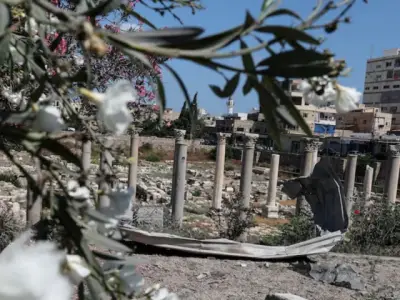
By mid-2026, the republic was fractured, disillusioned, and drifting headlong into the Hindutva Chaos Doctrine, which is a toxic concoction of triumphalist majoritarianism, institutional capture, selective history, and crony piety. The Doctrine wasn't just formed out of the blue. It was planted in the polarised soil of the late 1980s, when the Ram Janmabhoomi movement turned a neighbourhood issue into a battering ram for the nation. Thousands of kar sevaks took to the streets on the 6th of December 1992 to demolish the 16th-century mosque in daylight hours with hammers, waving in time with the slogans of promises of dignity and death. In the ensuing riots, which were almost entirely Muslim, in cities such as Mumbai, almost 2,000 lives were lost, and police were accused of turning a blind eye or worse. An entire generation was scarred, families were burned, and businesses were destroyed. Commissions recorded the orchestration. Decades later, courts found the key accused not guilty.
Judicial Erosion and the 2019 Verdict
The 2019 Supreme Court decision, which awarded the temple site to Hindus and an alternate land for a mosque, was perceived by many as a verdict that prioritised political expediency over genuine justice, further eroding public trust in judicial impartiality. The broken Babri did not mend Hindu wounds; it created fresh wounds for the republic – and the 2026 scam is an example of how unchecked power is the source of the very abuses it was meant to stop.

Ram Mandir Donation Scam: A ₹200 Crore Fraud
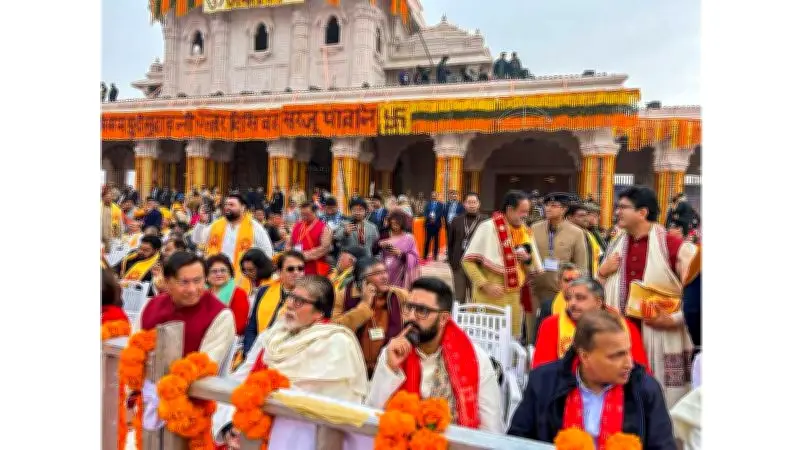
By 2026, the Hindutva project ensured the ruthless consolidation of its power. Its glittering centrepiece was the Ram Mandir: inaugurated with great pomp and spectacle, it attracted pilgrims and political pilgrims. But the "reclamation" brought no harmony. The latest episode in the Ram Mandir donation scam, which cost multi-crores of rupees, is a perfect illustration of the rot. The contributions made by devotees, their efforts to earn those notes and gold trinkets, have been systematically looted and put in the daan boxes with true devotion. SIT investigations, evidence gathered using hidden cameras, and the arrest of eight employees of the counting room reveal a dirty operation in which cash was hidden under cow dung heaps, luxury goods were bought with suspicious money, and losses spiralled to ₹200 crore, with recovery in lakhs. Trustees hold their seats "on moral grounds." Weak controls have been an audit issue for a while. An insider contacts a whistleblower and tells him about falsified records. It's by no means unique. It's the Doctrine in action: sacred institutions become patronage networks, faith becomes a cash cow, and accountability becomes a casualty of the pat control of the narrative.

Everyday Life in 2026: Normalised Otherness
Gritty realities on the ground tell a darker tale. This is a novel about everyday life in India in 2026, where otherness, particularly Muslim otherness, has become the norm. Once occasional, lynchings and bulldozer justice have become a pattern, and are now called "anti-encroachment" or "cow protection." Selective glories are being highlighted in educational curricula whilst syncretic traditions are being airbrushed. Waqf properties are under constant scrutiny and are frequently targeted by takeover bids. Any journalist, activist, or even moderate Hindu who criticises the excesses is labelled anti-national or urban Naxal. For some, the economy is buzzing, but there are structural inequalities: Muslim youth unemployment, ghettoisation, a trust deficit, which stifles integration. The spectre of the Babri demolition isn't just a spectral curse but a precarity of living. Those who have been affected by the riots of 1992 have yet to be fully rehabilitated. The provision of an alternate mosque plot remains bogged down in delays and disputes and is a symbolic afterthought in the Doctrine's march.
Devotion Exploited for Political Dominance
Nuance is essential. The Hindu devotion to Ram is deep and old, a historical grievance that helped many civilisations recover from conquest; it was the memory of the invaders desecrating their temples that gave rise to this devotion. The temple is a place of solace for millions of ordinary Hindus, who feel it is a vindication after centuries of feeling belittled. But not all the saffron voters support violence; many seek cultural pride in the midst of globalisation's dislocations. This is a genuine sentiment that the Doctrine exploits for electoral dominance and institutional overhaul. By 2026, however, India would have fully surrendered and become a performative Hindu country. Syncretism, the Ganga-Jamuna tehzeeb of Awadh and its surroundings, is reimagined as weakness. Dissent becomes sedition. The outcome is chaos: communal violence flares, social harmony is strained, and institutions bend to the will of the majority. The judiciary, a bulwark, issues verdicts said to be "final" but criticised for tilting the scales. States are remoulded by federal cultural agendas, which undermine federalism.
The Temple Scam Strips Moral Veneer
The hoax on the temple is especially damning because it takes away the moral veneer of the Doctrine. Hindutva propaganda for decades had been against the "pseudo-secular" corruption, Congress-era mismanagement of temples, and appeasement of minorities. This was to be a purely governmental, loot-free shrine managed by the trust, a shrine of moral government. Rather, it reflects all the scandals that have gone before it: murky trusts, inside-the-company theft, and loose auditing by whistleblowers and raids. This is not the only reason the whole thing smells; there have been claims of inflated land deals in the past, too. People who work at the company—they may be on a subcontract or paid less—are perhaps tempted in a system with weak controls. Leaders say they are shocked and will do what is necessary before meetings, but the blow to devotees' faith is severe. Good-faith donors among ordinary Hindus are outraged by their own side. There is auto self-own in this movement, which has demolished a mosque, in the name of dharma, yet cannot secure its own hundi.
The True Curse of Babri: Unchecked Majoritarianism
It was not supernatural revenge on demolitionists that was the true curse of Babri. It was a warning that went far beyond its time about unchecked majoritarianism. This movement set a precedent for the acceptance of "extra-constitutional assertion" as a method of destruction, especially against the mosque. 2026 brings that normalisation to systemic chaos. Economic surveys indicate differences in growth and the depletion of social capital. According to international observers, there has been an increase in indicators of intolerance. A quiet despair stalks liberal places, withering secular voices and self-censorship, and migration of talent. Muslims live their day-to-day lives, trying to assert themselves without incurring the Saffron Wrath. The temple is a success as a show, but the environment, the reality of Ayodhya, reveals uneven development, displacement, and commercialisation.
India as a Cautionary Tale
History's long arc is what the members of the doctrine miss. Erased empires tend not to last in peace. Historically, it was India's muddiness that was its strength, rather than purity tests. The broken Babri did not mend Hindu wounds; it created fresh wounds for the republic. The 2026 scam is an example of how unchecked power is the source of the very abuses it was meant to stop. If the ideal is True Ram Rajya, then how can there be justice, welfare and harmony in the midst of division and graft? While surrendering to Hindutva chaos, India has become a cautionary tale of a democratic country with a hollowed-out democracy, where sacred places stand for conquest rather than piety, and an eroded rupee compromises public trust. The Babri rubble has been removed, but the moral rubble remains. More than temples and inquiries are needed for rebuilding. It requires facing the violence of 1992 truthfully, maintaining financial integrity at the new shrine, safeguarding the minority as an equal partner in this civilisation, and rediscovering the spirit of inclusiveness that once characterised this civilisation. Otherwise, 2026 will not be a triumph, but a tragedy in saffron clothes, a curse that we wrought upon ourselves.