The turnstone, a small wading bird commonly found along the UK coastline, spends its time scrabbling under pebbles for insects and crustaceans. Coincidentally, "Turnstone" is also the name of a secret UK government planning exercise that envisages worst-case knock-on effects from the closure of the Strait of Hormuz, potentially leaving British consumers scrabbling for food as supplies dwindle.
Global Interconnectivity and Vulnerability
The UK lies about 12,000 km from the Strait of Hormuz via sea routes through the Red Sea, Suez Canal, and Mediterranean. The brewing crisis from the Iran war highlights the interconnectivity of the modern world and the vulnerability of global "just in time" supply chains. Details of Exercise Turnstone, run by the government's Cobra emergency committee, were leaked last week. Prime Minister Sir Keir Starmer will chair a meeting of the committee in person on Tuesday.
With local elections approaching, ministerial concern escalated after the International Monetary Fund warned that the UK, among advanced economies, will be hit hardest by the energy fallout from the Iran war. UK Chancellor Rachel Reeves stated, "The war in Iran is not our war, but it will come at a cost to the UK."

Contingency Plans for a Perfect Storm
Ministers have drawn up contingency plans for a "perfect storm" scenario: the Strait of Hormuz closed until June or beyond, no US-Iran peace deal, and the failure of a vital CO2 production plant. A shortage of CO2 is a surprising consequence. CO2 is used for stunning livestock, carbonating drinks, boosting greenhouse vegetable growth, extending food shelf life, and keeping food fresh during transport.
To avert a shortage, the UK government reopened a bioethanol plant in northern England, mothballed in August 2025 due to US imports. Carbon dioxide, a by-product of bioethanol production, was previously lost when the plant closed, making the UK reliant on imports—now disrupted by the Hormuz closure.
Fuel Prices and Inflation Rise
Fuel prices have surged, with petrol jumping 8.7% in a month by mid-March, and air fares rising. Inflation crept from 3% in February to 3.3% in March, with predictions of 4% by year-end. Mortgage rates have also climbed; the average two-year fixed rate rose from 4.83% before the war to 5.87%, and hundreds of mortgage deals have been withdrawn.
Food Supply and Fertilizer Shortages
Farmers warn of rising prices for crops and milk, with some goods becoming scarce by summer. Fertilizer shortages, linked to gas prices, exacerbate the situation. A growing shortage of jet fuel threatens British holidaymakers, with airlines cancelling flights or raising prices.
Chief Secretary Darren Jones urged calm: "People should carry on filling up and using their cars as normal." However, the message may lose traction as fuel prices keep rising.
Shipping and Christmas Stock
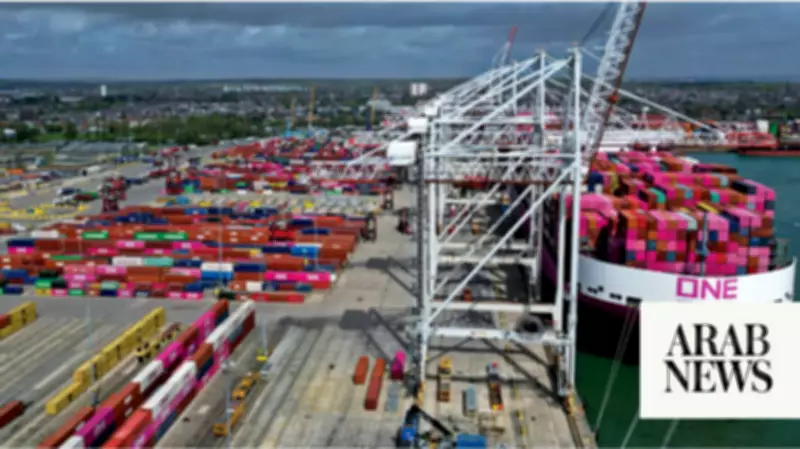
Global logistics company Advanced Supply Chain predicts retail supply chains may take three to five months to recover, meaning higher prices this Christmas even if peace talks clear the strait in April. Stuart Greenfield, UK and European sales director, noted that disruptions like the Ukraine war and Houthi attacks show a two-phase adjustment: initial stabilization and prolonged rebalancing. Reopening the strait will create a trickle-down effect, clearing stranded vessels and tackling backlogs.
Just-in-Time Supply Chains
Professor Jose Arturo Garza-Reyes of the University of Derby explained that modern "just in time" systems are highly efficient but vulnerable. Delays from disruptions can quickly stop production due to minimal buffer stock. Imported fresh fruit and vegetables, like tomatoes from Morocco, are most vulnerable. A tomato's journey from harvest to shelf takes five to seven days, but any hold-up can be disastrous.
Garza-Reyes warned that prolonged standoffs could lead to broader shortages and rationing pressures. The Iran war is forcing businesses and governments to rethink risk and disruption tolerance.