Prime Minister Shehbaz Sharif on Monday reaffirmed the government's commitment to export-based economic development, stating that the economy has stabilized through continuous hard work and further efforts are underway to accelerate growth.
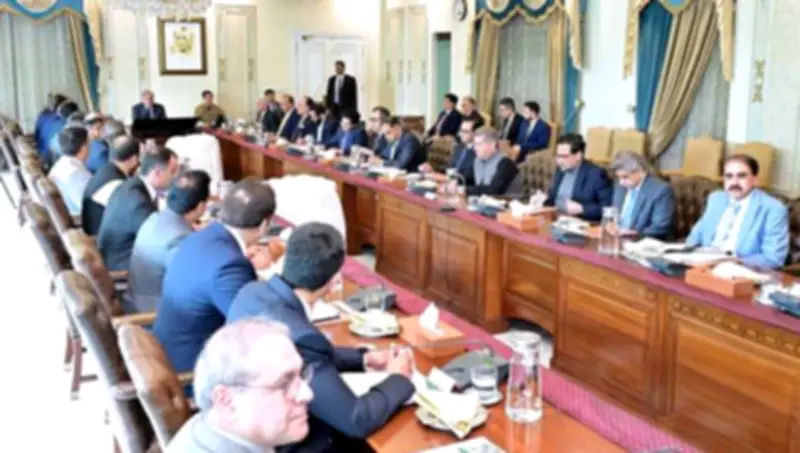
During a consultative meeting with senior leaders from various Chambers of Commerce and Industry, the prime minister said additional measures will be introduced in the upcoming budget to boost industrial development and production. “Our mission is export-based economic development, and we will ensure its completion through collective efforts,” he added.
The prime minister directed the Federal Board of Revenue (FBR) to resolve all pending tax refund cases by June 15. The meeting was attended by presidents and senior leadership of the Federation of Pakistan Chambers of Commerce and Industry (FPCCI), as well as chambers from Karachi, Lahore, Rawalpindi, Islamabad, Khyber Pakhtunkhwa, Quetta, Gujrat, Gujranwala, and Sialkot.

Federal Ministers Rana Tanvir Hussain, Muhammad Aurangzeb, Attaullah Tarar, Ali Pervez Malik, and Owais Ahmed Khan Leghari, along with Minister of State for Finance Bilal Azhar Kiani, Governor State Bank Jameel Ahmad, Chairman FBR, and senior government officials, also attended the meeting, according to a press release from the PM Office Media Wing.
The delegation presented proposals regarding the upcoming budget and overall economic development. Despite a recent increase in the policy rate, the prime minister noted that the interest rate for the export refinance scheme would remain capped at 4.5% until June 2027, and appreciated banks' decisions to facilitate exporters.
He also instructed the relocation of the central office of Pakistan Revenue Automation Limited (PRAL) to Karachi for the convenience of the business community. In response to requests from overseas Pakistanis and the business community, the prime minister directed the establishment of a passport office in Gujrat. He highlighted that reforms and facilities for the development of the SME sector are a vital part of the economic agenda.
The prime minister encouraged local production of electric vehicles through joint ventures by Pakistani investors. Delegation members praised the efforts of the prime minister, Deputy Prime Minister and Foreign Minister Mohammad Ishaq Dar, and Chief of Army Staff General Syed Asim Munir in promoting peace amid tensions in the Gulf region.
The business community across the country expressed support for the government's initiatives aimed at economic development and job creation. The delegation welcomed the launch of a loan scheme under the ‘Wazir-e-Azam Apna Ghar Programme’ for the underprivileged and middle class on easy terms. They also thanked the prime minister for reforms in the Export Development Fund Board, successful privatization of PIA, digitization of the FBR, and e-invoicing initiatives.
Members of the delegation committed to assisting the government in bringing the grey economy into the formal economy through digitization and other reforms.
Directives on China MoUs
Separately, Prime Minister Shehbaz Sharif directed that the Memorandums of Understanding (MoUs) signed during the B2B Conference in Hangzhou be immediately transformed into formal agreements and joint ventures. He issued these directives while chairing a review meeting in Islamabad on Monday regarding the agreements and MoUs signed during his recent visit to China.
The prime minister said promoting industrial, agricultural, and technical cooperation with China will enhance Pakistan’s exports and create new employment opportunities. He described the unprecedented increase in business engagements between the private sectors of Pakistan and China as the beginning of a new era of economic partnership between the two countries.
He directed the operationalization of cooperation agreed upon between the Chinese Academy of Agricultural Sciences and the Pakistan Agricultural Research Council. He said Pakistan’s agriculture sector can be revolutionized through Pak-China joint ventures, agricultural research, and modern technology.

One hundred and twenty-three Pakistani and 436 Chinese companies participated in the Pak-China B2B Conference held on June 24 in Hangzhou, where 207 MoUs worth approximately $7.54 billion were signed. The meeting was briefed that the MoUs were signed in the fields of battery energy storage systems, artificial intelligence (AI), mobile phones, and handheld devices. MoUs were also signed for extensive cooperation in fertilizers, seeds, advanced irrigation equipment, fisheries, and food processing.