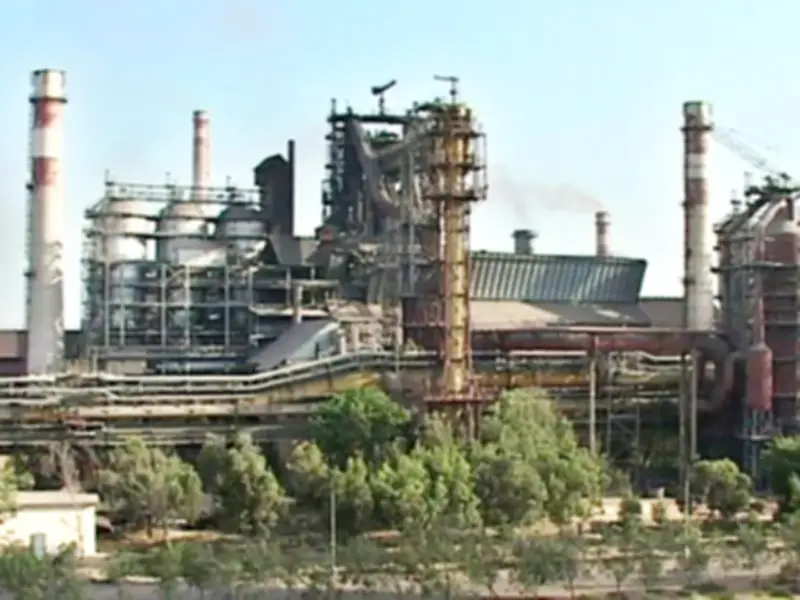
The Senate Standing Committee on Industries and Production, chaired by Senator Khalida Ateeq, convened on Friday to address rising theft incidents at Pakistan Steel Mills (PSM), the nation's largest industrial unit that has remained non-functional for over a decade. The committee also deliberated on the government's industrial and electric vehicle (EV) policies.
Rising Theft at Pakistan Steel Mills
The Chief Executive Officer (CEO) of Pakistan Steel Mills briefed the committee, revealing that theft incidents at the mill were increasing. He informed members that three inquiries into theft cases were still under way, and the management had requested the Director General of the Federal Investigation Agency (FIA) to cooperate in ensuring the early completion of these inquiries.
Senator Anusha Rehman criticized the slow pace of investigations, noting that officials received salaries worth hundreds of thousands of rupees but claimed a lack of manpower when asked to perform their duties. 'When details of their salaries are presented, it appears as if everyone is working, yet they cannot complete even one inquiry,' she remarked. She added that the committee might have to form its own sub-committee to examine the matter.

Privatization and Accountability Concerns
Senator Saleem Mandviwalla directed that members of the Privatisation Commission be invited to the committee's next meeting. He observed that discussions on the privatization of PSM had been ongoing for years without any visible progress. Referring to the theft, he questioned how truckloads of material could be taken away without accountability. 'It is unacceptable that such large quantities are stolen while no one is held responsible,' he said.
Electric Vehicle Policy and Infrastructure Gaps
The committee also discussed the government's industrial and electric vehicle policies. The Secretary for Industries and Production informed the committee that tariff, tax, and duty structures were part of the industrial policy. However, Senator Anusha Rehman observed that the Federal Board of Revenue (FBR) often overruled such policy measures through the Finance Act.
On electric vehicles, the secretary said the government's target was to manufacture 2.2 million EVs. He reported that 12,800 new energy vehicles had been produced during the current year. Officials further informed the committee that the government was providing subsidies directly into the accounts of 80,000 motorcycle owners, while 5,700 electric bikes had already been distributed.
Charging Infrastructure and Data Gaps
Senator Mandviwalla highlighted the inadequate charging infrastructure for EVs, recounting an individual's experience of traveling to Lahore in an electric vehicle but struggling to locate a charging station. He asked officials to provide complete data on the number of companies manufacturing EVs in Pakistan. Senator Rehman also questioned officials over the absence of charging facilities, remarking that they were unaware even of the locations of charging points in Lahore. The Secretary for Industries and Production admitted that he did not know the exact number or locations of charging stations in Lahore.
Senator Danesh Kumar asked how many electric vehicles had entered the country so far. Industries ministry officials replied that around 9,000 EVs had been introduced in Pakistan. Senator Rehman further asked whether the government had held discussions with petroleum companies on establishing charging stations at fuel pumps, observing that installing a charging port should not be a complicated task.