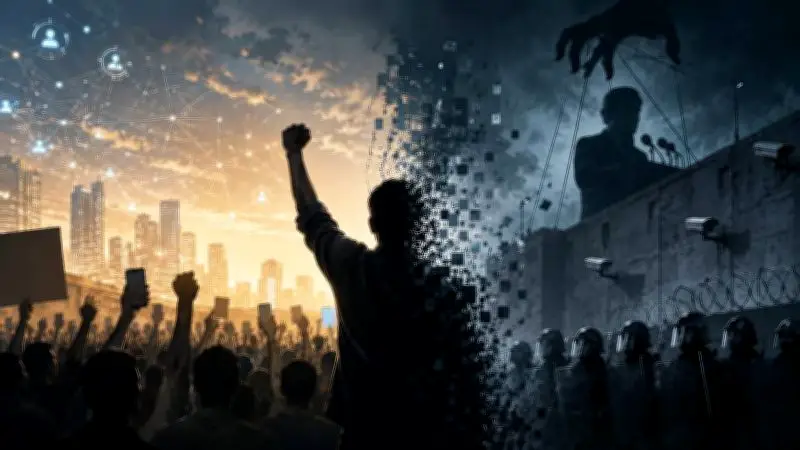
Democracies no longer collapse beneath tanks or decrees; they recede through quieter mechanisms: bureaucratic redesign, institutional alignment, and digital choreography. Pakistan’s latest transition reflects this twenty-first-century pattern: not a sudden overthrow, but a gradual re-calibration of how authority is organized and sustained. The instruments of control have evolved, blending technology with tradition, and persuasion with procedural order—a system that governs less through visible coercion than through managed consensus.
From Visible Coups to Invisible Control
The old coups were visible: constitutions suspended, generals on television, and streets under lockdown. The new order functions in daylight, under the illusion of normalcy. Institutions remain, but their autonomy is rewritten. Information is curated, and dissent is not tolerated but targeted. Those who speak out face disappearance—first from television, then from the ballot, and finally from public memory. It spills no blood, yet drains the nation’s political spirit.
The architecture of power now excels at performing legitimacy. Speeches of remorse, gestures of reform, and the language of moderation all contribute to a carefully managed image of renewal. Yet contrition, like control, can be choreographed. What appears as institutional evolution often amounts to re-calibration—the same structures repackaged for a digital age.

Gen Z Revolutions and Pakistan's Missed Moment
Across the world, the story has played out differently. In the past few years, we have heard of the so-called Gen Z revolutions, from the campuses of Dhaka to the streets of Kathmandu and beyond. Whether they qualify as revolutions is for historians to decide, but their shockwaves have already altered political discourse. Pakistan once seemed on the brink of such an awakening; hashtags trended, voices rose, and for a brief moment it felt as if youth had found its vocabulary of defiance. But that moment was swiftly crushed. Movements were neutralized, leaders erased, and the political energy that once hinted at change was absorbed or subdued.
The comparison between Pakistan and those “revolutionized” societies is revealing. The hybrid orders of the digital age have learned to preempt uprisings not through ideology, but through fatigue—by flooding citizens with narratives that make rebellion seem both impossible and unnecessary. If the Gen Z uprisings were born from hyper-connectivity, Pakistan’s managed calm has been sustained by hyper-control.
International Silence and the Hybrid Order
Abroad, the model finds comfort in recognition. China sees in it familiar discipline; Russia identifies its strategic kinship. Even the United States, publicly committed to democratic values, has offered little more than polite disapproval. When this order tightened its grip, some in Pakistan believed a change in Washington might alter the balance—that Donald Trump’s return to power could somehow restore human rights or democratic space. But that assumption ignored a consistent truth: America’s concern for human rights rarely extends beyond its interests. So long as Pakistan remains useful, its internal repression will be treated as a domestic matter, not a diplomatic one.
As Anne Applebaum observes in Autocracy, Inc., today’s autocrats thrive not in isolation but in imitation. Each learns from the other how to simulate stability, how to weaponize fatigue, and how to maintain applause abroad while silence deepens at home. Pakistan’s hybrid system fits neatly into that pattern—a regime that borrows the language of democracy to deny its substance. Its own defense minister has publicly described it as a “hybrid order,” confirming what citizens already sense: that the civilian facade conceals where real authority still lies.
The Hollow Promise of Elections
To many outside observers, Pakistan still appears to have the scaffolding of democracy: parties, parliaments, and the promise of elections. But from within, that promise feels increasingly hollow. I no longer believe the democratic cycle will renew itself through the ballot box, at least not under the present order. This is a system in which elections have lost their place in the design—where continuity, not competition, defines political stability.

Yet the architecture remains fragile. It relies on obedience, not conviction; on the pretense of order rather than genuine governance. Stability achieved through suppression is inherently brittle, appearing firm until the pressure shifts. For now, Pakistan’s managed calm endures, though history suggests such balance rarely lasts forever.
Uneasy Coexistence of Rebellion and Repression
What defines this era may not be rebellion or repression alone, but their uneasy coexistence. Systems of control, however intricate, must still navigate the unpredictability of human will. Where Pakistan’s path leads—toward renewal or further consolidation—remains an open question. For now, it offers a glimpse into how power adapts in the twenty-first century: sustained less through confrontation than through careful design.