The Economic Coordination Committee's recent decision to extend special honoraria to additional ministries involved in the federal budget process may appear to be a routine administrative matter. In reality, it offers a revealing glimpse into a larger problem that has long haunted Pakistan's governance system: austerity for the many and privilege for the few.
Austerity for the Many, Privilege for the Few
The decision comes at a time when the government continues to invoke fiscal constraints and International Monetary Fund commitments to justify difficult economic measures. Development expenditures have been curtailed, subsidies reduced, taxes increased, and public sector salaries and pensions kept within what officials describe as affordable limits. Citizens are repeatedly told that the country's economic circumstances demand restraint and sacrifice.
The One-Way Street of Sacrifice
Yet sacrifice in Pakistan often appears to be a one-way street. While ordinary citizens struggle with rising living costs, selected segments of the bureaucracy continue to enjoy perks and privileges that remain beyond the reach of the average Pakistani. The expansion of budget-related honoraria may not fundamentally alter the country's fiscal position, but it sends a powerful message about priorities. It suggests that even during periods of economic hardship, the state finds room to reward itself before relieving the burdens faced by the public.

The issue is not whether civil servants deserve fair compensation. A competent and professional bureaucracy is essential for any functioning state. The real question is whether the principles of austerity and fiscal discipline are being applied consistently. If the government expects pensioners, salaried employees, and taxpayers to accept limited relief in the national interest, should not the same standards apply to those occupying the highest offices of government and administration?
Pakistan's Severe Economic Predicament
Pakistan's economic predicament is severe. The country remains burdened by mounting debt, sluggish growth, and persistent fiscal pressures. To bridge revenue gaps, successive governments have increasingly relied on indirect taxation, particularly petroleum levies. These measures may be convenient from a revenue perspective, but they carry high social costs. While the elite feast, the poor are served austerity. Every increase in fuel prices ripples through the economy. Transport becomes more expensive. Food prices rise. Utility costs increase. The burden falls most heavily on those who spend the largest share of their income on necessities. For affluent households, such increases may represent an inconvenience. For low-income families, they can mean the difference between managing and falling deeper into poverty.
Poverty and the Widening Disconnect
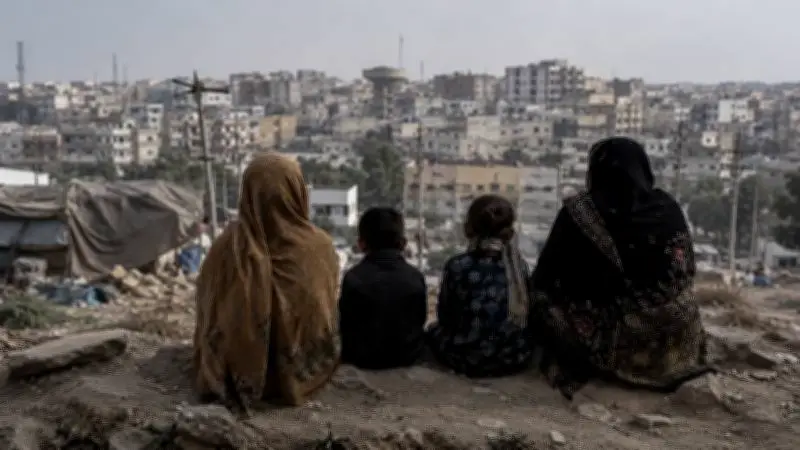
This reality becomes even more troubling when viewed alongside the latest poverty estimates. According to the World Bank, approximately 44.7 per cent of Pakistan's population lives below the poverty line applicable to lower-middle-income countries. In practical terms, this means that more than 100 million Pakistanis struggle to secure a reasonable standard of living. Statistics, however, tell only part of the story. Behind these numbers are parents who skip meals so their children can eat. There are families forced to withdraw children from school because education has become unaffordable. Elderly citizens are choosing between purchasing medicine and paying utility bills. Young graduates are searching endlessly for employment opportunities that never seem to materialise. For such citizens, discussions about honoraria, perks, and special allowances are not merely budgetary issues. They are symbols of a widening disconnect between the governing elite and the governed.

The Rhetoric of Reform vs. Reality
Pakistan has never lacked rhetoric about reform. Every government promises austerity, efficiency, and prudent financial management. Yet genuine austerity begins at the top. It is easy to ask citizens to tighten their belts; it is considerably more difficult for the state itself to abandon entrenched privileges. The persistence of these privileges explains why public appeals for sacrifice often fail to inspire confidence. People are generally willing to endure hardship when they believe the burden is being shared fairly. History offers countless examples of societies uniting during periods of crisis because citizens trusted that everyone, including those in positions of power, was contributing equally to the national effort.
The Trust Deficit
The opposite is also true. When people perceive one set of rules for the elite and another for everyone else, resentment grows. Public trust weakens. Cynicism replaces hope. Even necessary economic reforms become politically difficult because citizens begin to view them not as national imperatives but as mechanisms that protect privilege while transferring costs to ordinary households. This growing trust deficit may be Pakistan's most serious challenge. Economic indicators can improve. Debt can be restructured. Revenues can increase. But rebuilding public confidence is far more difficult once it has been lost.
A Moral Imperative for Fairness
The state must therefore recognise that economic policy is not only about numbers. It is also about legitimacy. Citizens evaluate policies not merely on technical grounds but on whether they perceive them to be fair. A government that asks for sacrifice must demonstrate its own willingness to sacrifice. A state that speaks of austerity must be seen practising it. Reducing unnecessary expenditures, reviewing official perks, limiting discretionary privileges, and increasing transparency in public spending would not solve Pakistan's fiscal problems overnight. However, such measures would send a powerful signal that the burden of adjustment is being shared across society rather than concentrated on those least able to bear it.
The debate surrounding bureaucratic honoraria is therefore about much more than a few additional salaries. It touches the central question confronting Pakistan today: who bears the cost of economic recovery? If the answer continues to be pensioners, salaried workers, small businesses, and struggling households, public frustration will only deepen. If, however, those entrusted with governing the country demonstrate that they are prepared to hold themselves to the same standards they impose on others, the prospects for meaningful reform become far brighter.
Pakistan's future will depend not only on balancing budgets and meeting fiscal targets. It will depend on restoring a sense of fairness between the state and its citizens. In a country where nearly half the population lives close to or below the poverty line, that is not merely an economic necessity. It is a moral imperative.