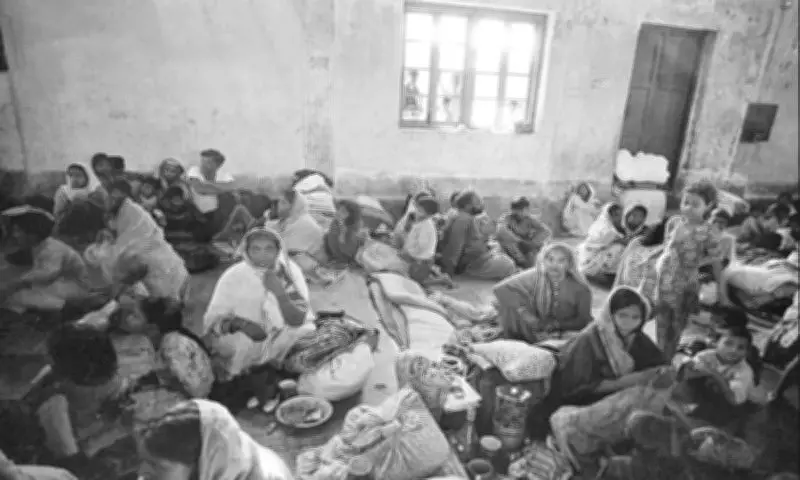
Forgotten Community Politics: Unraveling the Historical Silence
In the intricate tapestry of Pakistan's political landscape, certain community narratives have been overshadowed by dominant historical discourses, leading to a profound silence that continues to shape contemporary governance and social relations. This article delves into the phenomenon of forgotten community politics, examining how historical omissions have marginalized specific groups and the implications for national cohesion and democratic processes.
The Roots of Historical Silence
The historical silence surrounding certain communities in Pakistan can be traced back to the colonial era and the early years of independence, where state-building efforts often prioritized unifying national identities over diverse local narratives. This process involved the selective documentation of history, which excluded or minimized the contributions and struggles of minority and marginalized groups. As a result, these communities have faced systemic erasure from official records, educational curricula, and public memory, perpetuating a cycle of invisibility and disenfranchisement.
Impact on Modern Governance
The consequences of this historical silence are far-reaching, affecting modern governance in several key ways:

- Policy Marginalization: Without adequate representation in historical narratives, communities struggle to have their needs addressed in policy-making, leading to inequitable resource distribution and social services.
- Political Exclusion: The lack of historical recognition often translates into limited political participation, as these groups may lack the cultural capital and institutional support to engage effectively in democratic processes.
- Social Fragmentation: Historical silences can foster divisions within society, as dominant groups may overlook or misunderstand the experiences of marginalized communities, hindering efforts toward national unity and reconciliation.
Case Studies of Forgotten Communities
To illustrate this issue, consider the experiences of various communities across Pakistan, such as ethnic minorities in Balochistan or religious groups in Sindh, whose historical contributions have been largely omitted from mainstream discourse. These case studies reveal how historical silence has not only distorted the collective memory but also reinforced patterns of discrimination and inequality, making it challenging for these groups to assert their rights and identities in the contemporary political arena.
Pathways to Addressing the Silence
Addressing the historical silence requires a multifaceted approach that involves:
- Historical Revisionism: Encouraging academic and public efforts to revisit and rewrite history to include diverse community perspectives, ensuring a more inclusive and accurate representation of Pakistan's past.
- Policy Reforms: Implementing governance reforms that prioritize the inclusion of marginalized communities in decision-making processes, such as through quota systems or community-based consultations.
- Educational Initiatives: Integrating forgotten narratives into school and university curricula to foster greater awareness and empathy among future generations, promoting a more cohesive national identity.
By confronting and rectifying these historical omissions, Pakistan can move towards a more equitable and representative political system that honors the full spectrum of its societal diversity.