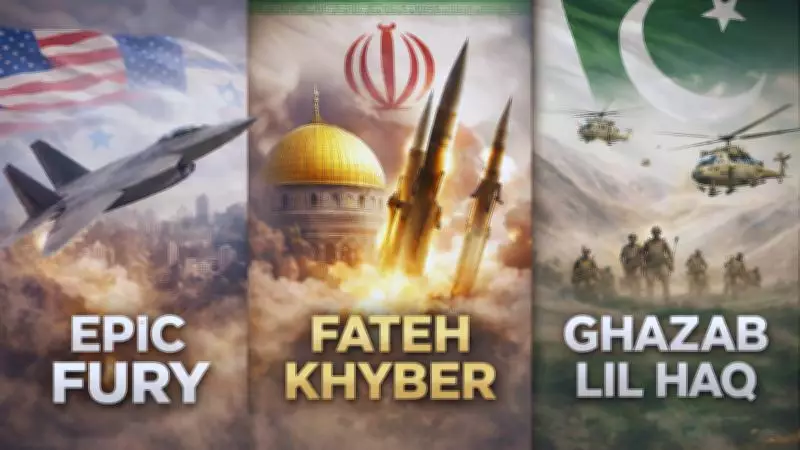
The Power of Military Operation Names in Pakistan
In the realm of national security, the names assigned to military operations are far more than mere labels; they serve as powerful tools of strategic communication, psychological warfare, and cultural expression. Pakistan's armed forces have historically employed evocative and meaningful titles for their campaigns, such as Epic Fury, Fateh Khyber, and Ghazab Lil Haq, each carrying deep implications for both domestic and international audiences.
Strategic Messaging and Psychological Impact
The selection of operation names is a deliberate process aimed at shaping perceptions and bolstering morale. Names like Epic Fury convey a sense of overwhelming force and historical significance, intended to intimidate adversaries while inspiring confidence among troops and the public. Similarly, Fateh Khyber references the historic Battle of Khyber, linking modern military efforts to a legacy of Islamic conquest and resilience, thereby fostering a narrative of divine support and national pride.
These names are crafted to resonate emotionally, often drawing from:

- Historical and religious symbolism to invoke a sense of destiny and righteousness.
- Linguistic power using Urdu and Arabic terms that evoke strength, justice, or victory.
- Psychological warfare elements to demoralize enemies by projecting an image of invincibility.
Cultural and Political Significance
Operation names in Pakistan are deeply intertwined with the country's cultural identity and political landscape. For instance, Ghazab Lil Haq translates to "Wrath for the Truth," emphasizing a commitment to justice and moral authority in counter-terrorism efforts. This not only aligns with Islamic principles but also reinforces the state's narrative as a defender of peace and stability.
Moreover, these names often reflect broader geopolitical strategies. By choosing titles that highlight regional landmarks like Khyber or concepts like fateh (victory), the military signals its focus on specific theaters of operation and its resolve to achieve strategic objectives. This practice helps in:
- Building public support by framing operations in patriotic and religious terms.
- Communicating intent to international allies and adversaries without explicit declarations.
- Creating a lasting legacy that can be referenced in future military doctrines and historical accounts.
Evolution and Future Trends
Over the years, the naming conventions for Pakistan's military operations have evolved, adapting to changing security challenges and media landscapes. Early operations might have had simpler, more direct names, but contemporary titles like Epic Fury showcase a shift towards more cinematic and media-friendly branding, aimed at capturing public imagination in an era of 24/7 news cycles and social media.
Looking ahead, as asymmetric warfare and cyber operations become more prevalent, we may see operation names that incorporate technological or digital themes, reflecting new domains of conflict. However, the core principles of using names to convey strength, purpose, and cultural resonance are likely to remain central to Pakistan's military strategy.
In conclusion, the names of military operations such as Epic Fury, Fateh Khyber, and Ghazab Lil Haq are not arbitrary; they are carefully chosen instruments of power that blend history, culture, and psychology to advance national security goals. By understanding these names, one gains insight into the broader narratives that shape Pakistan's defense policies and its ongoing efforts to maintain sovereignty and peace.