Internal Security Crisis and Cross-Border Retaliation
The beginning of 2026 proved highly challenging for Pakistan across multiple fronts. The country faced severe blows to its internal security, spanning from Khyber Pakhtunkhwa to Balochistan, largely driven by cross-border infiltrations by the Afghanistan-based Tehrik-i-Taliban Pakistan (TTP), Jamaat-ul-Ahrar (JuA) militants, and the allegedly Indian-backed Balochistan Liberation Army (BLA) in Balochistan. Various urban centres, including the provincial capital, Quetta, along with towns, military installations, and government buildings, became frequent targets of coordinated assaults and devastating suicide bombings.
Despite repeated warnings issued to the Taliban-led Afghan interim government to dismantle these militant safe havens, diplomatic channels ultimately yielded no results. Consequently, Pakistan retaliated by launching direct airstrikes against TTP camps and ammunition depots inside Afghan territory. Dubbed Operation "Ghazab-lil-Haq" (Righteous Rage), the military campaign struck several key Afghan cities and provinces, including Kabul, Kandahar, Paktia, Paktika, Kunar, Nangarhar, and Khost. This cross-border intervention sparked highly polarised reactions at home, igniting widespread outrage across Pakistan's own Pashtun belt over the air force's strikes inside Afghanistan.
US-Iran War and Pakistan's Mediation Role
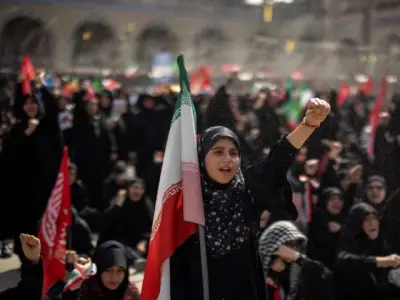
Domestic sentiment and the national discourse suffered an even more serious disruption when Israel and the United States (US) launched a coordinated attack on Iran on 28 February 2026. Designated "Operation Epic Fury", the campaign featured devastating airstrikes on Iranian military installations, top political and military leadership, and nuclear facilities, resulting in the assassination of Iran's Supreme Leader, Ali Khamenei, at the very outset of the war.

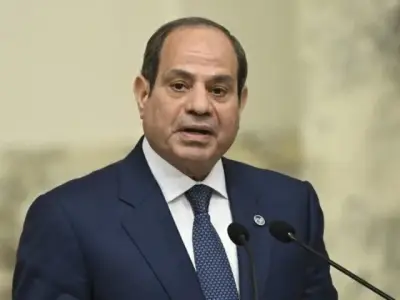
Despite being actively engaged in a volatile border conflict with Afghanistan, Pakistan chose to play a mediating role between Iran and the United States, collaborating closely with Saudi Arabia, Qatar, and Egypt. This diplomatic push followed intensive deliberations and telephone conversations among regional heads of state, aimed at navigating a crisis in which all parties were absorbing massive military, economic, and domestic political shocks.
Economic Fallout and Emergency Measures
Much of the global fallout was tied directly to the closure of the Strait of Hormuz, a critical maritime choke point that halted the flow of oil and gas from Saudi Arabia and the Gulf states to Asia and Europe. Early in the conflict, Iran launched retaliatory strikes against oil and military facilities in Saudi Arabia and Qatar, targeting installations it claimed were being utilised by the US military. This was in line with Tehran's initial declaration that it would strike US assets across the Middle East, including those in Bahrain, Qatar, the UAE, Jordan, Oman, and Iraq.
Beyond the immediate combatants, Pakistan emerged as one of the worst economic casualties of the US-Iran war. To manage the acute crisis, the government in Islamabad was forced to implement emergency measures. It imposed strict domestic lockdowns, sharply increased petroleum prices, instituted speed limits to conserve fuel, and enforced salary cuts for top bureaucrats, ruling elites, and cabinet members to cushion the economic hardship.
Ceasefire Breakthrough and Islamabad Talks
A breakthrough occurred during the early hours of Wednesday, 8 April 2026, when US President Donald Trump announced a temporary halt to military operations via a post on Truth Social. The announcement surfaced less than two hours before his 8:00 p.m. Eastern Time deadline for Iran to reopen the Strait of Hormuz was set to expire. In his statement, Trump noted that, following direct discussions with Pakistani Prime Minister Shehbaz Sharif and Chief of Army Staff Field Marshal Asim Munir, he had agreed to their specific request to postpone planned strikes and suspend the bombing campaign for two weeks to allow diplomatic efforts a window in which to succeed.

Meanwhile, Prime Minister Shehbaz Sharif broke the news of the ceasefire earlier that morning in a post on X (formerly Twitter). He welcomed the development, expressing his profound gratitude to the leadership of both the United States and Iran. Sharif also extended a formal invitation to delegations from both nations to convene in Islamabad on 10 April to pursue further talks aimed at reaching a definitive resolution to the conflict.
Democracy Discourse Index: Tracking Public Sentiment
As this regional crisis erupted and eventually shifted towards diplomatic negotiations in Islamabad, the newly established Democracy Discourse Index (DDI) tracked unfolding public reactions and sentiments in real time. Operating out of Karachi, the Pakistani arm of the project was supervised by Dr Wajiha Raza Rizvi, in association with Jacob-Udo Jacob, the Founding Director of the DDI. Together with a team of student researchers from NED University, Rizvi gathered and assessed digital conversation patterns to see how the public responded to the war waged against Iran by the US and Israel.
This research was part of a global consortium, with Pakistan chosen alongside institutions from six other countries—specifically the United States, Greece, Bulgaria, Albania, North Macedonia, and Nigeria—to pilot the framework. Looking into the mechanics of the DDI framework, the model prioritises public discourse over standard democratic benchmarks. Rather than tracking traditional indicators such as voting procedures, legal frameworks, or state institutions, the Democracy Discourse Index assesses a democracy's vitality through the calibre of its daily public conversation.
Student researchers from 12 classrooms across the seven partner nations monitored digital forums to evaluate civic health across four primary areas: Empathy, Civility, Trust Language, and Democratic Agency. Supported by the Department of English Linguistics & Allied Studies and supervised by Dr Rizvi, a team of 36 NED University students analysed a dataset of approximately 3,000 posts collected from X. The gathered data revealed a fascinating shift in public language and civic reactions within a rapidly shifting geopolitical landscape between 12 March and 28 April 2026.
DDI Findings: Spike in Civility and Trust, Persistent Agency Gap
A subsequent policy brief by the Global Centre for Rehumanising Democracy (GCRD), utilising the NED University data, revealed that Pakistan's role as a peace mediator triggered a sharp, uncommon 6.5-point spike in the national DDI score. At the peak of negotiations, digital discourse grew significantly more respectful, driving Civility to 66.9% and Trust Language to 67.95%, as public confidence in state institutions temporarily surged. However, this solidarity proved fragile; the moment the summit collapsed, Social Cohesion plummeted by 16 points, dropping from its 67.9% high to 51.9%.
Crucially, the study exposed a chronic "Agency Gap"—while surface-level trust and politeness spiked, Democratic Agency stagnated at a weak 52.8% average. This divergence demonstrates that top-down foreign policy triumphs merely sanitise public discourse temporarily. Ultimately, conventional legal or electoral metrics fail to capture a society's real-time vital signs; cultivating true, participatory civic agency requires deep, long-term structural reforms. As the brief concludes, Pakistan's public sphere can become more civil without necessarily becoming more democratic in a participatory sense. The brief is currently catalogued in the UN DESA Doha Solutions Platform and mapped to Sustainable Development Goal 16 (Peace, Justice and Strong Institutions).
Conclusion: DDI as a Tool for Policymaking
In conclusion, the Democracy Discourse Index emerges as a highly effective, objective, and results-oriented model for assessing complex societal dynamics in Pakistan. By evaluating real-time public sentiment and digital dialogue, this framework provides policymakers, independent observers, and state agencies with the vital insights needed to formulate and execute targeted strategies. Whether tracking volatile security situations in Khyber Pakhtunkhwa and Balochistan, including the sensitive discourse surrounding military operations and missing persons, or analysing public reactions to terrorism, systemic corruption, and electoral cycles, the DDI offers an invaluable baseline. Ultimately, leveraging this data-driven approach is essential for addressing public grievances, safeguarding democratic norms, and strengthening the country's foundational institutions.