The recent controversy over the Indus Waters Treaty has triggered a debate far larger than water. What began as a dispute over river rights quickly evolved into a contest over history, identity and civilisation. Pakistani leaders invoked the Indus Valley Civilisation while defending the country's rights over the Indus River. India's Hindutva media dismissed Pakistan's civilisational claim as opportunistic rather than engaging with the archaeological and historical evidence. Yet the controversy has revealed something far more significant. Pakistan is not merely defending a river. It is rediscovering the civilisational foundations of the land on which it stands while simultaneously redefining its strategic role in one of the world's most consequential regions. These two developments together represent one of the most important transformations in Pakistan's national identity since independence.
Rediscovering Civilisational Roots
This is neither a rejection of Pakistan's Islamic identity nor an attempt to rewrite history. It reflects the confidence of a mature nation-state. Religion remains an essential pillar of Pakistan's identity, but history, geography and civilisation are equally enduring foundations of national consciousness. Pakistan is finally embracing an inheritance that always existed but rarely occupied the centre of its national narrative. For decades, Pakistan was criticised for distancing itself from its pre-Islamic past, while India projected itself as the principal custodian of the subcontinent's ancient civilisation. Today, the irony is unmistakable. Pakistan is steadily reclaiming its indigenous civilisational roots in the Indus Valley, while sections of India's public discourse increasingly seek to reinterpret that same civilisation through contemporary ideological narratives.
The Indus Valley Civilisation
The intellectual foundations of this rediscovery were laid nearly three decades ago by Aitzaz Ahsan in The Indus Saga and the Making of Pakistan. He argued that Pakistan's history did not begin in 1947 or with the arrival of Islam in South Asia. The Indus basin had constituted a distinct civilisational space for millennia, and Pakistan was its principal geographical successor.

Indus Valley Civilisation Versus Hindu Zionism
Today, archaeology, geology and palaeohydrological research increasingly reinforce that argument. Scientific studies indicate that the major river shifts in the Ghaggar-Hakra basin predated the mature Harappan civilisation, challenging claims that it flourished along a large perennial Saraswati River. Scholarly debate will continue, but the principal urban heartland of the civilisation remains firmly rooted in the Indus basin. Archaeology is guided by evidence rather than ideology. The Indus continues to exist as one of Asia's great rivers. It gave its name not only to the civilisation but eventually to India itself through the linguistic evolution from Sindhu to Hindu and then India. The river is a geographical reality, and so is the location of the civilisation's principal urban centres.
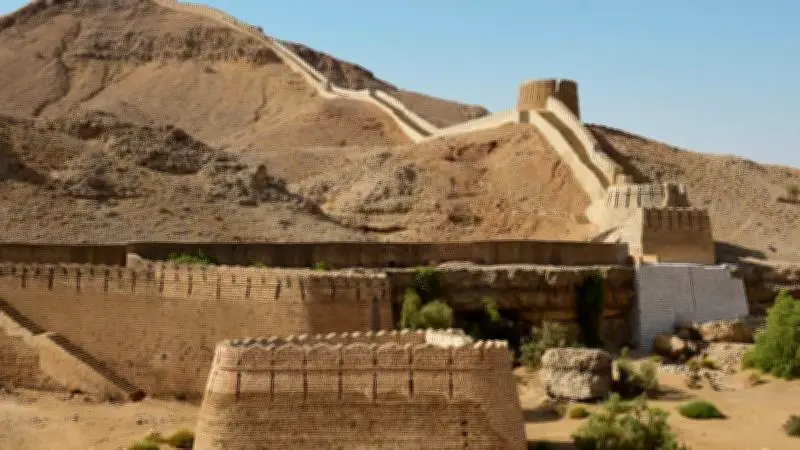
The overwhelming concentration of those centres—including Mohenjo-daro, Harappa, Ganeriwala and numerous other sites—lies within present-day Pakistan. This does not confer exclusive ownership of an ancient civilisation. Like Egypt, Mesopotamia and Greece, the Indus Valley Civilisation belongs to humanity. Yet geography matters. The state that contains most of its principal archaeological remains inevitably becomes its foremost custodian. Pakistan's claim therefore rests on geography, archaeology and historical continuity.
Rediscovering Geography: The West Asian Middle Power
If reclaiming the Indus Valley Civilisation explains Pakistan's rediscovery of its past, its growing role in West Asia reflects an equally important rediscovery of geography. Ironically, India decided to place the Indus Waters Treaty in abeyance before the May 2025 conflict that accelerated Pakistan's rediscovery of this inheritance. The Indus suddenly ceased to be discussed merely as a river governed by international law. Once again, it became recognised as the river that nurtured one of humanity's earliest urban civilisations.

The controversy also exposed an uncomfortable contradiction. If the Indus Valley Civilisation forms part of India's civilisational heritage, it becomes difficult to separate that civilisation from the river that gave it its name and sustained its existence. The civilisation and the Indus are inseparable. Contemporary water rights are determined by international treaties, not ancient history. Yet history reminds us that rivers are more than strategic assets; they are the lifeblood of civilisations.
Whose Heritage Is the Indus Valley Civilisation?
The sharpest responses came from a section of Indian media toing Hindutva narratives. Writing in Firstpost, Utpal Kumar dismissed Pakistan's renewed emphasis on the Indus Valley Civilisation as geopolitical rebranding, while Rajesh Kumar Thakur in India Today portrayed it as an attempt to appropriate India's civilisational heritage. Rather than engaging with the archaeological evidence, both reduced Pakistan's evolving narrative to political expediency. Their reactions inadvertently demonstrated how consequential Pakistan's changing narrative has become.
Pakistan's rediscovery of the Indus Valley Civilisation should not be interpreted as a departure from its Islamic identity. Across the Muslim world, countries are increasingly embracing the full depth of their historical inheritance. Saudi Arabia is investing in its pre-Islamic heritage. Egypt celebrates both its Pharaonic and Arab-Islamic identities, while Türkiye draws confidence from its Ottoman legacy. Pakistan's evolution reflects the same broader trend.
Nor does reclaiming the Indus diminish Pakistan's Islamic heritage. Pakistan is equally an inheritor of nearly eight centuries of Muslim rule under the Delhi Sultanates and the Mughal Empire, shaped by the wider Persianate world. It also preserves some of South Asia's most significant sacred landscapes associated with Hinduism, Buddhism and Sikhism, including Gandhara, Taxila, Takht-i-Bahi, Katas Raj and Nankana Sahib. Few modern states possess such a rich civilisational inheritance.
Pakistan's story did not begin in 1947. Independence gave it sovereign statehood, but its civilisational foundations stretch back over five millennia. Together, the Indus Valley Civilisation, the Gandhara tradition, the sacred landscapes of Hinduism and Sikhism, and the Indo-Islamic-Turkic-Persian legacy form a historical continuum that enriches rather than fragments Pakistan's national identity. A country once criticised for overlooking its ancient past is today reclaiming it with growing confidence, while some of its critics appear increasingly reluctant to acknowledge the geographical and archaeological realities on which that past rests.
The Rise of a West Asian Middle Power
If reclaiming the Indus Valley Civilisation explains Pakistan's rediscovery of its past, its growing role in West Asia reflects an equally important rediscovery of geography. Together, these transformations are reshaping Pakistan's identity and foreign policy more profoundly than at any time since independence. One gives Pakistan historical depth; the other gives it strategic purpose. Pakistan is rediscovering its civilisational confidence at precisely the moment when geography is expanding its strategic relevance.
This transformation is captured by Faisal Devji in The End of Political Islam. He argues that political Islam has steadily lost its appeal as the organising principle of Muslim politics. Across much of the Muslim world, governments increasingly pursue national interests, economic development and regional stability rather than transnational ideological projects. Pakistan's contemporary foreign policy reflects precisely this broader shift.
For decades, critics argued that Pakistan's search for identity in the Muslim world came at the expense of its indigenous civilisational roots. Others feared that ideological commitments often overshadowed geography and national interests. Those concerns belonged to another era. Today's Pakistan increasingly defines its external conduct through security, economic opportunity, regional connectivity and strategic realism.
Nothing illustrates this transformation more clearly than Afghanistan. During the anti-Soviet jihad and the years that followed, ideology often shaped perceptions of the Afghan theatre. Today, Afghanistan has become Pakistan's foremost external security challenge because of the Afghan Taliban's continued unwillingness to prevent the Tehreek-e-Taliban Pakistan from operating from Afghan territory. Pakistan's response demonstrates a decisive shift. Protecting the nation-state has overtaken ideological affinity. Geography has replaced ideology as the principal driver of policy.
The same pragmatism increasingly defines Pakistan's engagement with West Asia. Saudi Arabia's transformation under Crown Prince Mohammed bin Salman, alongside similar changes across the Gulf, has shifted the region's priorities from ideological competition towards economic diversification, technological progress and strategic stability. Pakistan's own evolution mirrors this broader regional transformation.
This changing landscape has significantly enhanced Pakistan's strategic relevance. Decades of defence cooperation have established deep institutional trust with Saudi Arabia and other Gulf states. More recently, Pakistan's diplomacy during regional crises has strengthened its credibility. It is increasingly viewed not merely as a military partner but as a reliable strategic actor capable of engaging competing regional powers without becoming captive to their rivalries.
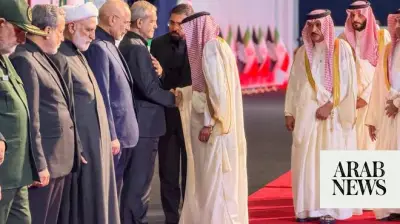
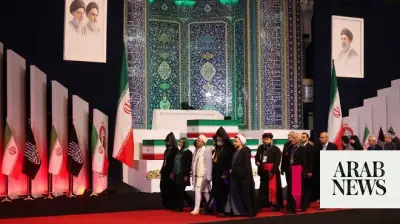
The recent Iran conflict further demonstrated Pakistan's evolving regional role. Islamabad maintained constructive relations with Tehran while simultaneously preserving the confidence of Riyadh, Doha and other Gulf capitals. Rather than joining competing regional camps, it consistently advocated restraint, dialogue and de-escalation, reflecting the conduct of a country whose foremost interest lies in preventing instability from spilling into its immediate neighbourhood.
In doing so, Pakistan is steadily acquiring the attributes of a West Asian middle power. Middle powers are defined less by overwhelming military or economic strength than by their ability to shape regional outcomes through strategic geography, credibility, diplomacy and trusted security partnerships. Pakistan increasingly meets that definition. Enjoying the confidence of key Gulf states while maintaining working relations with Iran, and backed by one of the Muslim world's most capable armed forces, it is emerging as a net contributor to regional stability rather than merely a consumer of it.
That position carries important dividends. A stable Gulf advances Pakistan's interests through trade, investment, energy security, defence cooperation and the welfare of millions of Pakistanis working across the Arab world. It also strengthens prospects for regional connectivity linking Central Asia with the Arabian Sea through Pakistan. Peace, therefore, is not simply a diplomatic aspiration; it has become an economic and strategic imperative.
The Islamabad Framework: Pakistan And The Recalibration Of West Asian Security
Pakistan's emergence also reflects a broader change in how regional security is understood. For decades, it was viewed primarily through the security challenges it confronted. Increasingly, it is recognised for the security it helps provide. Counterterrorism, defence cooperation, military professionalism and regional mediation have together strengthened Pakistan's standing as a responsible stakeholder.
Perhaps the greatest significance of this transformation lies elsewhere. It resolves one of Pakistan's oldest intellectual debates. Liberal and progressive scholars long worried that Pakistan's search for an Islamic or Arab identity risked distancing it from its own civilisational foundations in the Indus. Those concerns were understandable in their historical context. Yet they have steadily lost their relevance. Pakistan no longer has to choose between the Indus and West Asia. West Asia itself has changed. The Gulf's leading states increasingly pursue religious moderation, economic reform, technological innovation and strategic autonomy rather than ideological competition. Pakistan's growing role in the region, therefore, no longer represents a search for identity. It reflects a convergence of geography, security and economic interests. Pakistan enters this new regional order not by abandoning the Indus but by standing firmly upon it.
Rediscovering the Future
That is the defining difference between the Pakistan of yesterday and the Pakistan now emerging. Earlier generations often viewed civilisational identity and strategic orientation as competing choices. Today, they reinforce one another. A country rooted in one of humanity's oldest civilisations can simultaneously become a trusted strategic actor in one of the world's most consequential regions. History rarely offers nations such an opportunity. Pakistan is rediscovering its civilisational confidence at precisely the moment when geography is expanding its strategic relevance. The Indus gives Pakistan civilisational depth. West Asia offers a strategic opportunity. Together, they resolve a dilemma that shaped much of Pakistan's post-independence journey.
Pakistan is therefore not inventing a new identity. It is recovering an older one while adapting confidently to a changing world. For the first time since independence, it no longer has to choose between the confidence of its ancient civilisation and the opportunities of its geopolitical future. It has learned to draw strength from both. In that lies Pakistan's true rediscovery.