Three Years After the 9 May Riots: A Political Reckoning
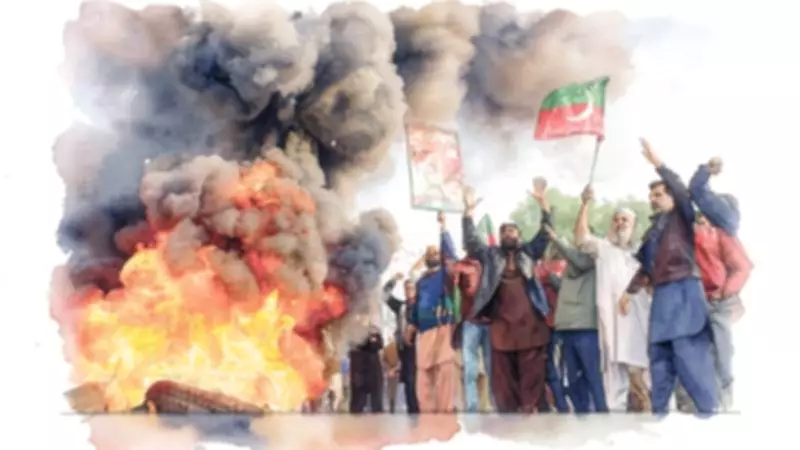
This 9th of May marks the third anniversary of the deadly anti-government and anti-military riots orchestrated by Imran Khan's party, the Pakistan Tehreek-e-Insaf (PTI). For a full year following his ouster as prime minister in April 2022 via a vote of no confidence, Khan proved remarkably successful in drawing crowds and monopolising media attention. He attempted to rekindle his popularity that had arguably begun to wane under the weight of governance challenges during his tenure as PM (2018-2022). His government had left behind a fragile economy characterised by a widening current account deficit and ballooning inflation, which the replacement coalition government headed by the Pakistan Democratic Movement (PDM) struggled to control. As fuel and electricity prices rose, the Military Establishment (ME), headed by General Asim Munir, intervened to aid the government through initiatives like the Special Investment Facilitation Council (SIFC). Yet, the new regime continued to face significant public discontent as the cost-of-living crisis deepened.
Khan's Populist Strategy and the Role of Faiz Hameed
Khan skilfully exploited this economic anxiety, posing as a defiant 'anti-establishment' figure, even though his own rise to power had been largely orchestrated by the same establishment albeit with a different set of high-ranking officers. Khan claimed that after his ouster he was battling both the ME and the 'corrupt dynastic parties' that had returned to power. To bolster this new-found 'revolutionary' image, he popularised a narrative of 'haqeeqi azadi' (true freedom) and accused the United States of engineering a regime-change conspiracy against him. This claim persisted despite the fact that US-Pakistan relations had largely gone cold from the mid-2010s onwards, with Washington's strategic focus shifting elsewhere. From a theoretical perspective, Khan's strategy mirrored the classic populist logic of political scientist Cas Mudde, which divides society into two homogenous and antagonistic groups: 'the pure people' versus 'the corrupt elite.' By framing the ME as part of this 'elite,' Khan successfully shifted the blame for his own governance failures onto a 'hidden hand', thereby immunising his support base against any rational critique.
A critical, albeit shadowy, factor in this escalation was the role of former DG ISI, Lt General Faiz Hameed. Even after his retirement, it is alleged that Hameed continued to flex a vast network of journalists, judges, and social media teams to exert influence over Khan's party. Some commentators suggest it was Hameed who convinced Khan that the military was internally divided and would come to his rescue if General Munir were pressured through an aggressive movement. This was notably highlighted by Defence Minister Khwaja Asif on 14 August 2024. Amidst the ensuing chaos of 9 May 2023, rumours had circulated that by not immediately engaging with the rioters, certain officers were signalling for General Munir to resign. While the military initially held back, a move some interpreted as strategic restraint and others as a momentary lapse in the chain of command, mobs torched iconic properties including the Corps Commander's House in Lahore and the entrance to the GHQ in Rawalpindi. The Punjab police, largely unsupported by paramilitary reinforcements in the opening hours, were left overwhelmed.


State Breakdown and the Military's Response
This moment can be analysed through the lens of Theda Skocpol's theory of state breakdown, which suggests that revolutions only succeed when the state's coercive apparatus fragments. Khan's gamble was founded on this very assumption: that the 'street' could induce a vertical split within the officer corps. However, the eventual cohesion of the high command demonstrated that the institutional identity of the ME remained stronger than any individual's charismatic appeal. Energised by digital-age rumours of a military mutiny, the mobs grew increasingly violent, though the PPP-led Sindh government successfully subdued the rioting within its jurisdiction within hours through proactive policing. In contrast, Lahore, Rawalpindi, and Peshawar continued to burn for nearly a day until Prime Minister Shahbaz Sharif's federal government intensified its response, eventually calling in the army under Article 245 of the Constitution to restore order.
Using geofencing, CCTV footage, and social media analytics, authorities apprehended hundreds of protesters. The state decried the riots not as a spontaneous protest, but as a treacherous, pre-planned attack orchestrated by Khan (allegedly 'via mobile phone') while he was under arrest at the Islamabad High Court. Just two days later, when the Supreme Court bench headed by Chief Justice Umar Atta Bandial, often described as a 'pro-Khan' (Imrandaar) judge by opponents, declared Khan's arrest unlawful after actually greeting him with 'Good to see you,' the government and military high command were livid. This judicial leniency points toward a 'Juristocracy,' where the court system becomes a secondary arena for political combat. The clash between the executive and the judiciary highlighted a fundamental crisis in the Pakistani state's 'separation of powers', as legal interpretations appeared increasingly coloured by political partisanship.
Legal Battles and the 2024 Elections
However, the tide turned decisively by August 2023. A court sentenced Khan to three years in prison for selling state gifts, and the Election Commission subsequently barred him from running for office. For six months, a game of cat and mouse ensued between the government and the courts. Legal relief provided in one case was frequently stumped by fresh accusations regarding corruption and the specific incitement of the 9 May violence. In early 2024, on the eve of the general elections, Khan received further heavy sentences of 10 and 14 years in two more cases. Yet, just as the government believed the PTI was dismantled, the party's 'independent' candidates bounced back during the February 2024 elections. They won a plurality of seats, though notably not enough to form a government or overcome the combined strength of the PML-N and PPP coalition.
Reflecting on this period, one noticed that many PTI supporters appeared to be functioning in an alternative reality, joined by some seasoned professionals who abandoned their usual analytical wisdom to follow the populist crowd. This phenomenon aligns with Jean Baudrillard's concept of 'Hyperreality,' where the digital simulation of a 'revolution,' fuelled by social media echo chambers, became more real to the participants than the actual physical and legal consequences of their actions.
The Reset and Khan's Strategic Cards
However, rational analysis dictated that the ME would never tolerate such direct incitement against the sanctity of the institution. While middle-class supporters applauded the 9 May 'uprising', a sharp contrast to their previous demands for law and order against working-class protesters, they failed to notice that the institutional 'fielding' that was set by the previous ME to facilitate Khan's rise and regime was being systematically replaced by a 'reset.' This reset was intended to keep Khan out, not merely due to personal animosity between Gen Munir and him, but because of his perceived policy blunders and his rhetoric which threatened the foundational discipline of the state. While analysts often acknowledge PTI's 'popularity,' perhaps out of a sense of electoral guilt, it must be noted that over 60 percent of the 2024 vote was cast for other parties. The strategy of demonising the ME likely stemmed from Khan's mounting frustration at his inability to force an early election. This led veteran analysts such as Najam Sethi to suggest that Khan was intentionally courting violent escalation to force a 'Grand Bargain' through coercion.
In his attempt to regain power, Khan rotated through several strategic 'cards', each designed to mobilise his support base. He tried to rebrand himself as what Indian economist Mohammad Nejatullah Siddiqi termed a 'Homo Islamicus.' Khan invoked the concept of Riyasat-e-Madinah and portrayed his political struggle as a moral battle between good and evil (Amr-bil-Ma'roof). By framing himself as a global spokesperson against Islamophobia, he sought a divine legitimacy that transcended secular accountability. Khan then draped himself in the language of Western-style liberalism whenever he faced legal pressure, appealing to international human rights organisations to intervene against 'fascism' in Pakistan. By weaponising his 'regime-change' narrative, he played the card of 'anti-imperialism', suggesting that he was a martyr for national dignity, a strategy that effectively distracted from the structural economic failures of his own administration.
Conclusion: No Return to Power
Today, three years after the 9 May riots, the contemporary political arena is defined by a hardening of state and global structures that prioritise technocratic and economic stability and IMF-mandated reforms over populist disruption. As traditional institutions develop more sophisticated digital and legal guardrails, the space for 'charismatic' outsiders to bypass established systems is narrowing. In this shifting international order, which favours stable governance to facilitate regional connectivity and investment, there is no foreseeable chance that Khan will ever return to the Prime Minister's office.