Tucker Carlson Exposes Trump's Iran War Rationale and Internal Dissent
After five weeks of confusing and inconsistent messaging, President Donald Trump delivered a national address on Wednesday night to justify his military campaign against Iran. However, his explanation remained unclear, failing to outline a definitive exit strategy, shifting responsibility for the Strait of Hormuz crisis onto other nations, and explicitly denying that regime change was the objective.
Carlson's Direct Appeals to Trump Prove Futile
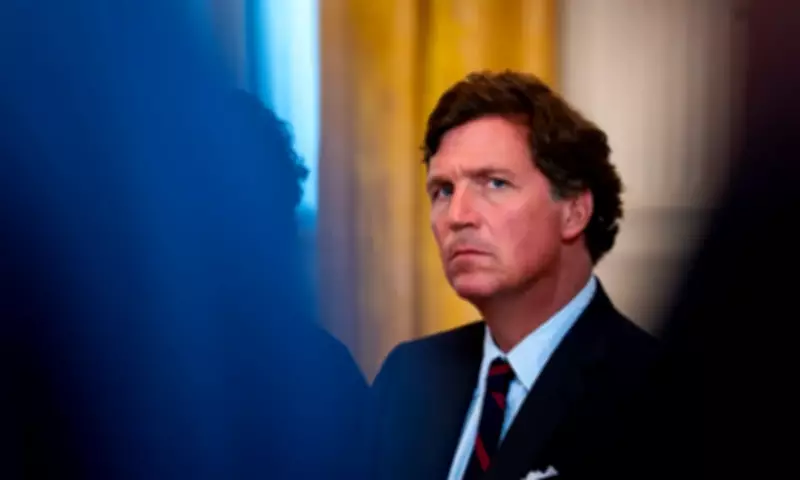
Among the most vocal critics of this conflict is Tucker Carlson, a longtime Trump ally and former Fox News personality who now hosts the widely followed podcast, The Tucker Carlson Show. In a recent interview with Vox's Today, Explained, Carlson told host Noel King that the war "doesn't serve American interests in any conceivable way." He challenged anyone to present a valid argument for its benefits, stating, "And let me just say that if it does in some way serve the interests of the United States, I'd love to hear it."
Carlson disclosed that he made three personal visits to the White House in the month preceding the conflict to plead his case directly to President Trump. "I went to see the president three times in the month before this in person, and made the case," he revealed. "And in the end it had no effect. So I tried. But I haven't been in touch with the president since then."

Israeli Pressure as the Decisive Factor
Beyond the war, Carlson and King explored topics including the conservative movement's association with extremist ideologies, Carlson's potential presidential ambitions, and the reasons behind MAGA voters' support for the war. A key excerpt from their conversation highlights Carlson's analysis of the conflict's origins.
When asked why the U.S. should not be at war with Iran, Carlson pointed to a lack of coherent justification from any quarter, including the Trump administration. He observed no internal enthusiasm for the war, suggesting Trump acted largely under external duress. "He did it, as the secretary of state explained, because we were pushed into it by the Netanyahu government, by Benjamin Netanyahu," Carlson asserted.
He clarified that this does not absolve Trump of responsibility, emphasizing that "Trump made the decision; it was the wrong decision." However, he framed the pivotal question: "Where did Netanyahu get the power as the prime minister of a country of 9 million to force the president of a country of 350 million to do his bidding?"
Carlson described a scenario where Israeli officials informed the White House of their intent to act against Iran, leaving the U.S. with two untenable choices: either follow Israel's lead or forcibly restrain them. He cited Senator Marco Rubio's warning that allowing Israel to proceed alone would endanger American assets in the Gulf. "But either way, Benjamin Netanyahu made the decision on the timing of this. That's another way of saying he was in charge," Carlson concluded, adding that he and most Americans view this as fundamentally wrong.
Trump's Historical Consistency Versus Current Actions
Addressing Trump's long-standing hostility toward Iran, dating back to a 1988 interview where he advocated harsh measures, Carlson acknowledged the president's consistent rhetoric. "Donald Trump is the president of the United States. Can't this war just be what he wants?" he pondered, reiterating Trump's ultimate authority while stressing the influence of Israeli pressure.
The real issue, according to Carlson, is whether a regime-change war against a nation of nearly 100 million people is feasible, beneficial for the U.S., or positive for global stability. He noted that Trump has historically opposed such wars, making the current shift particularly perplexing. "So this is the change. It's not that he woke up one morning and was mad at Iran," Carlson explained.

Questioning Decision-Making Wisdom in the White House
Reflecting on the lack of coherent strategy and exit planning, Carlson was asked if the current administration comprises "serious men making wise decisions." He responded bluntly, "We're not seeing wise decisions, obviously." He linked the Iran conflict to previous interventions like Venezuela and Ukraine, suggesting the Venezuela operation created a false impression that regime change could be achieved cheaply.
"As we're learning five weeks in, that's not possible in Iran, and the consequences are potentially catastrophic," he warned, expressing concern over Iran's strengthened position due to its control of 20% of global energy resources despite military weaknesses.
Carlson lamented the repetition of past mistakes, recalling the 2003 Iraq War. "It shocks me that we are doing this thing again, particularly under a president who understood exactly what happened in 2003, campaigned all three elections against doing an Iraq War again, because it was stupid," he said, highlighting the irony of Trump's reversal.
Ultimately, Carlson's critique underscores a deep rift within conservative circles over foreign policy, with his direct appeals to Trump highlighting internal dissent and the complex geopolitical pressures shaping U.S. actions in the Middle East.