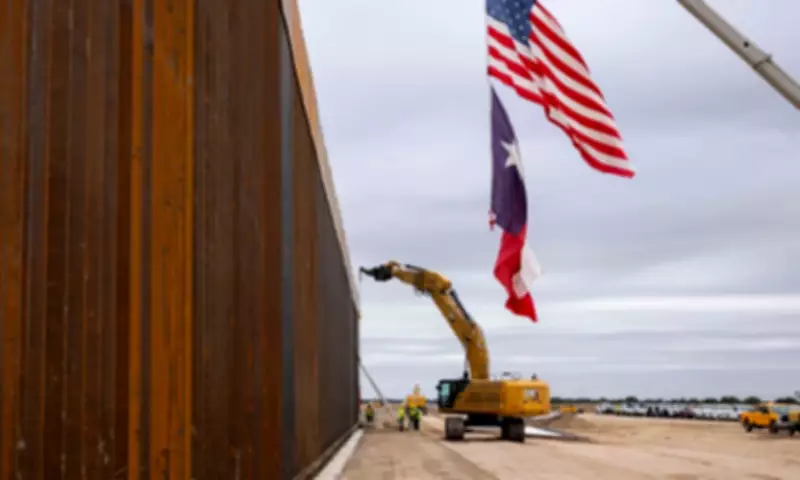
American Public Opinion on Immigration Undergoes Dramatic Transformation
Immigration enforcement once stood as a cornerstone of President Donald Trump's political strategy, propelling him to victory in both the 2016 and 2024 presidential elections. However, current sentiment indicates that most Americans now disapprove of nearly all actions taken by Trump's administration to address immigration issues. Polling data reveals a profound shift in public opinion since Trump's return to office, with approximately half of all Americans advocating for the abolition of ICE, the deportation agency significantly empowered under his leadership.
The Evolving Landscape of Immigration Sentiment
Gallup's research from last year demonstrates this transformation clearly: the percentage of Americans wanting reduced immigration has plummeted from 55% in 2024 to just 30% today. Simultaneously, a record-high 79% of U.S. adults now believe immigration benefits the country, suggesting Trump's enforcement measures have produced the opposite effect intended on voter attitudes.
As the nation approaches the 2026 midterm elections and looks toward the 2028 presidential race, both political parties confront an electorate that frequently agrees with Trump's identification of immigration problems while simultaneously rejecting his proposed solutions. This creates a complex political environment where traditional positions require reevaluation.

Expert Perspectives on America's Immigration Dilemma
In a recent episode of America, Actually, two journalists with distinct viewpoints examined America's immigration challenges. Caitlin Dickerson, a Pulitzer Prize-winning reporter at The Atlantic, has documented how both political parties contributed to building the immigration system they now acknowledge as broken. Yana Kuchinoff, reporting for Arizona Luminaria as a Report for America corps member, has tracked how Trump's policies have disrupted local communities along the Arizona border.
Caitlin Dickerson observed: "Obviously there's a lot that is novel that Donald Trump is doing on interior enforcement of our immigration laws right now. But if I think about your question, most of what we're seeing and most of the issues, frankly, that the public is taking with the current system come from many, many presidents ago."
Yana Kuchinoff noted: "When I was covering the election in 2024, the concerns about border security and people's feelings about what was happening were really big, emotional talking points. But I think some of the enforcement in the Tucson-area communities is a lot less abstract."
Political Consequences and Future Challenges
The changing immigration sentiment has already influenced the political landscape for this year's midterm elections. Trump's approval rating among Latino voters has collapsed since his return to office, and Democratic victories in special elections nationwide, including recent successes in New Jersey, have exploited this vulnerability. However, the most significant tests for both parties will likely emerge next year as the presidential race intensifies.
Republicans face critical questions after allowing Trump and his adviser Stephen Miller to define their immigration policy for a decade. Key unresolved issues include:
- Their stance on H-1B visas and legal immigration pathways
- Addressing ICE's substantial credibility loss among the general public
- Developing coherent policy alternatives to Trump's approach
Democrats confront their own substantial challenges, primarily centered on finding middle ground between supporting enforcement measures and championing comprehensive immigration reform legislation in Congress. As Dickerson explained regarding Democratic hesitation: "Democrats aren't sticking their neck out for a population of people who by nature cannot vote for them. Not only can this constituency not vote, but Americans generally tend to really underestimate, I think, how interconnected we all are with the immigration system."

The Tangible Impact on American Communities
The interconnectedness Dickerson references is becoming increasingly apparent as deportation campaigns affect communities directly. People experience consequences when family members, friends, or community members face arrest, creating ripple effects through churches, workplaces, and local economies. This tangible impact challenges previous perceptions of immigration as an abstract issue affecting only distant populations.
Dickerson highlighted a crucial gap in political discussions: "We don't have a lot of legal pathways to the United States and we especially don't have legal pathways to the United States for the jobs that we tend to rely on undocumented workers for. Construction, restaurant work, hospitality, domestic work. These jobs are dominated by immigrant workers and by and large, do not have visas available to do them."
She noted that while America has several hundred thousand guest worker visas for agriculture, millions of agricultural workers operate within the country, creating a significant disparity between legal pathways and actual labor needs.
The Path Forward for Immigration Policy
Some politicians, including Senator Ruben Gallego, advocate for practical reforms rather than dramatic measures like abolishing ICE. Gallego has emphasized the necessity of balancing border security with creating legal pathways, recognizing that enforcement crackdowns historically fail to overcome economic incentives driving immigration.
As both parties navigate this transformed political landscape, the fundamental question remains whether they can develop policies that address systemic flaws while responding to an electorate that has grown increasingly skeptical of enforcement-focused approaches. The coming election cycles will test whether American politics can move beyond reactionary positions toward substantive immigration solutions that acknowledge both security concerns and economic realities.