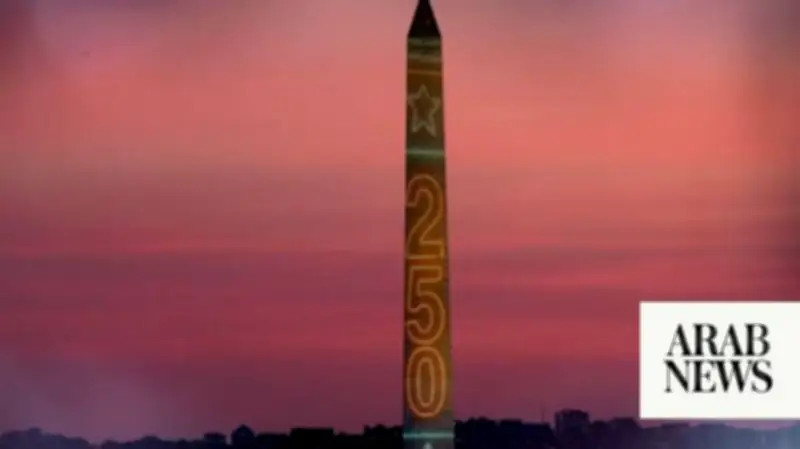
Arab American leaders are celebrating the 250th anniversary of the US Declaration of Independence with pride, even as they acknowledge persistent discrimination and misunderstanding. In interviews with Arab News, representatives from several Arab and Muslim organizations emphasized that while the United States offers freedoms unmatched elsewhere, the community continues to battle racism, stereotypes, and bias. They pointed to the tens of thousands of Arabs and Muslims who have served in the US military as a testament to their deep patriotism.
Patriotism and Military Service
Hassan Nijem, president of the American Arab Chamber of Commerce of Illinois, told Arab News: "Arabs and Muslims are very proud to be American, and we enthusiastically are celebrating this amazing achievement of 250 years since the founding of this great nation, which has been welcoming to immigrants from throughout the world, including from the Middle East." He highlighted that "thousands of our people have served this nation in the military, defending it in every war dating back to the Civil War, sacrificing their lives to ensure our country's survival." Nijem stressed that love for countries of origin does not diminish loyalty: "Just because we also love and respect the countries of our origin, doesn't mean we must constantly prove our loyalty and patriotism. Unlike others, we don't serve in foreign militaries and pretend we're patriotic." The chamber co-sponsors ArabWarVeterans.com, which documents Arab and Muslim military service.
Pride in American Identity
Azhar Azeez, CEO of the Islamic Society of North America, told Arab News: "America is a great nation … America is our motherland. We're very patriotic. We take great pride in calling ourselves Americans." Despite challenges, he said, "this is one of the best places for Muslims and Arabs to live, thrive and grow. This is one of the best places for Muslims to practice their religion freely." Azeez acknowledged racism and bigotry but noted that "most Americans are very tolerant. They hold pluralistic values in a big way and accommodate every faith group. The very basic foundation of this nation is that people came to this nation for religious freedom, so that can't be compromised." He warned that "today, certain bigots, hatemongers and racists are spreading fear because they see the growth and advancement of the American Muslim and Arab community."

Discrimination and Progress
Safa Rifka, chairman of the board of the American Arab Anti-Discrimination Committee, told Arab News that discrimination "has increased on all fronts." Warren David, co-founder of the Arab America Foundation, acknowledged "remarkable progress" in acceptance but said the question is "whether our nation fully recognizes them as an integral part of the American story. That's the work still ahead." He noted that "winning elected office has become more achievable, as demonstrated by the growing number of Arab American mayors, legislators, members of Congress and other elected officials. Yet candidates often face unique challenges, including stereotypes, misinformation, and questions about their identity."

Political Engagement and Voter Turnout
Laila Alhusini, founder and CEO of US Arab Radio, told Arab News: "A critical gap remains in community political awareness. Despite continuous and exhausting grassroots efforts to educate our community, voter turnout and full comprehension of the political system remain somewhat frustrating." She emphasized the importance of local elections: "There's a frequent tendency to overlook the immense impact of local elections, including city councils, school boards and mayors, which directly shape daily life, in favor of focusing solely on the federal level." Mohammed Jaber, a former board member of Chicago's Consolidated High School District 230—where nearly 35 percent of the 7,500 students are Arab or Muslim—said families will celebrate at picnics and Independence Day events. "We're very proud to be American Arab and American Muslim. Yes there are some challenges, but when we come together we can resolve them," he told Arab News. Imad Hamad, chairman of the American Human Rights Council, noted that despite increased racism, "the number of serving Arab Americans in the local governments and other official governmental entities is growing. The future is very promising. However, like in other communities, voter turnout continues to be a challenge. It's the struggle facing all minorities, migrants and ethnic communities … It's still a very bumpy road, but the community manages to mobilize and rise." He added: "Unfortunately, the lack of a coherent, holistic Arab American vision is one key challenge facing us despite the great success earned thus far."