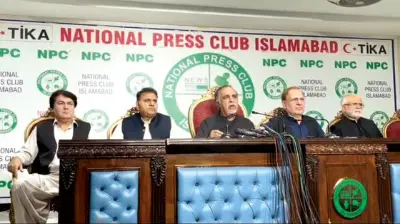
Senior leaders of the Pakistan People’s Party (PPP) on Wednesday alleged that their political opponents, unsettled by the party’s growing popularity in Gilgit-Baltistan, were attempting to influence the electoral process through pre-election measures, including development project announcements and the use of state resources. Speaking at a joint news conference in Islamabad, Senator Palwasha Khan, Senator Shahadat Awan, and Member of the National Assembly Sehar Kamran claimed the party was receiving overwhelming public support in the region ahead of the forthcoming elections.
Allegations of Pre-Poll Rigging
The PPP leaders alleged that federal and provincial ministers were trying to sway voters by announcing development schemes and funding projects during the election period. They also raised concerns over the reported presence of Punjab Police personnel in Gilgit-Baltistan, questioning the rationale behind their deployment. Palwasha Khan argued that announcements of development projects and the release of billions of rupees in funds immediately before elections amounted to pre-poll rigging. She called on the Gilgit-Baltistan Election Commission to take immediate notice of what she described as irregularities, including development fund announcements, alleged changes in electoral rolls, transfers of officials, and the use of government machinery for political purposes. She stressed that attempts were being made to influence voters and urged the Election Commission to ensure strict implementation of the electoral code of conduct.
PPP’s Historical Role in Gilgit-Baltistan
The leaders reiterated that Gilgit-Baltistan’s political identity and rights had been advanced under PPP governments and expressed confidence that the region’s people would once again place their trust in the party. Senator Shahadat Awan highlighted the party’s historical contributions, noting that President Asif Ali Zardari had helped provide Gilgit-Baltistan with political recognition, while former Prime Minister Zulfikar Ali Bhutto had abolished the colonial-era Frontier Crimes Regulation (FCR) system. He added that the PPP had also played a leading role in promoting women’s rights, youth representation, and democratic institutions. MNA Sehar Kamran said the PPP had completed numerous development projects in Gilgit-Baltistan and taken practical measures to address public concerns. She claimed that PPP leader Aseefa Bhutto Zardari was receiving an extraordinary public response during her visits to the region, which had caused concern among political rivals.

Criticism of Government Policies
Palwasha Khan also criticized the government over rising electricity costs, saying many citizens were being forced to install solar panels due to expensive power tariffs. According to her, the government’s economic policies were increasing the financial burden on ordinary people. Senator Awan appealed to the public not to be influenced by rumors and to focus on facts. He further demanded that government employees’ salaries be increased in proportion to inflation.
Demand for Fair Elections
The PPP leaders demanded that the Gilgit-Baltistan Election Commission ensure full enforcement of the code of conduct during the electoral process. MNA Sehar Kamran questioned why local government elections had not yet been held in Punjab, while noting that local body elections had been conducted in Karachi during the PPP’s tenure. She said the PPP was providing housing to flood-affected families and remained committed to its longstanding slogan of “Roti, Kapra aur Makan” (bread, clothing and shelter). She added that the PPP believed in building homes for people rather than demolishing them and asserted that the foundations of several major projects, including dams in Gilgit-Baltistan, had been laid by PPP governments. The PPP lawmaker also questioned the deployment of Punjab Police personnel in Gilgit-Baltistan and sought details about the number of federal and provincial ministers participating in the election campaign.

Confidence in Victory
Senator Shahadat Awan said political parties that had previously governed Gilgit-Baltistan should explain what development initiatives they had undertaken during their tenure. He expressed confidence that the PPP would form the next government in the region. The PPP leaders expressed confidence that the people of Gilgit-Baltistan would support democratic forces and enable the party to secure a decisive victory in the forthcoming elections.