Tuareg rebels from the Azawad Liberation Front (FLA) coalition have declared that Mali's ruling junta "will fall" and announced their intention to capture the northern region. In an interview with AFP on Wednesday, the rebels made these statements just days after launching large-scale attacks against the country's military government.
Large-Scale Attacks
Over the weekend, separatist rebels and extremists carried out the largest assault on Mali in nearly 15 years, targeting the military junta and its Russian paramilitary allies. The coordinated dawn offensive on Saturday struck strategic junta positions, including areas near the capital, Bamako, killing at least 23 people. The death toll is expected to rise. The two days of fierce fighting also resulted in the death of Defense Minister Sadio Camara, widely seen as the architect of the junta's pivot to Russia. His funeral is scheduled for Thursday.
Junta's Response
Junta chief Assimi Goita, who had not been seen for three days, acknowledged the situation as "of extreme gravity" but stated in a televised speech late Tuesday that the situation was "under control." However, FLA spokesman Mohamed Elmaouloud Ramadane told AFP in Paris on Wednesday that "the regime will fall, sooner or later."

Clashes and Territorial Gains
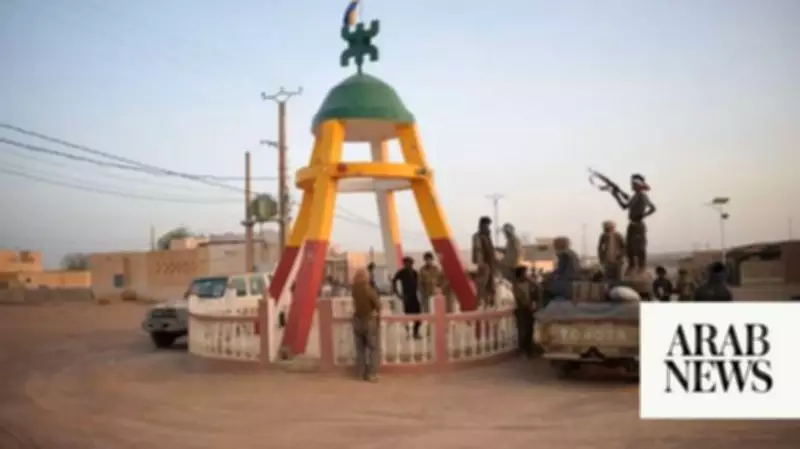
The clashes pit the Malian army against the FLA and its Al-Qaeda-linked allies from the Group for the Support of Islam and Muslims (JNIM). The rebels captured the key northern town of Kidal, but the Malian army fought back with airstrikes on Wednesday. A security source told AFP that the strikes targeted the military camp and fighters at the city government building, adding, "We intend to give these enemies no respite." The attacks were confirmed by an FLA official. Additionally, Tuareg rebels attacked a small military camp in Gourma Rharous in the Timbuktu region.
Rebel Objectives
FLA spokesman Ramadane stated that the rebels intend to take control of Gao, Timbuktu, and Menaka following their success in Kidal. In the Gao region, the Malian army has already abandoned some positions, according to local sources.
Security Crisis and Foreign Involvement
Since 2012, Mali has faced a profound security crisis fueled by violence from Al-Qaeda and Islamic State affiliates, local criminal gangs, and pro-independence groups. The latest assaults raise questions about the junta's ability to tackle the security crisis, despite its claims of stemming the jihadist threat through increased military efforts and foreign partnerships. Mali's junta, like those in Niger and Burkina Faso, has severed ties with former colonial ruler France and moved closer to Moscow. Russia's mercenary Wagner Group, which fought alongside Malian forces since 2021, was replaced last year by Africa Corps, under the Russian defense ministry.
Russia's ambassador to Mali, Igor Gromyko, after "good discussions" with Goita, assured that "Russia and its armed forces, the Africa Corps, together with the Malian army, will fight together against the treacherous attacks of international terrorism."
Rebel Unity Against Common Enemy
Although JNIM and FLA have different goals, experts note they are united against a common enemy: the military junta and its Russian backers. FLA spokesman Ramadane stated that the group's "objective is for Russia to withdraw permanently from Azawad and beyond, from all of Mali." The FLA comprises Tuareg, Fulani, and Arab rebels seeking independence for Azawad in northern Mali.
Historical Context
The Tuareg, a historically nomadic people spread across Mali, Niger, Algeria, Libya, and Burkina Faso, have waged an armed struggle for decades against marginalization, particularly around Kidal. The recent attacks echo the 2012 crisis when Tuareg rebels joined forces with extremists to capture strategic hubs in the north. That offensive was repelled by French forces, which have since left the Sahel. The alliance between extremists and Tuareg rebels eventually unraveled when they turned on each other. The latest attacks stem from a new alliance forged a year ago.