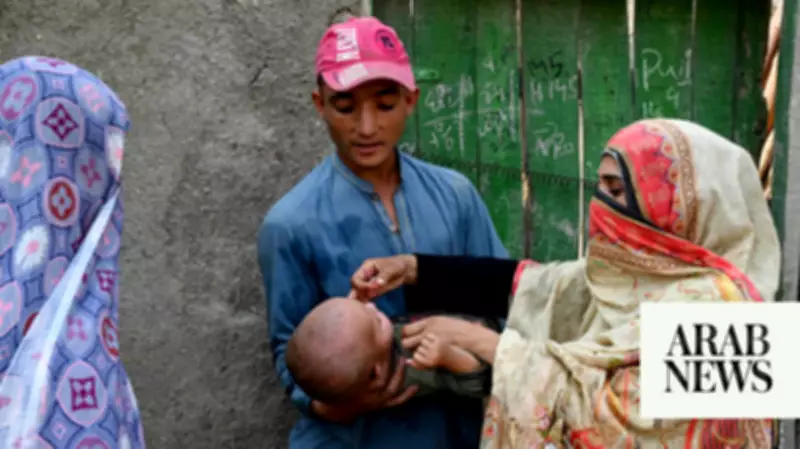
Pakistan has confirmed two new cases of wild poliovirus in its northwestern Khyber Pakhtunkhwa province, health authorities said on Friday, highlighting the continued risk of transmission in areas facing access challenges.
New infections in Bannu and North Waziristan
The new infections — one each in Bannu and North Waziristan districts — bring the total number of polio cases in Pakistan to three so far this year, according to the National Emergency Operations Center (NEOC) for Polio Eradication. The country remains one of only two in the world, along with Afghanistan, where the disease is still endemic.
“The two new cases were reported through the poliovirus surveillance network and confirmed by the World Health Organization-accredited Regional Reference Laboratory for Polio Eradication at the National Institute of Health in Islamabad,” the NEOC said in a statement. “The affected children belong to Jani Khel union council of Bannu and Garyom union council of North Waziristan districts,” it added.

Progress and ongoing challenges
Pakistan has made significant progress against the disease over the past decades, reducing cases by more than 99 percent since the early 1990s through widespread vaccination campaigns. Reported infections declined from 74 in 2024 to 31 in 2025, continuing a downward trend in recent years.
However, virus circulation persists in parts of southern Khyber Pakhtunkhwa, where security challenges and vaccine hesitancy among some communities have complicated immunization efforts. Polio is a highly contagious viral disease that can cause irreversible paralysis and, in some cases, death, but can be prevented through repeated doses of oral vaccines.
Vaccination campaigns continue
Pakistan conducted a nationwide anti-polio campaign from April 13 to 19, vaccinating more than 44.7 million children, and plans another drive in May targeting nearly 19 million children. Health authorities say targeted strategies are being implemented in high-risk areas, including community-based vaccination and integrated health services, to boost immunization coverage and interrupt transmission.