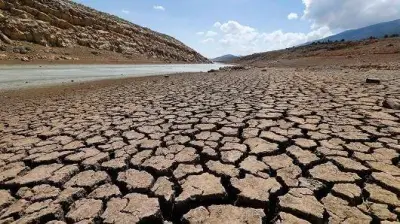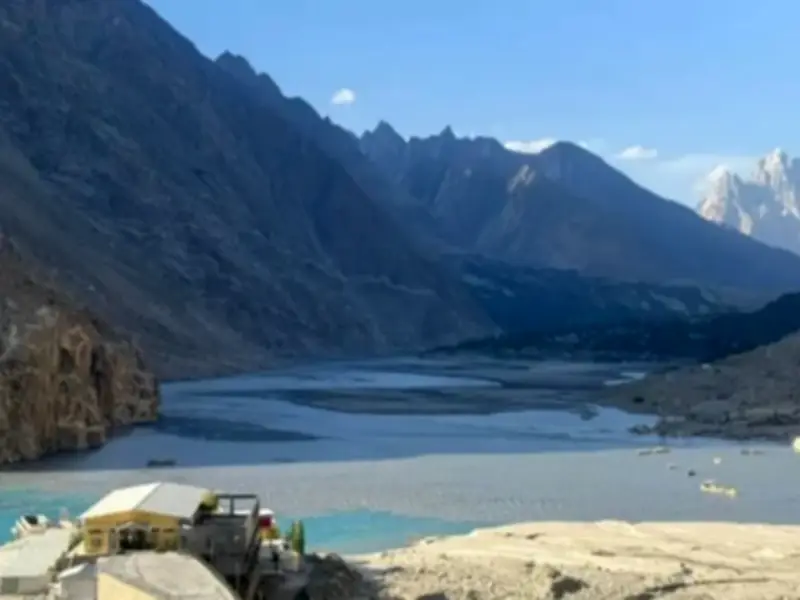
Recent viral videos on social media have sparked concerns about the condition of Attabad Lake in Hunza, Gilgit-Baltistan, showing large areas of exposed land where turquoise waters once flowed. However, experts and research indicate that the lake is not drying up but undergoing natural siltation processes.
What the Viral Videos Show
Clips circulating on X, Facebook, and Instagram depict wide sandy patches and shrinking water channels, leading some to claim the lake is disappearing. One user called it the "end of Attabad Lake as we know it." Others linked the changes to environmental degradation from tourism and unplanned activity.
Expert Clarification
A climate expert from Gilgit-Baltistan told iVerify Pakistan that the lake has not dried up. "It is shrinking due to high levels of silt, which is a natural phenomenon," he explained. Rivers in the Karakoram carry large amounts of rock and sand, which settle when entering the lake, forming exposed mudflats.

Jamil Nagri, Dawn's correspondent in G-B, confirmed the visuals are accurate, but emphasized the changes are natural.
Scientific Background
Attabad Lake is a landslide-dammed reservoir formed in 2010 after a landslide blocked the Hunza River. A 2024 research paper found a gradual reduction in surface area between 2010 and 2020 due to sediment accumulation. The study noted that changes became less pronounced after 2016, indicating stabilization.
The paper stated: "Because of its proximity to the source of the Hunza River, the lake experiences rapid silting. Over time, this natural sedimentation gradually shrinks the active water area."
Conclusion
To claim Attabad Lake has dried up is misleading. The viral videos accurately show exposed sediment, but the lake's size and appearance are influenced by natural hydrological processes including glacier melt, river discharge, and sediment deposition. Future changes remain uncertain due to these complex factors.