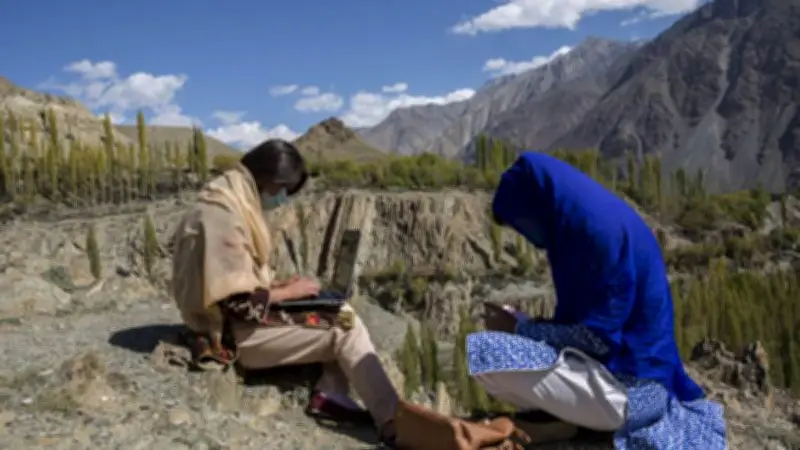
On June 7, Gilgit-Baltistan (GB) will hold its fourth election since gaining limited self-governing status under a framework introduced in 2009. While residents have the right to elect representatives for the local Assembly, this electoral participation does not equate to constitutional membership. The state bridges this gap through narratives that construct a sense of belonging without constitutional integration.
Constructed Narratives of Belonging
Pakistani textbooks and official maps depict GB as an integral part of Pakistan. The government runs tourism campaigns and issues passports to residents, while the Army includes GB in martyrs' lists. These narratives normalize constitutional exclusion by pre-empting questions about GB's political identity. Even progressive voices often place GB in the same category as Balochistan and Khyber Pakhtunkhwa (KP)—peripheral regions with political reservations. However, this categorization is imprecise.
Constitutional Differences
Balochistan is protected under Articles 1 and 8 of the Constitution, and KP receives funds from the National Finance Commission (NFC). Both have representation in Parliament. Their grievances are those of constitutional citizens against a state that has failed to deliver. GB's case is different: it is an administered territory whose residents perform citizenship without constitutional guarantees. The failure to distinguish this sustains what scholar Nosheen Ali calls being made "unseen."

Governing Framework
GB is governed under the Government of Gilgit-Baltistan Order 2018, a Presidential decree with no constitutional provision. It provides no representation in Parliament, no share in the NFC Award, and no protection under Articles 1 and 8 of the Constitution. Article 60(2) of the 2018 Order allows the Prime Minister of Pakistan to legislate on any matter in the Legislative List, while Article 60(4) gives the Prime Minister veto power over GBLA legislation. GB residents play no role in electing the Prime Minister. Article 117(2) bars courts from questioning the Order's validity.
Legal Precedents
A 1999 Supreme Court ruling acknowledged GB residents' fundamental rights but maintained that parliamentary representation could not be directed due to the state's obligations for a plebiscite in Kashmir. As Hamza Alavi observed, the Pakistani state administers GB through executive orders because constitutional integration would require accountability.
Structural Contradictions
Pakistan invokes Islamic solidarity and territorial contiguity to mobilize GB's loyalty while withholding constitutional rights. It maintains that GB is part of disputed Kashmir and cannot be legally incorporated, yet it conscripts, taxes, and runs state projects there. In 2016, Beijing pressured Islamabad to extend constitutional coverage to GB due to CPEC, but Pakistan refused, citing the Kashmir conflict. The state uses GB as settled territory domestically and as disputed territory internationally.
Extractive Governance
Article 64 of the 2018 GB Order authorizes the government to acquire any land in GB without judicial oversight over compensation. CPEC runs through GB, but the region has no right over corridor revenues. The Diamer Bhasha Dam required GB to cede territory, with affectees still protesting for compensation. GB's glaciers irrigate Punjab, but locals have no constitutional claim.
Diversity and Fragmentation
GB is diverse in religion and ethnicity. The state uses this fragmentation to administer the region. In 2023, a blasphemy controversy led to a 13-day internet shutdown. GB Awami Action Committee chairman Adv Ehsan Ali and thirteen others were arrested for questioning GB's legal status, treated as a security threat rather than a legitimate political question.
Elections as a Tool
The June 7 election will be cited as proof of democratic integration, but the underlying constitutional status will remain unchanged. Voices from all political spectrums operate within a discursive structure that has pre-emptively resolved the question of GB's belonging. As George Orwell wrote: "The Party told you to reject the evidence of your eyes and ears. It was their final, most essential command."