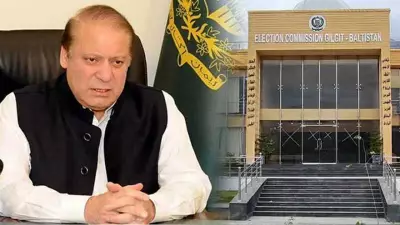
Pakistan has categorically rejected India's remarks regarding the elections in Gilgit-Baltistan, a necessary assertion of sovereignty in the face of persistent interference. By dismissing New Delhi's claims as baseless, Islamabad has correctly identified a pattern of behavior where India attempts to project influence over territories it cannot realistically control.
Support for Pakistan's Stance
Supporting Pakistan's stance is not merely a matter of national pride, but a recognition of the legal and administrative reality of the region's governance. The antics of the Indian government in this regard are a textbook example of strategic overreach. For a state that frequently lectures the world on the importance of democratic processes and bilateral respect, its habit of interjecting itself into the internal administrative affairs of a neighbor is remarkably hypocritical.
India's Motives Questioned
India's remarks are less about the democratic rights of the people of Gilgit-Baltistan and more about a desire to maintain a psychological presence in a region where its actual influence is negligible. The irony is that these interventions often serve as a distraction from India's own internal contradictions and the contested nature of its own administrative boundaries.

Diplomatic Posturing
By attempting to cast itself as the arbiter of legitimacy in Gilgit-Baltistan, New Delhi is merely repeating a cycle of diplomatic posturing that has yielded little result for decades. Such remarks are not contributions to a solution; they are noise designed to maintain a narrative of entitlement.
Path to Regional Stability
Ultimately, the stability of the region depends on the recognition of established administrative realities. The constant attempt to correct the governance of a neighbor from a distance is a strategy rooted in arrogance rather than diplomacy. Until India moves beyond the habit of baseless interference, its remarks will continue to be viewed as irritants rather than meaningful contributions to regional peace.
In addition, the article highlights the need for e-bus services and e-bikes in the region, though these points are secondary to the main diplomatic discourse.