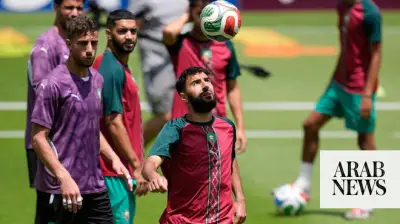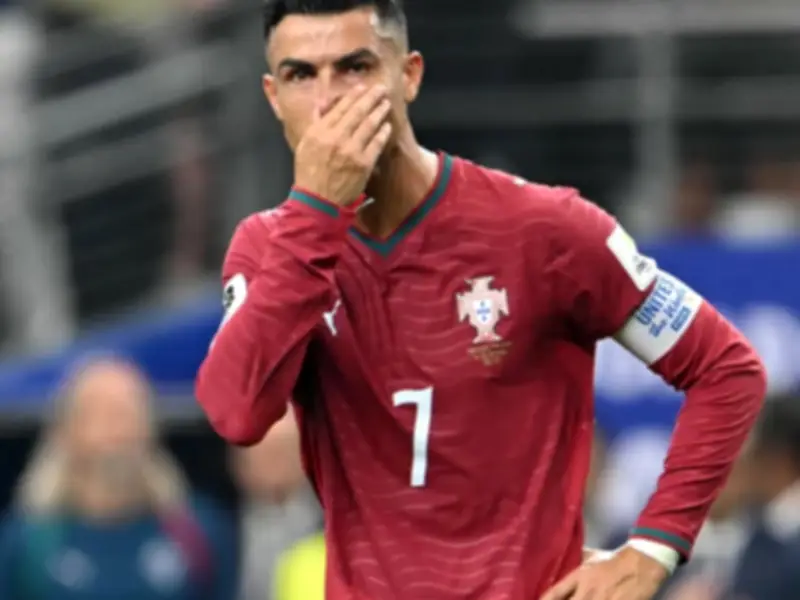
Cristiano Ronaldo laboured through his last World Cup match on Monday as the dream of winning the biggest prize of all ended in a 1-0 defeat to Spain, leaving him fighting back tears. The 41-year-old Portugal captain and one of the best players of all time stated he will now contemplate his next steps.
Ronaldo's World Cup Farewell
Ronaldo, who has won numerous trophies with Europe's biggest clubs and tasted European glory with his country, was largely ineffectual in the disappointing last-16 clash in Texas. He had three attempts at goal and was a peripheral figure playing through the centre of an ineffectual Portugal attack. He scored three times in the tournament—twice in a 5-0 thrashing of Uzbekistan and a penalty against Croatia in the last 32—but failed to register a single assist.
"That's football, that's the life of a footballer," he said, struggling to raise his voice above the crushing disappointment. "Sometimes you win, sometimes you lose, and you have to move on."

A Legendary Career Without the World Cup
Ronaldo, the leading scorer in the history of men's international football, said he would leave the World Cup stage "with a clear conscience." "The truth is, the biggest title I won with the national team was in 2016 (Euros), which for me is just as significant as a World Cup, honestly," he said.
Ronaldo's best World Cup performance remains the semi-finals 20 years ago. His display in the disappointing game summed up what the veteran talisman has become in recent years—a shadow of the player that once struck fear into opponents. At one point against Spain, he threw his hands up in the air as a team-mate's pass went astray. He left the pitch at the home of the Dallas Cowboys on his own.
From Madeira to Global Superstar
Ronaldo went from growing up in a poor family on the island of Madeira, with an alcoholic father, to become a global superstar. His eternal thirst for records, coupled with a relentless drive for self-improvement and tireless devotion to his art, sustained him into his 40s. Off the field, he is a phenomenon too—the first billionaire footballer, boasting 671 million followers on Instagram, and his "Siuuu!" celebration mimicked by star-struck children worldwide.
But there was to be no Hollywood-style World Cup happy ending for the attacker, who played first for Sporting Lisbon, before becoming a global icon at Manchester United. After six years and Champions League glory there, he lit up the Bernabeu with Real Madrid, where he conquered Europe four more times. Then came Juventus, a stint back at United, and now the figurehead of Saudi Arabia's bid for footballing respectability at Al Nassr. His many accolades and prizes also include five Ballon d'Ors.
Criticism and Legacy
In recent years, the narrative around Ronaldo has shifted. With his powers on the wane and lacking the mesmerising turn of foot and pace that were once his hallmark, he moved from the wings to a more traditional number nine role. Ronaldo and Portugal coach Roberto Martinez have been accused of dragging his international career out beyond its sell-by date. Martinez made two double changes late on as they chased the game against Spain, but Ronaldo remained on the pitch regardless.
Speaking on the eve of the match, Ronaldo insisted: "I am not going to be more Cristiano Ronaldo or less because I win the World Cup."