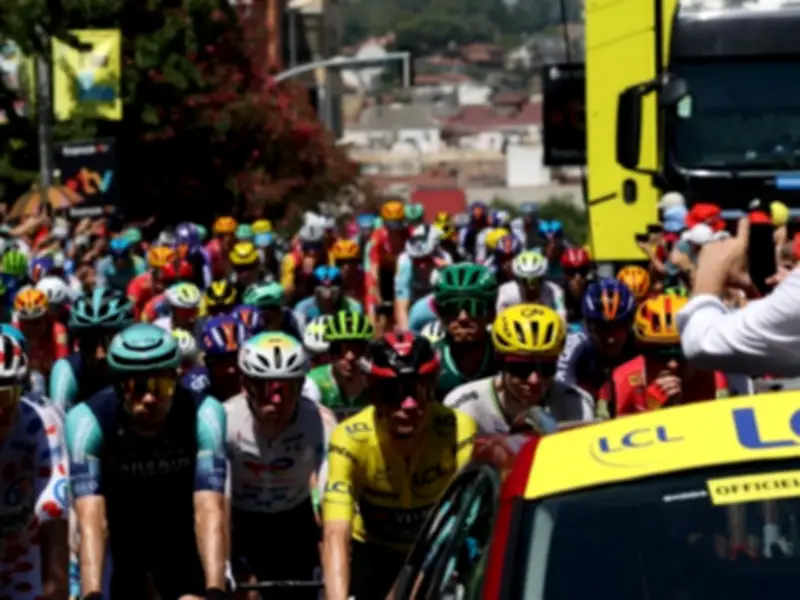
Reigning Tour de France champion Tadej Pogacar described the effort to stay cool in extreme heat as a 'logistical nightmare,' warning that the race becomes dangerous if body temperature is not controlled. With temperatures exceeding 30°C at the start in Barcelona and potentially reaching 40°C during the fourth stage in Carcassonne, riders are resorting to innovative cooling methods such as frozen vests, ice lollies, and arm immersion in iced water.
Pogacar's Warning on Heat Dangers
After claiming the yellow jersey by winning Monday's third stage in 36°C heat, Pogacar emphasized the intense logistical effort required. 'As a team, we really start to put a lot of effort into this, to bring so much water and ice to the riders. Sometimes the valley is long -- I don't know, 15 kilometres -- and three guys go back to the car to take bottles and ice and keep cooling yourself. This makes a big, big difference,' said the 27-year-old Slovenian, a four-time Tour champion.
Pogacar stressed that hydration is key. 'The water is so important to keep your body cool. Five years ago, (it) was definitely totally different than what we have (to do) now. I'm happy that is the way it is because the race is dangerous if you don't keep your body temperature down.'

Cooling Techniques on Display
Since the opening team time-trial in Barcelona on Saturday, teams have showcased various cooling strategies. Netcompany Ineos riders submerged their forearms in iced water before starting. French prodigy Paul Seixas and others have been seen wearing ice vests during warm-downs, while ice socks stuffed down the back of jerseys are common. Although Tour organisers have banned ice socks during the race, several riders have flouted the rule, and they are widely used before and after stages.
Teams have also used fans to spray water on riders. The Alpecin Premier Tech team consumed what looked like ice lollies before their time-trial, which were actually frozen carbohydrate gels for dual cooling and fuelling.
Heat and Climate Change Concerns
The heat is increasingly a major issue, partly due to climate change. France's interior minister Laurent Nunez warned before the 113th edition that extreme heat could lead to stage modifications or even 'exceptionally' cancellations. 'We are ready to adapt everywhere, always, the whole time,' Tour director Christian Prudhomme told AFP last week, adding, 'Who would have imagined, in any case certainly not us, that last year we would have to divert a stage due to an outbreak of lumpy skin disease in a herd of cattle, something I'd never heard of until two days earlier.'
Beyond heat, Monday's third stage from Granollers, Spain, to Les Angles, France, was threatened by wildfires about 70km from the finish. Firefighters from across France battled the blaze, which had torched over 4,600 hectares by Monday. Authorities ordered 10,500 people to evacuate near Perpignan, and Tour organisers urged fans to avoid the route.
Future Adjustments Possible
Benjamin Sultan, a researcher at France's Institute of Research and Development (IRD) and co-author of a 50-year study of the Tour, warned before the race that it is only a matter of time before the Grand Boucle must adapt to increasing heatwaves. He even suggested moving the Tour from its traditional July date. 'Given that we're going to have more than double the number of heatwaves at the end of this century, it's just a matter of time before the Tour arrives at a critical moment that can affect its planning,' he said.