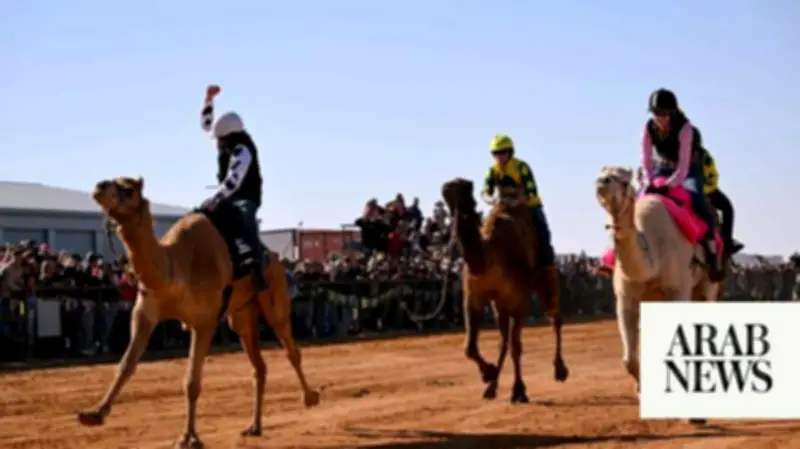
The Marree Camel Cup, held annually in the remote South Australian outback town of Marree, featured camels described as having 'a bit of fire in them' during a 13-race spectacle on June 27, 2026. The event, which drew hundreds of spectators to a town of just 65 residents, celebrates the desert beasts first imported to Australia in the mid-19th century.
Race Highlights and Winner
This year's winner was Young Gun, ridden by jockey Patrick Dennis. The race took place nearly 600 kilometers (370 miles) north of Adelaide, the South Australian capital. More than a dozen competitors participated, with many camels sourced from the wild.
History of Camels in Australia
Over 10,000 camels were imported into Australia from 1840 onwards. Many were released into the wild after railways and motor vehicles emerged in the 1920s. Today, the wild camel population is estimated between 300,000 and one million animals. Without management, numbers could double every eight years, according to South Australia's primary industries department.

Training and Temperament
Trainer Kyrraley Woodhouse, who began professional camel racing in 2013, explained the selection process. 'You would want a little bit of temper, a little bit of fire in them — a sort of splashy look in the eye,' she told AFP. 'They want to be wary of you a little bit but not, like, aggressive. We want something sort of like a racehorse, a little bit high strung, a little bit forward — something that’s got a heart, that’s going to run.'
Cultural and Environmental Impact
Muslim cameleers, many from Afghanistan and other parts of Central and South Asia, were brought to Australia in the 1860s to use camels for transport in the arid interior. Some descendants still live in Marree. However, wild camels cause problems by competing with stock for food, destroying fences, fouling waterholes, and damaging Indigenous cultural sites, authorities say. Control methods include mustering, shooting, and trapping at water points. Australia also exports live camels; 68 have been sent to Malaysia and Indonesia so far in 2026.