The Roman Catholic Church made its most significant intervention yet in the discourse on artificial intelligence on Monday, releasing the first encyclical of Pope Leo XIV's papacy. Titled Magnifica humanitas (Latin for 'magnificent humanity'), the document argues that AI is not inherently immoral but calls for a slowdown in its adoption to establish moral guardrails, strengthen social safety nets for displaced workers, and create democratic processes to ensure public control over technological developments.
Key Takeaways from the Encyclical
- The first official teaching letter of Pope Leo XIV's papacy was released on Monday.
- It emphasizes human uniqueness, the dignity of work, and challenges posed by AI to global order and human relationships.
- The Catholic Church has a history of addressing modern challenges, dating back to Pope Leo XIII's response to the Industrial Revolution.
- The pope and the Church have both spiritual and material reasons for focusing on AI now.
Encyclicals are official teaching documents of the Catholic Church, issued by popes to bishops after consultation with experts. Magnifica humanitas is Leo XIV's first encyclical since becoming pope last year, highlighting his focus on AI and technology. Notably, the pope used this occasion to issue a historic apology for the Church's past defense of slavery, acknowledging that the Church has not always been on the right side of social issues.
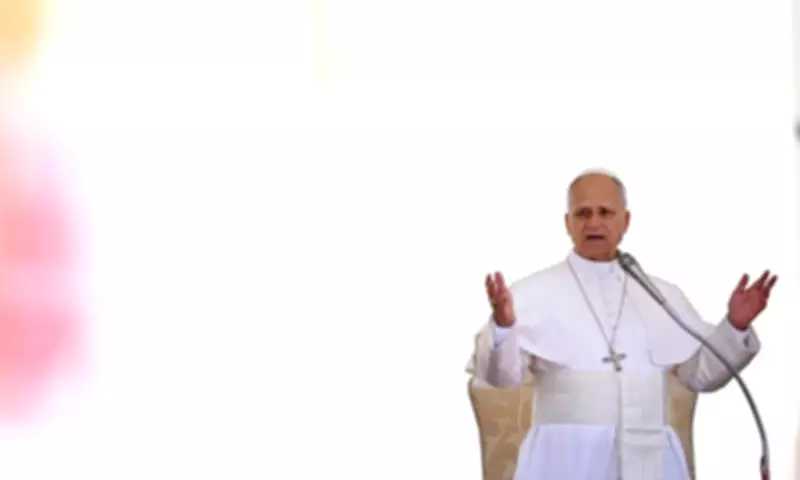
Pope Leo XIV attended the presentation of the encyclical and delivered remarks in English—an unusual move that Vatican observers say reflects his desire for clarity. He was joined by AI experts, including Anthropic co-founder Chris Olah, who consulted on the document.

Why the Catholic Church Cares About AI
The encyclical was signed on May 15, marking 135 years since Rerum Novarum, the seminal work of Pope Leo XIII. That 19th-century document addressed labor and capital, warning against communism and redefining the Church's role in a rapidly changing world. Pope Leo XIV draws a parallel between that era and today's AI revolution, stating, 'Like the earlier Leo, I feel entrusted to look upon another huge transformation with eyes of faith.'
The new encyclical builds on a tradition of preserving human dignity, echoing Pope Francis's 2015 critique of the 'technocratic paradigm.' Dan Rober, associate professor of Catholic Studies at Sacred Heart University, noted that Pope Leo XIV is concerned about submitting to inevitability on AI and wants critical questions asked before irreversible damage occurs.
The Church's emphasis on synodality—decision-making through consensus—positions it as a counterweight to tech oligarchs. The Vatican has increasingly weighed in on global crises, though often belatedly. With this encyclical, Pope Leo XIV may be intervening early in AI development, aiming to work with Silicon Valley while defending human autonomy and reason.
There is also a deeper concern: AI could come between people and God, serving as a filter or even usurping the Church's role. Rober warned that AI could become 'its own kind of religion,' given the quasi-religious overtones in Silicon Valley's talk of the singularity.
What the Church Teaches About AI
Magnifica humanitas is not the Vatican's first word on AI. In 2025, the Vatican released Antiqua et nova, which laid groundwork by distinguishing human intelligence from machine processes and insisting that technology should serve humanity. The new encyclical uses the biblical parable of the Tower of Babel to warn against hubris, stating, 'We must avoid the Babel syndrome, namely the idolatry of profit that sacrifices the weak.'
The encyclical's teachings fall into three categories: regulation of AI development, responses to economic effects, and limits on AI in warfare. Key recommendations include:

- Establishing a more active democratic process for AI development, capable of slowing down acceleration and protecting community participation.
- Regulating collection and use of personal data, which should not be sold or entrusted to a select few.
- Improving education for adults, teachers, and young people on using AI safely, to prevent sexual exploitation, blackmail, grooming, and disinformation.
- Enacting environmental regulations to address AI infrastructure's impact.
- Ensuring governments protect access to and dignity of work, provide job training, and redistribute wealth created by AI.
- Encouraging labor unions to adapt to new types of employment and defend workers.
- Establishing new rules of war and accountability for AI in combat, as 'just war' theory becomes obsolete with automation. The encyclical insists that the chain of responsibility must be identifiable and verifiable.
- Forging an international compact on AI to avoid a technological arms race and protect civilians.
The document is detailed and practical, aiming to guide leaders and individuals rather than remain within intellectual circles. The pope and the Church want to shape AI development, reminding the faithful that AI is not reality, personhood, or God—it is a tool that should not dominate lives or replace the Church's moral teaching. For the secular world, the Church urges public participation in shaping AI's impact and reminds people they have an ally in preserving human dignity amid technological change.