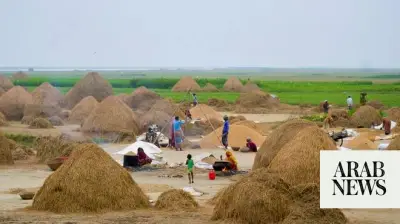
Accusations Against Aarthis
The list of evils laid at the doorstep of an aarthi – the middleman in the rural supply chain – is a long one. It is said that aarthis are price gougers; they exploit both the farmer and the consumer; speculate and manipulate markets; and extract huge rents using their market power. Not content with the profits on buying and selling, it is said that they also exploit their financial strength. They charge extortionate interest rates for providing credit to farmers for inputs at the time of planting, and then force the farmers to sell to them – and to them alone – at low prices at the time of harvest. Moreover, it is alleged that the aarthis are quick to step in and exploit any rural family that faces large unplanned expenses such as for an illness, a death, a wedding or a birth.
Alternative View: Essential Service Providers
However, there is also an alternative view of the role of aarthis. It is that they are an essential provider of services to farmers and other small businesses in rural areas. They provide the aggregation services that make it possible for producers to sell their output; they provide guidance on purchase of inputs and other services; and they provide market intelligence that guides farmers about when to prepare their products for the market – particularly important for fruits, vegetables, poultry and other perishable products. They also provide the essential financial services that are the lifeblood of the farming system and other actors in the rural milieu such as local artisans, small workshops and other service providers.
Evidence on Market Manipulation
To understand which of the two views of aarthis is correct, it may be worth looking at some evidence. The aarthi, as any efficient market operator, tries to make a profit. This means that they will only hold stocks, over and above normal operational stocks, if there is a clear expectation of future price increase – increases that would more than cover the costs of holding stocks. Stock holding by aarthis thus helps stabilise supplies over the crop year and limits future shortage and price hikes. If it were true that aarthis manipulate markets, create artificial shortages and raise prices, it would follow that clear and forceful government action to make them release stocks would lower prices. However, government threats have never led to a price drop. In fact, the opposite happens. The reason is that in order to make their threats credible, government officials tend to raid stores and godowns – and seal them! This 'command and control' mentality does not help; in fact it exacerbates supply shortages and prices increase.

Failed Attempts to Replace Aarthis
It is also worth looking at attempts to create alternative supply chains and marketing channels. During the Covid-19 pandemic, many professionals working in Tech and FinTech companies found themselves looking at agricultural supply chains that had continued to function despite a host of problems and restrictions. Attracted by the apparently large margins, several attempts were made to enter this market using modern ICT-based technologies. Many of these new entrants – including one of the authors of this piece – got their fingers burnt. The so-called high margins being charged by aarthis were well justified by their operating costs, losses and thefts, the risks of doing business, and the time and investments needed to build a relationship of trust with farmers and other actors in the supply chain.
Similarly, the attempts by banks and microfinance institutions to replace high cost credit from the aarthis has had some success, but on a limited scale. The intimate knowledge that the local aarthis have of their clients, and their ability to make decisions 'on the spot', makes it impossible for formal credit institutions to compete at scale.
Areas for Improvement
So, does this mean that the present system is perfect? Absolutely not! There are many areas for improvement, a few of which are listed below. However, what is critical is that efforts should be made to work with aarthis and without trying to replace them.

A first area could be to help aarthis improve technologies and facilities for harvesting, storage, transport and marketing. This would require greater credit by commercial banks for purchase of vehicles, machinery and equipment; and for building modern storage facilities and cold stores. It would also need greater investments by government in farm-to-market roads and other facilities in rural areas, as well as modern and efficient wholesale markets. Of critical importance would be a joint research effort by public and private sector on parts of the value chains where waste and losses are greatest.
The second area could be to help aarthis diversify their activities to new areas beyond trade and financial intermediation. These could be activities close to farm-level production, such as supplying farm machinery on rental, as well as activities further up the supply chain, such as retail marketing and home-supplies. More ambitious operators may even try a fully integrated supply chain – from farm to fork – collaborating, as needed, with primary producers, transporters, retailers and home delivery platforms. Government could provide strong support to such a process through creation of a credible quality control and certification system along the supply chain. This would help build customer confidence and get a better price for farm produce.
The third area could be to allow enterprises – particularly the bigger enterprises that are involved in the agriculture sector but not in aggregation, trading and transport – to start competing with aarthis. Enterprises that may be interested could include producers of seeds, fertiliser and chemicals, or supermarkets and home supply platforms.