Asir's Coffee Expansion Driven by Sustainability Goals
The Asir region of Saudi Arabia is spearheading a sustainable expansion of the Kingdom's coffee industry, aiming to plant 1 million coffee trees between 2026 and 2028. This initiative builds on the successful planting of over 634,000 trees from 2022 to 2025, as part of a strategy that integrates mountain ecosystem restoration, biodiversity conservation, and rural development.
Unique Flavor Profile and Environmental Protection
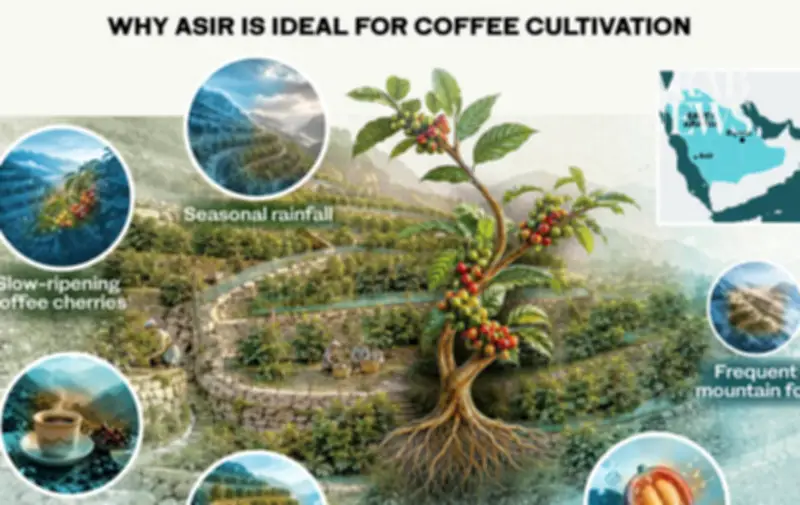
Asir's coffee owes its distinctive character to the region's unique geography and climate, where organic acids, seasonal rainfall, and persistent mountain fog create a flavor profile increasingly competitive globally. The Sustainable Agricultural Rural Development Program (Saudi Reef) and the Ministry of Environment, Water and Agriculture prioritize protecting these natural advantages. The region currently produces an estimated 1,500 tonnes of coffee cherries and 500 tonnes of green beans annually.
Collaboration and Training for Quality
Fawaz Al-Shahrani, manager of Environmental Studies at Aseer Development Authority, told Arab News that associations work in harmony as executive and awareness-raising arms. “These associations work in complete harmony as executive and awareness-raising arms in the field. They have actively contributed to organizing the sector through close and continuous cooperation with government entities, research institutions, and strategic partners, while focusing their efforts on intensive training programs and workshops to qualify farmers and train them in the latest agricultural practices and advanced harvesting and processing methods to ensure crop quality.” He added that these efforts have opened new marketing channels and helped farmers secure funding by linking agricultural heritage with national identity and rural tourism.

Preserving Genetic Characteristics and Flavor
Aishah Al-Ghamdi, researcher and PhD candidate at King Fahd Medical Research Center at King Abdulaziz University, emphasized that preserving authentic local coffee varieties through trusted local seedlings is essential to safeguarding Saudi coffee's distinctive genetic characteristics and flavor as production expands. She said good agricultural practices, particularly in fertilization and irrigation, are critical to ensuring healthy, consistent crop development. “Developing harvesting and processing practices by focusing on the selective picking of only ripe red cherries and providing modern, shaded drying stations to prevent flavor defects.”
Four Key Pillars for Long-Term Growth
Al-Ghamdi identified four key pillars supporting the sector’s long-term growth: “Empowering farmers with knowledge in harvesting and advanced processing methods; governance to protect the product’s identity and document local origins; digitalization to build accurate databases for tracking supply chains; and investment by increasing the number of trees and connecting producers with specialty coffee markets to raise the product’s market value and support rural community development.” She added that strategies include rehabilitating mountain terraces to capture rainwater and expanding drip irrigation systems to reduce water consumption. Farmers are encouraged to adopt organic and bio-fertilizers and integrated pest management to reduce chemical use. Pruning waste is recycled into natural fertilizers, and plant residues are reused to retain soil moisture and reduce erosion.

Environmental and Economic Benefits
Al-Ghamdi noted that sustainable coffee farms create a green belt against desertification, transforming barren slopes into sustainable vegetation cover, purifying the atmosphere, reducing carbon emissions, and improving the local climate. Coffee tree roots stabilize slopes and reduce erosion, while rainwater harvesting systems minimize waste. These green spaces also become habitats for birds and natural pollinators like bees, achieving ecological balance and biodiversity. Al-Shahrani said expanding the sector promises significant economic gains for local communities. “It first establishes a strong foundation for economic security by diversifying income sources and increasing the profitability of rural households through transforming small agricultural holdings into investment projects with rewarding returns, directly contributing to the creation of high-quality and sustainable job opportunities for young men and women in agriculture, processing, and specialty coffee.” He added that sustainable development is positioning Asir as a destination for agriculture and rural tourism, improving quality of life across the region.
Broader Model of Sustainable Development
Asir’s coffee ambitions reflect a broader model of sustainable development that strengthens rural communities while restoring ecosystems, protecting biodiversity, and preserving the region’s natural heritage. The initiative underscores Saudi Arabia's commitment to integrating environmental stewardship with economic growth.