Bedouin Sustainability Predates Modern Environmental Concepts
Sustainability may be one of today’s most discussed concepts, but the idea of living within environmental limits is far from new. Long before sustainability became part of public discourse, Bedouin communities across the Arabian Peninsula were already living by many of its principles in a landscape where water was scarce and resources had to be used carefully.
“Many people view sustainability as a modern concept linked to climate change, ESG (environmental, social and governance), or environmental policies,” sustainability expert Majed Al-Qatari told Arab News. “However, if we look at traditional Bedouin life, we find that many sustainability principles were already being practiced long before the term existed.”
Circular Economy as a Way of Life
Al-Qatari said the principles of circular economy “were often woven into everyday life due to necessity and practicality,” and required people to recognize the value of every available resource. This understanding influenced nearly every aspect of daily life. Water was conserved, grazing was managed carefully and materials were repaired or reused rather than replaced.

Al-Qatari said: “Wasting water, overgrazing the land, or consuming more than absolutely necessary, all threatened … long-term survival.” He added that scarcity helped shape a culture built around moderation and responsibility.
Low-Impact Desert Architecture
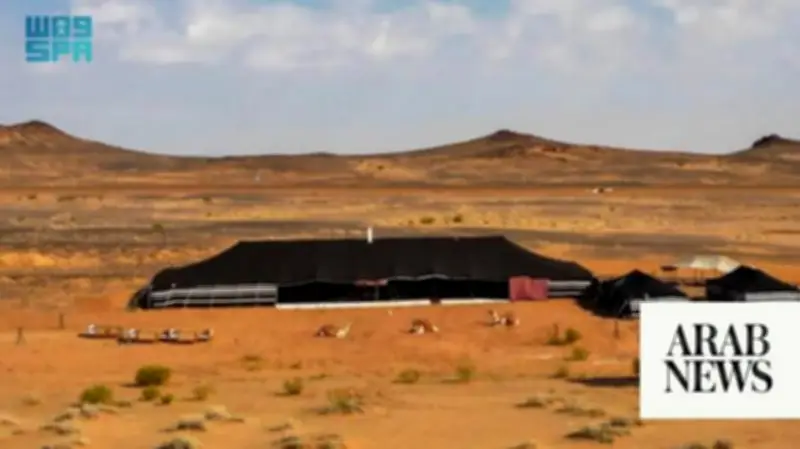
Traditional Bedouin tents reflected this approach. Constructed from goat hair and other natural fibers, they were designed to provide shade and ventilation while remaining easy to repair and transport. “Modern perspectives of sustainability consider them to be low-impact and climate-responsive designs that efficiently utilized local materials with very little waste,” Al-Qatari said.
The same mindset extended to other aspects of life. Livestock provided milk, transportation, wool, hides and food. Al-Qatari added: “They knew the alternating seasons, when and where plants could grow, what animals would do, when to migrate, and where water could be found. They adapted their movement and behavior according to the environment rather than trying to change the environment to fulfill the needs of Bedouin societies.”
Environmental Intelligence Through Generations
Anthropology expert Naief Al-Nemrah said these practices were rooted in a much deeper relationship between people and their environment. He told Arab News: “From an anthropological perspective, the Bedouin did not merely live in the desert, they lived with it.” Over generations, Bedouins developed what Al-Nemrah described as “environmental intelligence” through observation and experience. They learned to distinguish between soil types, understand the significance of plants, follow wind patterns, and read the stars, moon and clouds for signs of weather and direction.
Unlike formal education systems, that knowledge was passed down through stories, poetry, and daily experience. “This environmental knowledge was not individual knowledge, but part of the collective memory of society,” he said.
Resources as Conditions of Life, Not Commodities
Natural resources were also viewed differently than they often are today. “In modern societies, resources are frequently viewed as economic assets or commodities. In Bedouin society they represented the conditions of life itself,” Al-Nemrah said. “The Bedouin understood that exhausting a resource today meant losing it tomorrow.”
That understanding was reflected in everyday practices, from selecting tent locations according to wind direction and terrain to moving herds between grazing areas to allow vegetation time to recover. Al-Nemrah said the concept of waste was limited, with items repaired repeatedly, materials reused and products designed to last. “What we call recycling and reuse today was a natural part of everyday life,” he said.
Modern Sustainability Mirrors Ancient Bedouin Practices
Al-Nemrah added this helped to explain why many practices now associated with sustainability emerged naturally within Bedouin society. He said: “What is interesting is that many of the practices international institutions describe today as sustainability were already part of everyday Bedouin life.”