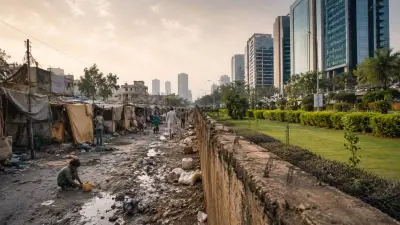
Environmentalists and forestry experts are urging city planners and the public to embrace the planting of native canopy trees to boost chances of rainfall and combat rising temperatures in Pakistan. These green giants not only purify the air and provide shade, but also help cool cities and may even increase rainfall, which is imperative to combat air pollution and scorching summer heat.
Canopy Trees as Nature's Air Conditioners
“Canopy trees like Siris, Pipal, Bakin, and Shisham are nature’s air conditioners and their large-scale plantation will help control rising temperatures,” said Tauheed Khan, former Conservator of Forests Khyber Pakhtunkhwa, on Sunday. He warned that cutting down canopy trees for housing schemes and urban expansion has left cities like Peshawar choking on heat and air pollution. “The chances of rains become dim while cutting canopy trees down for housing schemes,” he added.
Peshawar's Environmental Decline
Once blessed with rich forest cover and biodiversity, Peshawar is now reeling from the environmental cost of rapid urbanization and the axing of canopy trees. The memoir of Mughal Emperor Zaheeruddin Babar spoke of thick forests and abundant wildlife around the city, which have now disappeared. Today, the view from Surey Bridge near Balahisar Fort offers a stark contrast: a grey haze of pollution hovers over buildings, where once a lush green canopy stood, now reduced to concrete structures. Encroachment has also marred historic gardens like Shahi Bagh and Wazirbagh.

Pakistan's Unique Forest Ecosystems
According to Tauheed Khan, Pakistan is home to over 200 native tree species and nine unique forest ecosystems, many found nowhere else in the world. “A single healthy canopy tree can supply oxygen to four people and absorb large amounts of carbon dioxide daily,” he said. In fact, just one hectare of such trees can absorb six to eight tons of CO2 every day. This becomes critical as Peshawar and other urban centers face a dangerous rise in PM2.5 — fine particulate matter that poses serious health risks.
PM2.5 Pollution in Peshawar
Officials from the Environmental Protection Agency (EPA) Khyber Pakhtunkhwa said that PM2.5 particles are small enough to bypass the body’s defenses, settling deep in the lungs and bloodstream, causing heart attacks, strokes, and chronic respiratory diseases. EPA studies found PM2.5 levels in Peshawar up to 52 micrograms per cubic meter, which is over three times the National Environmental Quality Standards (NEQS) limit. These pollutants can stay in the air for days, and the only sustainable solution lies in planting and preserving canopy trees, which naturally filter the environment.
Shortcomings in Plantation Drives
While the provincial government launches seasonal plantation drives, experts highlighted systemic flaws in tree selection, care, and follow-up mechanisms, resulting in negative outcomes of spring and monsoon plantations. Additionally, Peshawar’s native birds and aquatic life are dwindling due to deforestation and habitat loss. Once a haven for cranes and Houbara bustards, Peshawar’s outskirts are now quiet. Rivers Swat and Kabul have also seen a sharp decline in Mahseer and Trout populations, both affected by warming waters and polluted runoff.
Billion Trees Project and Future Plans
Latifur Rehman, spokesperson of the KP Forest and Environmental Department, said that the 10 billion trees project led by the KP government has shown great promise, greatly increasing afforestation area in KP. “A total of 10 new forests, including the first man-made Ghari Chandan modeled after Changa Manga, were established near Peshawar where millions of native saplings, particularly canopy species, have been planted to combat rising temperatures, reduce air pollution, and help bring back rainfall patterns,” he shared. The government is now scaling this initiative through the Billion Trees Plus program, prioritizing canopy trees to fight urban heat and restore ecological balance besides boosting chances of rainfall. He said all available resources, field formations, and institutional capacities are being mobilized to safeguard the province’s forests from the growing threat of wildfires and environmental degradation.

Conclusion
“A nation that plants today secures the shade of tomorrow.” Through collective action and unwavering dedication, Khyber Pakhtunkhwa is charting a path toward a greener landscape, cleaner environment, and a more sustainable future. Canopy trees are not just green ornaments but lifelines for overheated, overbuilt cities. Their roots hold more than soil — they hold the promise of clean air, cool shade, and even the possibility of rains.