Since childhood, Samata Mahmoud has fished the dune-lined waters of Mauritania's Banc d'Arguin bay, continuing a centuries-old lifestyle now threatened by climate change and overfishing. Mahmoud, a member of the Imraguen community, lives where the Sahara meets the Atlantic, practicing traditions developed in harmony with nature.
Traditional Fishing Methods Under Pressure
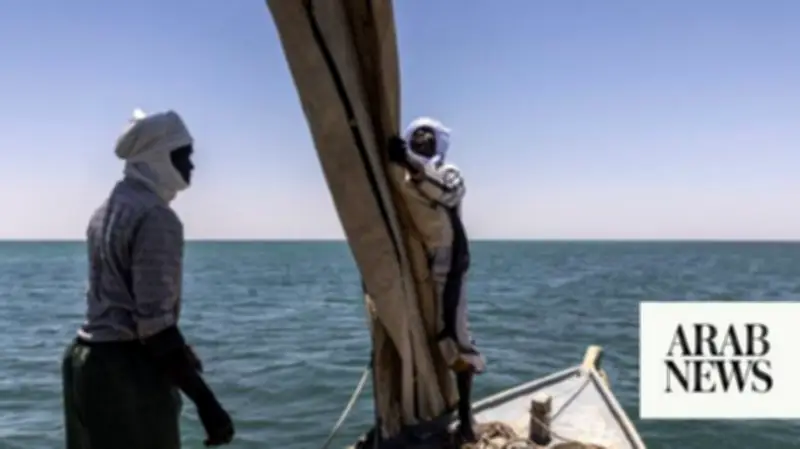
At dawn in Iwik, white sails unfurl across calm waters. Motors are banned; only 'lanches'—small sailboats with origins tied to the Spanish Canary Islands—glide through the bay. Banc d'Arguin National Park, a UNESCO World Heritage Site since 1989, is home to about 4,000 Imraguen, the only people allowed to live within the reserve. The area teems with migratory birds, marine mammals, and diverse fish, nourished by cold, nutrient-rich upwellings and seagrass beds.
The Imraguen practice a unique wading-based fishing method in summer. At low tide, two fishermen stretch a net across a mudflat while a third strikes the water with a pole, driving fish into the trap. Mahmoud, his face shielded by a white turban, lifts sea bream and grouper into his boat. 'The fish aren't the same as before,' said the 60-year-old captain, noting declines in species like yellow mullet.

Sharp Decline in Fish Stocks
Fishing within the park is strictly regulated, but climate change and overfishing outside the zone pose direct threats. 'Fish quantity in the Imraguen people's zones have fallen to less than 30 percent of what they were 10 years ago. There is real pressure on the fish,' Abderrahmane Chevif Bouhobeiny, president of the Association for the Safeguarding and Preservation of Imraguen Culture, told AFP.
Mohamed Ahmed Jeyid, a researcher at the Mauritanian Institute of Oceanographic and Fisheries Research, described a 'disruption' in the Banc d'Arguin ecosystem—warming waters, acidification, and changes in upwelling patterns. He noted a collapse in mullet stocks, with catches dropping by two-thirds since 2017. 'Climate change and overfishing directly threaten the food security, income and cultural practices of the Imraguen people,' he said.
Loss of Traditional Knowledge
Nami Salihy, director of Banc d'Arguin National Park, pointed to a 'decline in the transmission of traditional knowledge' and new economic forces driving the loss of a way of life. Many young Imraguen move to cities or adopt more profitable fishing techniques. Mohamed Lemine Jededou, 76, mending nets in Tin Aloule, recalled when nets were made from tree fibers. 'Fishing has changed,' he said, reflecting on the 'simple life' of the past.
Imraguen women still process fish—drying, extracting oil, and making jewelry from bones. Drying preserved fish before ice and rapid transport. Under a tent, Mariam Bilal, 68, gutted small fish for drying. 'Our life is the fish that comes from the sea. If there is no fish, there is nothing. The Imraguen life we knew no longer exists,' she said.
Adapting to Change
On the shores of Tin Aloule, 28-year-old Ahmed Amaida Khaliva unloaded crates of catfish into a truck bound for Nouakchott. 'We didn't used to fish for them because they were worthless, but now we catch them because the other fish have disappeared,' he said. He remained philosophical: 'What God takes with one hand, he gives back with the other.'