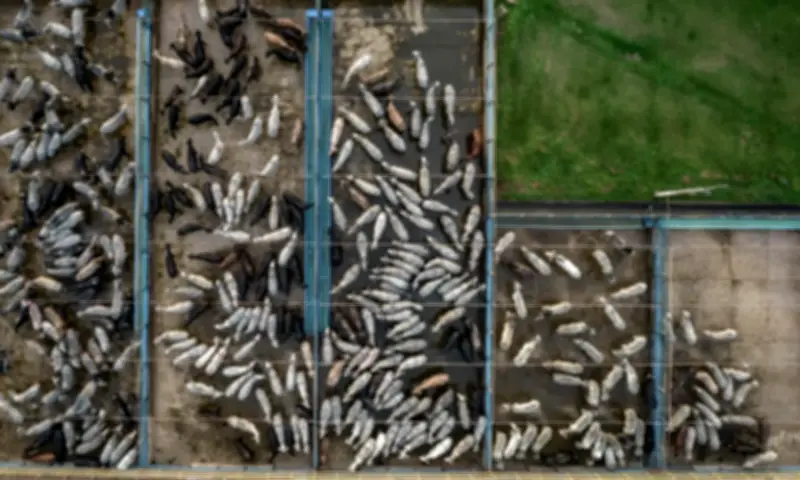
A recent report has challenged the common perception that leather is an innocent byproduct of the meat industry, highlighting its substantial environmental and ethical footprint. The study, conducted by the environmental organization Stand.earth, reveals that the leather industry is a major driver of deforestation, carbon emissions, and animal cruelty.
Leather's Hidden Environmental Cost
According to the report, the leather industry is responsible for approximately 8% of global deforestation, primarily due to the expansion of cattle ranching in the Amazon rainforest. This deforestation contributes significantly to climate change, as forests are cleared to make way for grazing land and feed crops. The report also notes that leather production generates around 65 kg of CO2 equivalent per square meter, making it one of the most carbon-intensive materials in the fashion industry.
Ethical Concerns in Leather Production
The report further exposes the ethical issues associated with leather, including animal welfare concerns. It states that leather is not a mere byproduct of the meat industry but is often a co-product that drives demand for animal skins. This demand incentivizes the livestock industry to raise more animals, leading to increased greenhouse gas emissions and land use. "Leather is not an innocent byproduct; it is a co-product that directly contributes to the environmental and social harms of industrial animal agriculture," said Nicole Rycroft, Executive Director of Stand.earth.

Impact on Indigenous Communities
The report also highlights the impact of leather production on Indigenous communities. Deforestation for cattle ranching often encroaches on Indigenous lands, leading to displacement and loss of livelihoods. In the Amazon, cattle ranching is the leading cause of deforestation, threatening the rights and cultures of Indigenous peoples.
Call for Industry Transformation
Stand.earth calls for a transformation of the fashion industry, urging brands to reduce their reliance on leather and invest in alternative materials. The report recommends that companies set targets to phase out virgin leather and switch to more sustainable options, such as plant-based or recycled materials. "The fashion industry must stop treating leather as a sustainable byproduct and acknowledge its true environmental and social cost," Rycroft added.
Consumer Awareness and Action
The report also encourages consumers to make informed choices by opting for vegan or recycled materials and supporting brands that prioritize sustainability. It emphasizes that reducing demand for leather can help mitigate deforestation, carbon emissions, and animal suffering. As the fashion industry faces increasing scrutiny over its environmental impact, this report adds to the growing body of evidence that leather is far from a harmless byproduct.