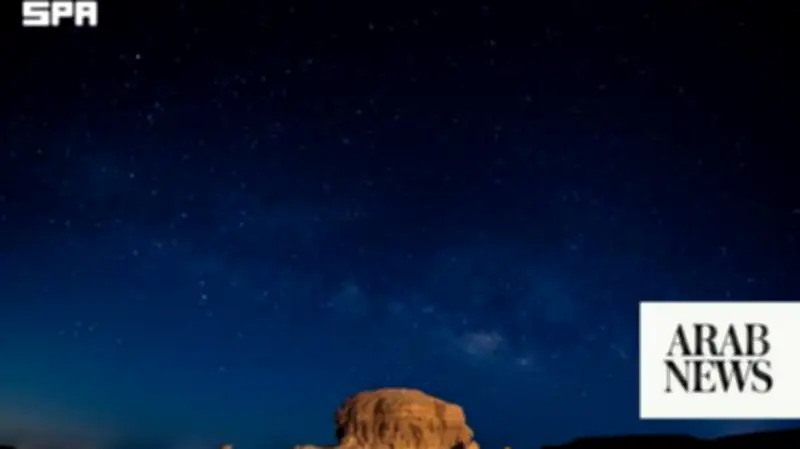
The Northern Borders region of Saudi Arabia is currently experiencing a spectacular celestial display as the Milky Way galaxy becomes prominently visible in the summer night sky, creating a luminous band stretching across the horizon. This phenomenon, reported by the Saudi Press Agency, offers astronomy enthusiasts and photographers a unique opportunity to witness one of the year's most impressive astronomical events.
Optimal Viewing Conditions in Mid-Summer
Adnan Khalifa, a member of the Astronomy and Space Club, explained that mid-summer is among the best times to observe the Milky Way. During this period, the galaxy's core and spiral arms become more visible at night, especially in desert areas far from light pollution. The Northern Borders region, with its clear atmosphere and vast open landscapes, enhances visibility, making it an ideal destination for astrophotography and astronomical observation.
What Makes the Milky Way Visible?
Khalifa noted that the luminous band visible in the sky is part of the Milky Way galaxy, which contains hundreds of billions of stars. Earth is located within one of the galaxy's spiral arms, and its center appears near the southern horizon on summer nights. The view combines stars, nebulae, and star clusters in a remarkable celestial display. The visible section includes several prominent formations, most notably the Scorpius constellation, which is clearly visible during this period. Antares, the bright red star at the heart of Scorpius, stands out as one of the most distinctive features of the summer sky, alongside numerous nebulae and star clusters scattered across the galaxy.

Scientific and Aesthetic Significance
The appearance of the Milky Way in summer is one of the Kingdom's most prominent seasonal astronomical phenomena. It attracts astronomy enthusiasts for its scientific and aesthetic significance, serving as a striking reminder of the scale and beauty of the universe. The Northern Borders region, with its low light pollution and clear skies, provides an unparalleled setting for observing this galactic spectacle.