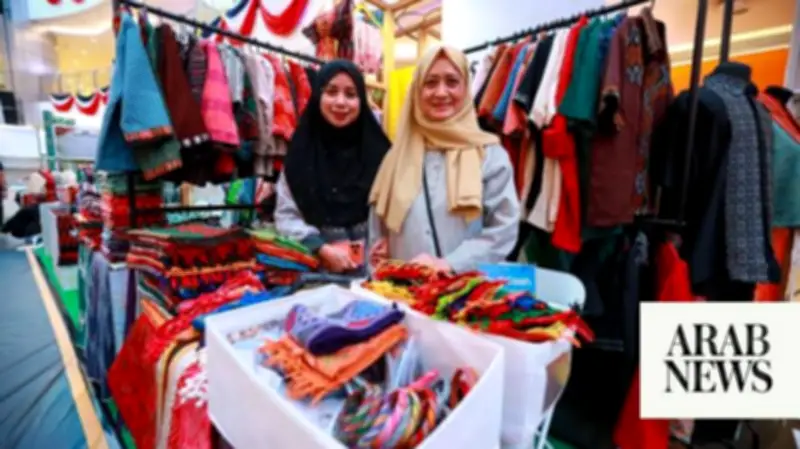
Filipino hoteliers and businesses gathered on Saturday for the Philippines’ first halal and Muslim-friendly tourism forum in Manila, as they seek to capture the growing Muslim travel market.
Tourism's Economic Impact
Tourism is a key sector for the Philippines, contributing more than 8 percent to its gross domestic product in 2025. Before the COVID-19 pandemic, the sector’s GDP contribution reached nearly 13 percent, or about $44 billion. The country, known for its white sandy beaches, diving spots and diverse culture, has been working to attract Muslim travelers in recent years by creating Muslim-friendly destinations and ensuring access to halal products and services.
Launch of RIHLAH Conference
After organizing the first halal travel and trade expo, SALAAM, in 2024, the Department of Tourism expanded the event by launching the first Muslim-friendly tourism conference, RIHLAH, on Saturday, as officials seek to boost the Philippines’ position as a preferred destination for global Muslim travelers.

“Through the sharing of knowledge, experiences and success stories, we hope to inspire greater collaboration and innovation in advancing Halal and Muslim-friendly tourism in the Philippines and beyond,” outgoing tourism undersecretary Myra Paz Abubakar said during the event.
International Participation and Future Plans
The forum featured international speakers from Oman, Malaysia, Thailand and Singapore, and showcased best practices from local and global tourism stakeholders.
“In the coming months and years, the Department of Tourism will continue to strengthen the foundations of Muslim-friendly tourism through the development of standards for Muslim-friendly restaurants, the improvement of tourism infrastructure, the creation of more Muslim-friendly travel packages and circuits, familiarization tours for key opinion leaders and media partners, and programs that empower content creators to tell authentic stories about Muslim-friendly travel in the Philippines,” Abubakar said.
Global Muslim Travel Market Growth
In 2026, the Philippines is ranked fifth among non-Organization of Islamic Cooperation Destinations by the Mastercard-CrescentRating Global Muslim Travel Index (GMTI). The global Muslim travel market is projected to contribute 262 million international arrivals with an estimated $310 billion in annual expenditure by 2030, according to GMTI. This number has “accelerated past previous linear forecasts” after it reached 196 million in 2025, and is expected to hit 208 million this year.
“This expansion positions the sector as a mainstream global economic powerhouse, commanding premium market share for destinations that proactively address faith-essentials,” the report reads.
Business Sector Response
Philippine businesses are also keen to tap into the market potential. “That is very important for the business sector, to take the opportunity. There is a big market. There’s a big demand. All we have to do is — the business sector — is to prepare the market, prepare the restaurants that they can go to that can offer the services,” Ruby Banarea-Victorino, president of the Makati chapter of the Philippine Chamber of Commerce and Industry, told Arab News on the sidelines of the Manila forum.
Though the Philippines has made some progress in becoming more Muslim-friendly, there was still a lot of room to grow, she added. “We have so much to offer. Our country has a lot of shopping places. We have a lot of tourist destinations they’re excited to go about. It’s just a matter of adding halal destinations.”