The Indus wheel, a seemingly simple yet profoundly innovative invention, stands as a testament to the engineering brilliance of the ancient Indus Valley Civilization. This remarkable device, often overlooked in the shadow of grander monuments, played a pivotal role in shaping the agricultural and economic landscape of one of the world's earliest urban societies.
The Design and Functionality of the Indus Wheel
At its core, the Indus wheel is a masterpiece of practical engineering. Typically crafted from robust wood, the wheel consists of a central hub connected to an outer rim by a series of spokes. This design, while common today, was revolutionary for its time, providing both strength and lightness. The wheel's primary function was to be attached to carts, enabling the efficient transport of goods and people across the vast expanses of the Indus region. However, its most significant impact was in agriculture, where it was used in water-lifting devices known as norias or sakias, allowing farmers to irrigate their fields with water from rivers or wells.
Agricultural Revolution
The introduction of the wheel for irrigation marked a turning point in Indus agriculture. Before its widespread use, farmers relied on manual methods like carrying water in pots or using simple levers. The wheel-driven water lift dramatically increased the efficiency of irrigation, enabling the cultivation of larger areas and supporting a growing population. This technological leap contributed to the surplus production of crops such as wheat, barley, and cotton, which in turn fueled trade and economic growth.

Transportation and Trade
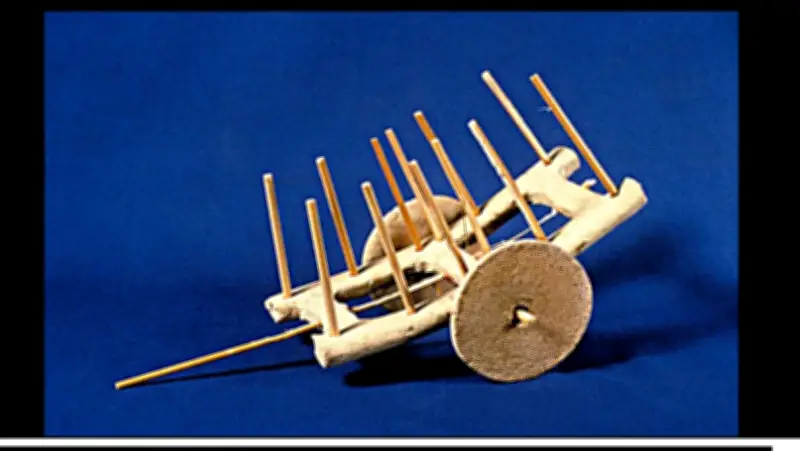
Beyond agriculture, the Indus wheel revolutionized transportation. Bullock carts equipped with these wheels became the backbone of overland trade, connecting distant settlements and facilitating the exchange of goods like pottery, beads, and metals. The wheel's durability and efficiency allowed for heavier loads and longer journeys, expanding the reach of Indus merchants and fostering cultural exchange with neighboring regions.
Cultural and Symbolic Significance
The Indus wheel also held cultural and symbolic importance. Depictions of wheels have been found on seals and pottery, suggesting they were imbued with meaning beyond their practical use. The wheel may have symbolized the sun, cycles of life, or the concept of movement and progress. This duality of function and symbolism highlights the holistic worldview of the Indus people, where technology and spirituality were intertwined.
Legacy and Modern Relevance
The legacy of the Indus wheel endures in modern times. Its basic design principles are still used in traditional water wheels in parts of South Asia, and its concept influenced later innovations in mechanics and engineering. The wheel stands as a reminder that simple solutions can have profound impacts, and that the ingenuity of ancient civilizations continues to inspire.
In conclusion, the Indus wheel is far more than a mere artifact; it is a symbol of human creativity and adaptability. Its simple yet effective design transformed agriculture, transportation, and trade, laying the foundation for the prosperity of the Indus Valley Civilization. As we face modern challenges, the Indus wheel reminds us that sometimes the best solutions are the simplest.