As the 80th anniversary of the negotiations leading to the United Nations' Universal Declaration of Human Rights approaches, it is an opportune moment to reflect on the intersection of human rights and taxation. A nation cannot claim to be a human rights state if it selectively endorses only civil and political rights, as seen in the United States, or only economic and social rights, as in China. Such a cafeteria approach contradicts the Vienna Declaration. A lesser-known provision of the Universal Declaration, Article 29(1), states: “Everyone has duties to the community in which alone the free and full development of [their] personality is possible.”
Budget 2026-27: Beyond Fiscal Metrics
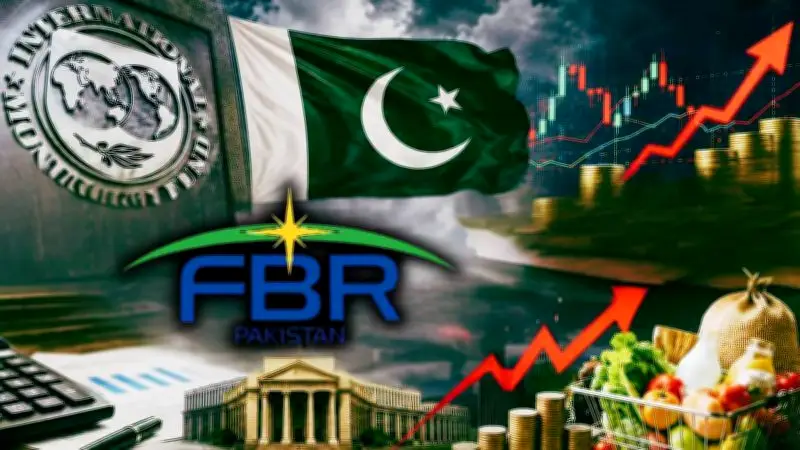
For years, budget debates in Pakistan have been trapped within a narrow binary: taxpayers versus the state, or the International Monetary Fund (IMF) versus sovereignty. Article 29(1) of the UDHR provides a more sophisticated lens, reminding us that rights are accompanied by duties towards the community, as human personality can only fully develop within society. This approach has profound implications for taxation. The Budget 2026–27, unveiled on 12 June 2026, should not be judged merely by fiscal deficit, primary surplus, or revenue targets. The real test is whether it advances a constitutional and human-rights-based fiscal compact where both rights and duties are shared equitably, and public resources are deployed for the free and full development of every citizen’s personality. The answer is a resounding no.
The federation, as in the past, has increasingly relied on unbearably oppressive petroleum levies, withholding taxes, and indirect taxation, while simultaneously demanding provincial cash surpluses under IMF programmes. The result is that revenue extraction expands, but corresponding public services remain weak. The social contract becomes unbalanced: citizens perform their duties, but the state struggles to fulfil its own.

Taxation as Social Obligation
The dominant neoliberal discourse treats taxation as a confiscation of private wealth. The social-democratic tradition sees taxation as the price of civilisation. Article 29(1) of the UDHR goes further: taxation becomes an expression of social obligation. Citizens have duties towards the community; the state has corresponding duties to utilise public resources to advance collective welfare and enable the full development of human personality. A country that spends more on servicing debt than on educating and healing its people cannot plausibly claim that human development is the centrepiece of public policy.
Under this framework, the first question is not whether taxes are high or low, but whether the burden of civic duties is distributed fairly. In Pakistan, the answer is plainly negative. A salaried employee cannot escape taxation. Corporate entities in the documented sector bear the overwhelming burden of direct taxes. Exporters face unjustified and exorbitant withholding taxes. Meanwhile, large segments of untaxed wealth, agricultural rent, urban land speculation, untaxed capital appreciation, privileged sectors, and informal economic activity remain either undertaxed or completely outside the fiscal net. The Finance Bill 2026 offers nothing in this direction.
Article 29(1) of the UDHR transforms this from a technical tax issue into a human rights issue. If duties towards the community are imposed selectively, equality before the law is violated. Civic obligations cannot be the exclusive responsibility of the compliant.
The State's Duties Under the Constitution
The second question concerns the state itself. If citizens have duties, the state also has duties, foremost among them being Article 3 of the Constitution: “The State shall ensure the elimination of all forms of exploitation and the gradual fulfilment of the fundamental principle, from each according to his ability to each according to his work.” Taxation can only be justified when revenue is utilised to create conditions in which the free and full development of personality becomes possible. This directs attention towards education, health, housing, environmental protection, justice, public transport, local government, social security, and economic opportunity.

Here lies the central contradiction of Pakistan’s fiscal framework. The Economic Survey 2025–26 itself provides evidence of this contradiction. The Survey celebrates macroeconomic stabilisation: inflation has declined, the current account has improved, foreign exchange reserves have strengthened, and remittances have reached record levels. The government understandably presents these as signs of recovery after years of economic turbulence. However, the question is whether stabilisation has translated into human development.
Article 29(1) of the UDHR does not ask whether inflation has fallen; it asks whether society creates conditions for the free and full development of human personality. The Constitution of Pakistan similarly does not confine itself to fiscal indicators. Articles 3, 9, 9A, 14, 25A, 37, and 38 require the State to create conditions enabling citizens to live with dignity and realise their potential.
Education and Health: Underinvestment
The Economic Survey reveals how far Pakistan remains from that objective. Education provides the first example. Successive governments have described education as a national priority, yet public expenditure on education remains around two per cent of GDP, despite constitutional obligations under Article 25A guaranteeing free and compulsory education. Literacy improvements remain painfully slow, while millions of children remain outside the formal education system. The State continues to demand sacrifices from taxpayers while failing to make corresponding investments in the most important determinant of long-term national prosperity.
Health presents an even starker picture. The Survey acknowledges continuing challenges in maternal health, child nutrition, communicable diseases, and access to quality healthcare. Public expenditure on health remains around one per cent of GDP, far below levels necessary for basic universal health coverage. A country that spends more on servicing debt than on educating and healing its people cannot plausibly claim that human development is the centrepiece of public policy.
The position becomes more troubling when viewed alongside fiscal data. For years, Pakistan has expanded revenue extraction through withholding taxes, indirect taxation, and petroleum levies. The proposed petroleum levy target alone now exceeds the total development budgets of the centre and some provinces. Yet education and health continue to receive only residual attention. Citizens are told there is no fiscal space for schools, hospitals, local governments, and environmental protection, but there is always fiscal space for debt servicing and IMF-mandated primary surpluses.
Social Protection and Fiscal Justice
The Survey’s chapter on social protection highlights another structural weakness. The Benazir Income Support Programme and related initiatives provide relief to vulnerable households, but Pakistan’s social protection architecture remains disconnected from a coherent and progressive tax system. In functioning welfare states, social protection is financed substantially through taxes collected according to economic capacity. Those with greater wealth contribute proportionately more towards community welfare. Pakistan has chosen a different path: untaxed agricultural rent, speculative gains in urban land, preferential treatments, tax expenditures exceeding three trillion rupees, and vast segments of undocumented wealth escape meaningful taxation. Meanwhile, social protection programmes are increasingly financed through revenues collected from consumers and documented sectors. This is redistribution without fiscal justice.
The result is a peculiar social contract in which the salaried classes, documented businesses, and ordinary consumers perform duties on behalf of society, while many beneficiaries of economic privilege remain substantially insulated from corresponding obligations.
Economic Growth and Employment
The Economic Survey also exposes another uncomfortable reality: the celebrated growth rate remains insufficient for Pakistan’s demographic realities. An economy growing below five per cent cannot absorb a rapidly expanding labour force. Millions of young Pakistanis enter the working age every year, but employment generation lags behind demographic expansion. Economic growth that fails to create sufficient opportunities eventually produces frustration, outward migration, and social instability.
The survey tells two stories simultaneously: the official story of stabilisation and the largely unspoken story of underinvestment in human capabilities. The first story dominates press conferences; the second emerges from the data itself. Viewed through Article 3 of the Constitution and Article 29(1) of the UDHR, the deficiency becomes obvious. The State has become increasingly efficient at demanding duties from citizens—taxes collected at source, transactions monitored, petroleum levies imposed, advance taxes proliferated, compliance burdens expanded. However, the same State remains remarkably reluctant to invest adequately in the conditions necessary for the free and full development of personality. The imbalance is not merely economic; it is constitutional, moral, and political.
A Rights-Based Economic Survey
Economic surveys traditionally celebrate growth, exports, reserves, and revenue collection. A genuinely rights-based Economic Survey would ask different questions: How many children received quality education? How many citizens gained access to healthcare? How many communities obtained clean drinking water? How many young people secured productive employment? How many families escaped poverty without dependence on state transfers? These indicators reveal whether economic policy serves human beings or whether human beings merely serve economic policy.
The Budget 2026–27 and Economic Survey 2025–26 should therefore be judged by a simple standard derived from both the Constitution and the Universal Declaration of Human Rights. Does the State demand duties according to ability? Does it distribute burdens fairly? Does it deploy public resources to expand human capabilities? Does it create conditions for every citizen to develop his or her personality freely and fully? The evidence presented in the Economic Survey 2025–26 suggests that Pakistan has made progress on stabilisation but remains far from achieving that broader objective.
The tragedy of contemporary Pakistan is not merely that taxes are high or that debt remains excessive. The bigger tragedy is that citizens are repeatedly reminded of their duties while the State, controlled by an oligarchy, continues to postpone fulfilment of its own.